Personalized Medical Care & Dedicated International Patient Concierge

Facial & Body Fillers · Consultation Required
Hyaluronidase Filler Dissolving
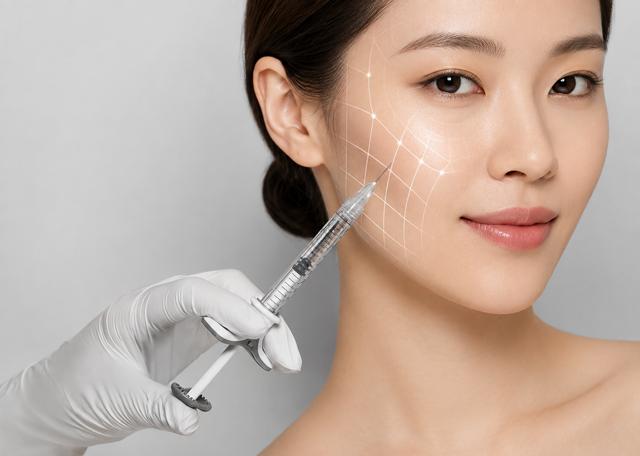
Hyaluronidase filler dissolving is an enzyme-based treatment offered at Toxnfill Hongdae to reduce or remove unwanted, excessive, uneven, or asymmetric hyaluronic acid (HA) filler.
Schedule a ConsultationFiller Dissolving in Seoul
Medically reviewed by Dr. Choi Ji Eun, Director, Toxnfill Hongdae
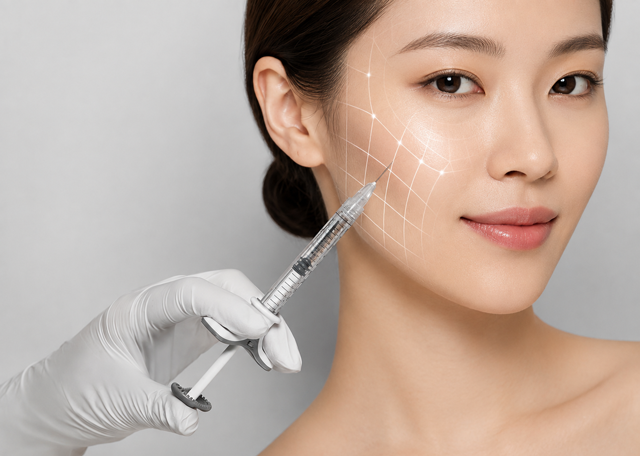
Hyaluronidase filler dissolving is an enzyme-based treatment offered at Toxnfill Hongdae to reduce or remove unwanted, excessive, uneven, or asymmetric hyaluronic acid (HA) filler. Toxnfill states that the HA fillers it uses have high responsiveness to hyaluronidase, supporting easier correction when a patient's filler result needs adjustment. Director Dr. Choi Ji Eun oversees assessment and treatment planning for this service.
What Is Hyaluronidase Filler Dissolving?
- Hyaluronidase is an enzyme that breaks down hyaluronic acid; when injected into an area containing HA filler, it degrades the filler gel so the body can clear it, effectively reversing part or all of a previous filler treatment.
- Hyaluronidase is widely regarded in the aesthetic medicine literature as the standard tool for managing HA filler complications, including overcorrection, filler migration, lumps, asymmetry, and vascular occlusion.
- In many countries, including the United States, hyaluronidase's use for dissolving cosmetic filler is considered an off-label application of an enzyme originally approved for other medical indications — it is not itself marketed as a filler-removal product with its own dedicated aesthetic approval, though it is long-established and widely used in clinical practice for this purpose.
- Toxnfill Hongdae states it evaluates each patient's face and filler history before recommending dissolving, and that its own HA filler products are formulated to be readily responsive to hyaluronidase if correction is ever needed.
- The dissolving effect is generally described as beginning quickly and progressing over the following one to two days as the enzyme breaks down the targeted hyaluronic acid.
Who Performs Filler Dissolving at Toxnfill Hongdae
Dr. Choi Ji Eun, Director at Toxnfill Hongdae, is a graduate of Seoul National University College of Medicine who completed her internship at Seoul National University Hospital. Her documented clinical focus areas include dermal fillers, botulinum toxin, and aesthetic laser/skin treatments — placing filler assessment and correction, including dissolving, within her core practice. Toxnfill Hongdae describes its dissolving process as beginning with an assessment of the existing filler (type, location, and amount where known), followed by targeted hyaluronidase injection into the relevant area, then evaluation of the response before determining whether further treatment is needed.
Who Is a Good Candidate for Filler Dissolving?
- Patients with unwanted, excessive, uneven, or migrated HA filler from a previous treatment (at this clinic or elsewhere) who want correction.
- Patients wanting to fully reverse a previous filler treatment before trying a different product, technique, or provider.
- Candidacy depends on medical history, known hyaluronidase allergy, the type of filler previously used, and the treatment area — always confirmed by the clinician, not assumed from general product information. (Note: hyaluronidase dissolves hyaluronic acid–based filler specifically; it is not effective against non-HA or permanent filler materials.)
What to Expect: Procedure, Recovery, and Results Timeline
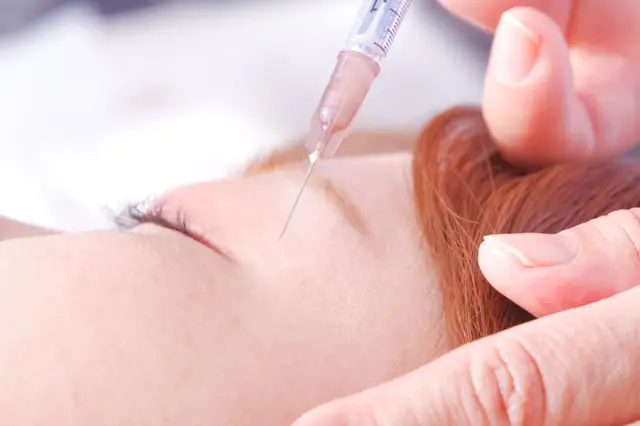
- Assessment. The clinician identifies, where possible, the type, location, and approximate amount of existing HA filler, informed by the patient's treatment history.
-Preparation. A topical anesthetic cream is applied beforehand to minimize discomfort from the injection needle.
-Injection. Hyaluronidase is micro-dosed into the precise target area using fine-gauge micro-needles or flexible cannulas; ultrasound guidance may occasionally be used to help locate deeper or hidden filler deposits.
-Evaluation & follow-up. The treated area is assessed for response; most patients need only one visit, though touch-up dissolving can be scheduled roughly one to two weeks later if needed.
Swelling and minor bruising typically peak within 24–48 hours and fade over the following few days; most patients can resume normal daily activities immediately after the appointment. The dissolving effect on the targeted hyaluronic acid filler volume is considered permanent for that specific filler material — hyaluronidase does not affect the body's own naturally occurring hyaluronic acid on a lasting basis, though a temporary reduction in native tissue hyaluronic acid can occur in the treated area.
Combining Filler Dissolving with Other Treatments
- Re-injection of fresh HA filler, generally scheduled one to two weeks after dissolving is fully completed, once the area has settled.
- Skin boosters or laser lifting treatments, which can be introduced afterward to support skin firmness and quality.
Safety, Precision, and Clinic Standards
- Toxnfill Hongdae is a Registered Medical Institution for Attracting Foreign Patients, certified by Korea's Ministry of Health and Welfare under the Medical Overseas Expansion and Foreign Patients Attraction Act.
- Published clinical literature on hyaluronidase in aesthetic practice describes it as the standard treatment for HA filler-related vascular occlusion, with a 2025 systematic review and meta-analysis of 231 patients finding that early hyaluronidase administration — particularly within six hours of symptom onset — was associated with significantly better clinical outcomes.
- Clinical guidance in the aesthetic dermatology literature discusses dosing strategies for hyaluronidase, including higher-dose, repeated-injection protocols developed specifically for managing vascular occlusion and impending tissue compromise, reflecting an actively studied and evolving area of aesthetic safety practice.
- Reported risks of hyaluronidase treatment include allergic reaction (which can range from mild to, rarely, more serious), temporary breakdown of the body's own natural hyaluronic acid in the treated area, localized bruising, redness, tenderness, and swelling.
- Toxnfill Hongdae states that identifying the type, location, and amount of existing filler before treatment is part of its process for determining the appropriate hyaluronidase approach for each patient.
The Bottom Line
- Hyaluronidase filler dissolving is an enzyme-based treatment that breaks down unwanted, excessive, or uneven hyaluronic acid filler.
- It is widely used and clinically well-established for managing filler complications, though its use for cosmetic filler dissolving remains an off-label application of the enzyme in many countries, including the U.S.
- Care is overseen by Director Dr. Choi Ji Eun, whose clinical practice includes dermal filler assessment and correction.
- Dissolving begins quickly, with visible results generally developing within 24–48 hours; the effect on the targeted filler is considered permanent.
- Hyaluronidase only dissolves HA-based filler, not non-HA or permanent filler materials — the treated filler type must be confirmed before treatment.
Frequently Asked QuestionsWhat does hyaluronidase filler dissolving actually do? It uses the enzyme hyaluronidase to break down hyaluronic acid-based filler in the treated area, allowing the body to clear it and effectively reversing part or all of a previous HA filler treatment.** Is hyaluronidase FDA-approved for dissolving filler?** Hyaluronidase's use for filler dissolution is considered off-label in many countries, including the U.S., though it is the clinically established, widely used standard approach for correcting HA filler complications.** How fast does filler dissolving work?** The clinic describes the dissolving process as beginning quickly, with the visible result developing as swelling settles over roughly 24–48 hours; the final result is typically assessed after this period.** Can hyaluronidase dissolve any type of filler?** No — hyaluronidase only breaks down hyaluronic acid–based fillers. Non-HA or permanent filler materials require a different approach, which should be discussed with the clinician.** Is filler dissolving painful?** A topical anesthetic cream is applied beforehand to reduce discomfort from the injection; most patients describe the sensation as mild stinging, pinching, or tenderness.** Will dissolving remove all of my natural facial volume?**
Hyaluronidase specifically targets the injected filler material; the clinician micro-doses the enzyme to the treated area to avoid unnecessary effect on surrounding tissue, though some temporary reduction of naturally occurring hyaluronic acid nearby can occur.
Book a Consultation at Toxnfill Hongdae

To discuss whether hyaluronidase filler dissolving is appropriate for correcting a previous filler result, contact Toxnfill Hongdae in Seoul's Hongdae/Mapo-gu district. The clinic is open weekdays 10:30–21:00 and weekends 10:00–17:00 (Korea Standard Time). Enquiries can be made through the clinic's contact page via our online inquiry form.
Disclaimer
This page is for general informational purposes and does not constitute individualized medical advice. Suitability, product selection, and expected outcomes can only be confirmed through a consultation with a qualified physician.
Sources & Further Reading
- Hyaluronidase Use in Aesthetic Medicine: Formulations, Safety, and Clinical Practice — MDPI / PMC
- How Should We Use Hyaluronidase for Dissolving Hyaluronic Acid Fillers? — PMC
- This Month's Guideline: The Use of Hyaluronidase in Aesthetic Practice — Journal of Clinical and Aesthetic Dermatology (JCAD)
Clinical Notice: Individual treatment outcomes and recovery timelines may vary depending on skin condition and personal physiology. Temporary redness, mild swelling, or bruising may occur after treatment; a pre-procedure physician consultation is always conducted.
Other Services
Explore additional treatments offered by our specialists.

Cryo Iontzyme Skin Treatment
Cryo Iontzyme Skin Treatment is a non-invasive treatment that combines cooling technology with ion-based delivery to support skin hydration, texture, and overall appearance.
Learn More

Juvelook Skin Booster
Juvelook Skin Booster combines Poly-D,L-Lactic Acid (PDLLA) with hyaluronic acid, micro-injected into the dermal layer to stimulate the skin's own collagen production while restoring volume and improving overall texture.
Learn More

Skin & Pore Botox
Skin & Pore Botox is a botulinum toxin treatment designed for skin texture rather than large muscle groups, delivered through multiple small intradermal injections into areas such as the butterfly zone/cheek where pores and oiliness ar...
Learn More