Personalized Medical Care & Dedicated International Patient Concierge

Medical Guide
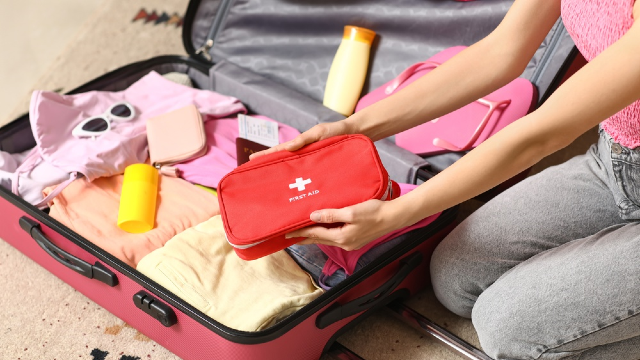
What to Pack for a Dermatology Treatment Trip to Seoul
Medically reviewed by Dr. Byun Sung Ho, MD, Director, Toxnfill Hongdae Almost everybody packs for the appointment. Very few people pack for the week. The appointment is the part th
Schedule a ConsultationMedically reviewed by Dr. Byun Sung Ho, MD, Director, Toxnfill Hongdae
Almost everybody packs for the appointment. Very few people pack for the week.
The appointment is the part that has a time on it, so it gets the attention. But the appointment is typically an hour or two, and the days that follow it are three, four, sometimes five — and those are the days when you will actually be opening your suitcase looking for something. That is the gap this article is about. Not what to carry through the clinic door, but what will be sitting in your hotel room on the second evening, when your face feels tight and slightly hot and the convenience store downstairs has four hundred products on the shelf and none of them are in a language you read.
Packing well for this is less about buying things than about deciding in advance what you are not going to have to improvise.
The days people under-pack for
Think about the shape of a treatment trip from the suitcase's point of view. Day one and two are travel and settling in. Day three is the appointment. Days four through seven are the part almost nobody plans for, and they are the part that decides how the trip feels in memory.
Skin that has just been treated is, for a short window, less tolerant than usual — more reactive to friction, to heat, to strong products, and to sun. Toxnfill Hongdae's post-treatment guidance across a wide range of its treatments keeps returning to the same few instructions: keep the skin moisturized, use sunscreen, wash with lukewarm water, avoid scrubs and strong active products, do not pick at anything that flakes. Those are simple instructions. They are also instructions you can only follow if you have the right objects within arm's reach.
Here is the failure mode. Someone travels with the skincare they use at home — actives, exfoliating toner, the retinol they have finally gotten their skin used to — and nothing else. On day four, none of it is usable, so they buy something at random in a store where the labels are unfamiliar, while their skin is in the one state where unfamiliar products are a bad idea.
The fix is unglamorous: pack the boring version of your routine, and pack it deliberately.
Sun protection is the thing you will use most
If you take one item seriously, take this one. Sunscreen turns up in more of the clinic's post-treatment guidance than any other single product, across lifting treatments, skin boosters, peels and pigmentation work alike — sometimes as "apply sunscreen daily," sometimes as strict daily protection at SPF 50 or above.
There are two reasons to settle this at the packing stage. The first is that sun protection is a habit, and habits need the right object. The US Food and Drug Administration's consumer guidance on sunscreen sets out the basics plainly: choose a broad-spectrum product with an SPF of at least 15, apply it about fifteen minutes before sun exposure, and reapply at least every two hours, more often if you are sweating. The FDA also lists the spots people routinely miss — ears, nose, lips, the back of the neck, the hands, the hairline. A reapplication schedule means you need a product you can reapply, on a street, without a mirror. A stick or a compact format is worth more on a treatment trip than a large bottle in the hotel bathroom.
The second reason is more particular to traveling. The FDA points out that sunscreens are regulated differently in different countries — in the United States they are regulated as drugs and must meet nonprescription drug standards — and that if you buy sunscreen outside the US it is worth reading the label to understand the differences. That is not a warning against Korean sunscreen, which is plentiful and often very pleasant to wear. It is an argument for arriving with a product you already know suits your skin, and treating anything you buy locally as a supplement rather than as the plan.
Two more FDA points are worth carrying into a suitcase. Do not leave sunscreen in direct sun, which is why the labels say to protect it from heat; and sunscreen expires, with a product carrying no expiration date to be treated as expired three years after purchase. The half-used bottle in your bathroom cupboard from a vacation you can no longer date is not the one to pack.
And sunscreen is not the whole answer. The American Academy of Dermatology's sun protection guidance puts shade and clothing alongside sunscreen rather than beneath it, and shade and clothing require no reapplication, no timer, and no remembering. Which brings us to hats, further down.
The bland, boring, fragrance-free basics
What a compromised skin barrier wants is nothing interesting.
Pack a gentle, non-foaming or low-foaming cleanser and a plain moisturizer, both fragrance-free, and pack enough of both to get through the trip. Those two products, used lukewarm and gently, cover the majority of what the clinic's post-treatment instructions ask for across its treatment families. The AAD's guidance on caring for dry, irritated skin makes the same argument from the other direction: use a gentle, fragrance-free cleanser, moisturize while skin is still damp, avoid hot water, and avoid products that sting or burn — the AAD's point being that stinging is information, not something to push through.
Fragrance is worth singling out. The FDA's consumer material on allergens in cosmetics notes that fragrance ingredients are among the more common causes of cosmetic allergic reactions, and it also notes that the word "hypoallergenic" on a package is not backed by a federal standard that guarantees anything. On ordinary days that may not matter much to you. In a week where your skin's barrier is temporarily less robust, removing an avoidable variable is cheap insurance.
A short, honest list of what belongs in the bag:
- A fragrance-free gentle cleanser, in a size that will not run out.
-A plain moisturizer or a barrier-repair creamwith a short ingredient list, ideally one you have used before.
-A lip balm, plain, and a separate SPF lip balm — the FDA lists lips among the commonly forgotten spots.
-A small tube of plain petrolatum-style ointmentif you already use one, for any dry patch that outlasts the moisturizer.
What does not belong: exfoliating acids, scrubs, retinol and other strong actives, clay masks, anything described as "brightening" that you have not used before, and any device with bristles. Several of the clinic's post-treatment notes specifically ask patients to hold off on scrubs, peeling products and irritating active skincare for a period after treatment. If those products are physically in your washbag, you will use them on day five out of habit. Leave them at home; that is a packing decision, and it is easier made in your own bathroom than in a hotel one.
Why a Seoul pharmacy is the wrong place to start something new
Seoul is a genuinely good city to buy skincare in, and that is exactly the problem. The shelves are excellent, the staff are helpful, the packaging is beautiful, and you are standing there with skin that is flaking slightly and a strong desire to fix it. Every incentive points toward buying something.
But a new product on newly treated skin is an experiment with no control, run at the worst possible moment. If your skin reacts, you will not know whether the reaction came from the treatment, the product, or the interaction of the two — and that ambiguity muddies both what you can tell a clinician and what you learn about your own skin for next time.
The rule is simple enough to hold onto in a shop: buy what you like, and start using it once your skin is back to baseline. The same caution applies to anything sold as a "post-procedure" or "soothing" product you have not used before; the claim on the box is not a clinical fact about your skin. If you want something specific for the days after your treatment, ask the clinician who treated you — or ask in advance through the clinic's contact page, so that whatever you need is either in your suitcase or waiting for you.
Clothing that does not go over your head
This sounds trivial. It is the item people are most grateful for and least likely to have thought about.
Pack shirts that button or zip. Not one — several, enough to cover the recovery days. A crew-neck sweater pulled off over your head drags fabric across your cheeks, your jaw and your forehead, and does it with friction and pressure at precisely the moment you have been told not to rub the treated area. It also does it twice a day, every day, without you noticing that it is happening.
The same logic extends outward:
-Front-opening tops and an open jacketfor the whole recovery window, not just the first evening.
-A scarf you can drape rather than wind, which gives you shade and cover without going over your face.
-Loose collars. Anything that has to be tugged past your jawline is a problem if your jawline was treated.
If the treated area is below the jaw — neck, shoulders, chest, or anywhere on the body — the same rule applies with more force. Clothing that can be put on without dragging over the site is worth more than any product in the bag.
Cold, and what your accommodation actually has
Several treatments are followed by advice to use cold compresses for the first days, and swelling or a warm, tight feeling is a documented part of the normal course for a number of injectable and energy-based treatments. So the practical question is: where is the cold coming from?
Assume less than you think. A hotel room in Seoul may have a small refrigerator and an ice machine on the floor, or neither; serviced apartments and guesthouses vary more. A freezer compartment capable of freezing a gel pack is not something to plan around unless you have confirmed it.
What travels well:
-A soft reusable gel pack, which can be chilled in a mini-fridge even if it cannot be frozen. Check airline rules for your carrier if you intend to fly with one.
-A small cloth or two. This matters more than the cold source: cold is applied through fabric, not directly against skin, and a thin cotton cloth is the difference between a compress and an ice burn.
-A resealable plastic bag, which turns whatever cold you can find — ice from a machine, a cold drink bottle — into a compress.
Ask at the appointment how long cold is useful for and how often, because the answer differs by treatment and is not a general rule. And ask at the hotel, on arrival, what is actually in the room. Both questions take under a minute and remove an entire evening of improvisation.
Medicines: hand luggage, original packaging, paper copies
This is the section where general travel guidance is better than anything specific to dermatology, and it is worth following exactly.
The US Department of State's guidance for travelers on medicine and health makes several points that apply directly. Bring enough medicine for the whole trip plus a few days in case of travel delays. Ask your own doctor to write a letter explaining your medical condition, listing your prescription medicines by their generic names, and keep that letter with the medicinesin their original packaging. Take copies of your prescriptions with you. And check in advance whether any country you are entering or passing through restricts a medicine you take — the State Department notes that entering another country with certain medicines, even ones that are legal in the United States, can create serious legal problems, and that some medicines require permits.
Three practical consequences for a treatment trip:** Carry medicines in hand luggage, not in checked baggage.** A delayed bag is an inconvenience; a delayed bag containing the only supply of a daily medication is a different kind of problem, and an avoidable one.** Keep the original labeled packaging even though it is bulkier.** The pill organizer is more efficient and less useful. A labeled box carries the generic name, which crosses languages; loose tablets in a compartment carry nothing at all.** Carry the prescription copies as paper as well as on your phone.** Phones run out of battery, lose signal, and occasionally get left in taxis.
If you are prescribed anything at the clinic — some treatments are followed by a short course of oral medication — the same logic runs in reverse on the way home.
Masks, hats and glasses: cover, not concealment
Bring a mask, a wide-brimmed hat and a pair of sunglasses, and think of them as practical equipment rather than as hiding.
The distinction matters because the impulse behind packing them is often mild embarrassment, and that framing leads people to leave them out. Framed correctly, all three are doing physical work:
-A hatgives shade that needs no reapplication and no timer. The AAD's sun protection guidance treats shade and clothing as part of protection rather than as an afterthought, and a brim is the most reliable shade you can carry. Choose a brim rather than a cap if your cheeks or jaw were treated; a cap shades the forehead and nothing else.
-Sunglassesreduce squinting, which is a comfort issue in bright weather and a mild mechanical one if the area around your eyes has been treated. Check that they do not press hard on the bridge of your nose or your temples.
-A maskis unremarkable in Seoul, provides a little physical shield against wind and grit, and — yes — covers the lower face if you would rather not be looked at on day four. All three of those are legitimate reasons.
The phone, and the documents that matter afterward
Most packing lists stop at the clinic door. A few things are worth having specifically for the period after you walk out of it.** The clinic's contact route, saved where you can reach it.** Not on a business card in a bag you might leave in a locker — in your phone, in whatever messaging app you used to arrange the appointment, so that a question on day five takes thirty seconds to ask. Toxnfill Hongdae is at 11-12F, Good People Building, 162 Yanghwa-ro, Mapo-gu, Seoul, and is open on weekdays from 10:00 to 20:00 and on weekends from 10:00 to 19:00 Korea Standard Time, but knowing the address is not the same as having a live route to a person.** A power bank.** Your phone is now your translation tool, your navigation, your camera and your line back to the clinic.** A copy of your travel or medical insurance details.** The State Department's guidance is blunt: the US government does not pay medical bills abroad, Medicare does not cover costs outside the United States, and it is worth knowing what your own policy covers before you leave rather than after. If your insurance is accepted abroad, carry the card and any claim forms.
The deliberate non-list
As much of good aftercare packing is subtraction as addition. These are the things people bring and do not use:
-A second set of "in case" skincare. If the first set is right, the second set is temptation.
-Heavy makeup for the recovery days. Timing varies by treatment — some of the clinic's treatments permit light makeup the same day or the next, others later — and the answer comes from the clinician, not from your suitcase.
-Facial devices and rollers. Massage tools, cleansing brushes and anything with a motor are friction with a marketing budget.
-Sheet masks bought on arrival. Unknown ingredients, occlusive contact, compromised barrier. Not this week.
-Gym clothes for a full week. Strenuous exercise is restricted after a number of the clinic's treatments for a period measured in days. Pack for walking, which is what you will actually be doing.
The theme is consistent. The aftercare that produces good results is mostly restraint: less product, less friction, less heat, less sun, less doing. Equipment is not the answer to a problem whose answer is mostly leaving it alone.
The Bottom Line
- Pack for the three to five days after the appointment rather than for the appointment itself; the recovery window is where the suitcase actually gets used.
- Bring sun protection you already know suits you, in a format you can reapply on the street, and treat shade and a brimmed hat as part of the same job rather than as optional extras.
- Bring a plain, fragrance-free cleanser and moisturizer, leave strong actives and scrubs at home, and do not start a new product bought in Seoul while your skin is still recovering.
- Bring front-opening clothing, a soft cloth and something that can hold cold, and carry medicines in hand luggage in their original labeled packaging with paper copies of your prescriptions, as the US State Department advises.
- Leave room in the suitcase and in the schedule; the aftercare that works is mostly restraint, and restraint needs time more than it needs equipment.
What to leave room for
Two kinds of space are worth protecting.
The first is space in the bag. You will buy things — Seoul is good at that — and a suitcase packed to the zipper on the way out creates a problem on the way back.
The second is space in the schedule, and it is the more important of the two. Almost every packing mistake described above is recoverable. A schedule with no slack in it is not: it is what turns a sensible instruction to keep the area undisturbed, or to stay out of strong sun, into one you quietly decide to ignore because you have already paid for something else. Book fewer fixed things than you think you can manage, and keep the day after your appointment genuinely open.
If you want to know what your own treatment will ask of you specifically, ask before you pack rather than after. The clinic's medical team page sets out who you would be seeing, and a question sent in advance is the cheapest item on this entire list.
Frequently Asked Questions
What is the single most useful thing to pack?
Sun protection you already know works on your skin, in a format you can reapply during the day. Sunscreen appears in more of the clinic's post-treatment guidance than any other product, and the FDA's advice is to use a broad-spectrum product and reapply at least every two hours. A brimmed hat runs a close second, because shade requires no reapplication and no remembering.
Should I buy skincare in Korea for the days after treatment?
Buy it if you want it, but start using it after your skin has returned to normal rather than during the recovery window. A new product on recently treated skin is an experiment with no way of telling which variable caused any reaction. If you need something specific for those days, ask the clinician who treated you rather than a shelf.
Can I take my usual retinol and exfoliating products on the trip?
You can, but there is a good argument for leaving them at home. A number of the clinic's post-treatment instructions ask patients to avoid scrubs, peeling products and irritating active skincare for a period afterward, and products that are physically in your washbag tend to get used out of habit. Removing the temptation is simpler than resisting it.
How should I carry my medications?
In hand luggage, in their original labeled packaging, with paper copies of your prescriptions. The US State Department advises bringing enough for the whole trip plus a few days, asking your own doctor for a letter listing your medicines by generic name, and checking in advance whether any medicine you take is restricted in the countries you are entering or transiting.
Will my hotel have ice or a freezer for cold compresses?
Assume not until you have confirmed it. Mini-fridges are common and freezer compartments are not, and guesthouses and serviced apartments vary widely. A soft gel pack, a thin cloth and a resealable bag cover most situations, and cold should always be applied through fabric rather than directly against skin.
How much free time should I leave after the appointment?
More than feels necessary, and certainly the following day. The most common reason people fail to follow simple aftercare advice is not disagreement with it but a schedule that has already been paid for. Slack in the calendar protects the result more effectively than anything you can put in a suitcase.
This article is for general informational purposes only. It is not individualized medical advice and it is not a self-diagnosis tool, and nothing in it should be used to start, stop or change a prescribed medication. What your skin will need in the days after a specific treatment depends on the treatment, your history and your own physician's advice, and only an examining dermatologist can answer that for you in person.
Clinical Notice: Individual treatment outcomes and recovery timelines may vary depending on skin condition and personal physiology. Temporary redness, mild swelling, or bruising may occur after treatment; a pre-procedure physician consultation is always conducted.
More Articles
Continue reading our clinical guides.
Toxnfill Hongdae Dermatologist: Meet Dr. Chang Ye Ji
Medically reviewed by Dr. Chang Ye Ji, MD, Chief Director, Toxnfill Hongdae The lead dermatologist at Toxnfill Hongdae is Dr. Chang Ye Ji, who serves as the branch's Chief Director
Learn More
Korean Dermatology Residency Training: How Doctors Qualify
Medically reviewed by Dr. Chang Ye Ji, MD, Chief Director, Toxnfill Hongdae Korean dermatology residency training follows a sequence that will look broadly familiar to an American
Learn More
In-Person Consultation at a Korean Dermatology Clinic
Medically reviewed by Dr. Chang Ye Ji, MD, Chief Director, Toxnfill Hongdae An in person consultation at a Korea dermatology clinic is a working appointment with a defined shape: h
Learn More