Personalized Medical Care & Dedicated International Patient Concierge

Medical Guide
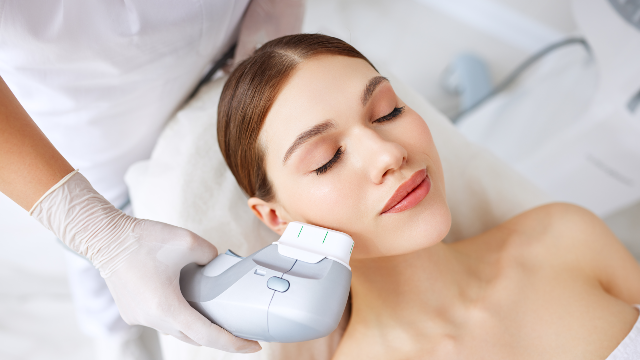
Ultrasound Lifting vs RF Lifting: The Third Category
Ultrasound Lifting vs RF Lifting: Which Suits Your Concern? Medically reviewed by Dr. Choi Ji Eun, MD, Director, Toxnfill Hongdae Almost every guide to ultrasound lifting vs RF lif
Schedule a ConsultationUltrasound Lifting vs RF Lifting: Which Suits Your Concern?
Medically reviewed by Dr. Choi Ji Eun, MD, Director, Toxnfill Hongdae
Almost every guide to ultrasound lifting vs RF lifting hands you a two-way choice, and that is where readers get stuck. A third energy category exists — microwave — and it answers a concern the other two were never built to solve. The useful question is not which machine is strongest. It is which kind of energy reaches the layer where your own complaint actually lives.
Why the two-way comparison leaves you stranded
The head-to-head format fails because it sorts by brand rather than by tissue depth, and depth decides whether a treatment can help you. Every option runs on one principle: energy is aimed at a chosen level below the surface, the heat there prompts new collagen while existing tissue contracts, and the payoff is a modest lift with firmer skin and little downtime.
The American Society for Dermatologic Surgery groups lasers, radiofrequency and ultrasound into one family for that reason: each warms skin well below the surface, far enough down that the body answers by making collagen. What separates them is where the heat stops.
At Toxnfill Hongdae, the lifting treatments run on four related technologies: radiofrequency, monopolar radiofrequency, microwave energy, and high-intensity focused ultrasound. Treatment is customized to your concern and the treatment area, with the device or cartridge selected for that depth and region.
The three energy categories, in one pass
Three categories cover the whole field, and each has a different natural target.
- Focused ultrasound (HIFU). Sound waves converge at a preset depth, deep enough to reach the fascia and the SMAS — the sheet of connective tissue and muscle that supports the lower face. This is the lifting category, and Ultherapy is the name most readers recognize in it.
-Radiofrequency, including monopolar radiofrequency. An electrical current meets resistance in tissue and becomes heat, delivered mainly through the dermis, the collagen-rich layer beneath the surface. This is the tightening and fine-wrinkle category, and Thermage is its best-known member.
-Microwave. Electromagnetic energy concentrates heat inside the dermis and, with the right handpiece, in the fat immediately beneath it. This is the only category that addresses loose skin and unwanted fat in one pass.
The clinic's own shorthand settles most of the HIFU vs radiofrequency confusion. High-frequency lifting works primarily on the dermis, so it serves tightening and fine wrinkles; ultrasonic lifting acts mainly on the fascia and SMAS layer, so it serves lifting. That is deep tissue versus dermal lifting in plain terms.
Concern one: sagging and a jawline that has lost its edge
If your lower face has drifted downward and the jawline has blurred, focused ultrasound is the category designed for that geometry. Sagging is structural, and structure needs energy that arrives below the dermis.
A 2023 systematic review of microfocused ultrasound in the International Journal of Environmental Research and Public Health sets out the mechanism. Energy is aimed at the SMAS and the deep dermis, creating small zones of thermal injury at depths set in advance. Focal heat denatures collagen there, and over the following months your body deposits replacement collagen around those zones.
The same review is useful about who this category serves less well: it treats severe laxity, and a body mass index above 30, as relative contraindications. That is a practical matching criterion, because more sagging does not mean more suitable.
Shurink is the clinic's HIFU option here. It focuses ultrasound energy on the SMAS layer to support collagen regeneration and the contraction of sagging tissue, and it is recommended for people who want firmer facial skin, improvement of uneven contours caused by sagging, personalized lifting, and treatment of narrow or curved areas. Linear Firm, another treatment on the same menu, uses line-type cartridges so energy is spread more evenly.
Concern two: overall firmness, surface laxity and fine wrinkles
If your skin simply feels slack, with fine lines across the cheeks, radiofrequency fits better than ultrasound. It spends its heat in the dermis, where surface quality is determined, so it targets the skin envelope rather than the scaffolding under it.
A 2024 monopolar radiofrequency trial in the journal Cosmetics gives a realistic picture. One treatment produced significant improvement in laxity at the jowl and the nasolabial fold, and the benefit was still measurable at the end of a 24-week observation period. Instrument-measured cheek firmness kept improving as the weeks passed rather than peaking early.
The limits matter just as much. Pore appearance, fine wrinkles and skin tone all moved in a favorable direction, but none of those changes reached statistical significance — so the study supports radiofrequency more confidently for laxity than for pores or etched lines. No burns, skin breakdown or scarring were reported.
Concern three: laxity arriving together with unwanted fat
Neither of the first two categories answers this one, which is why microwave lifting belongs in any comparison of Korea non-surgical lifting options. Ultrasound lifts structure and radiofrequency firms the dermis. Neither is built to reduce a soft pad of fat under the chin while tightening the skin above it. Microwave energy is.
What microwave energy does inside tissue
Microwave devices in this field operate at 2.45 GHz, and the frequency is not arbitrary. A 2025 immunohistochemistry study in the journal Cosmetics reports that microwaves at 2.45 GHz travel roughly 1.2 to 1.5 cm into subcutaneous fat. Lower frequencies reach deeper, but they need a higher power density and lose precision about where the energy lands — a trade between reach and control.
A 2024 advisory-board paper in the journal Bioengineering describes the delivery. A coaxial-emitter handpiece directs the field down into subdermal fat, while contact cooling held at 5 °C sits against the skin to protect the dermis during the pass. Heat is created at depth; the surface is chilled at the same moment.
That paper also describes two handpieces with different jobs — the most useful fact for matching this category to a concern:
- A shallow handpiece produces concentrated superficial heat, contracting collagen and tightening skin. It is the one used under the chin.
- A deep handpiece drives controlled hyperthermia inside fat, prompting lipolysis — the breakdown of fat cells — plus remodeling by fibroblasts, the cells that build collagen.
The same advisory board recommends raising the dose by extending treatment time before raising the power.
What the histology actually showed
The 2025 Cosmetics study is unusual because it examined treated tissue rather than photographs. Five volunteers each had one microwave session five days before a planned abdominoplasty, in a split-body design comparing a treated square against an untreated square on the same person. The deep handpiece was used, with the heating focus set 1.2 cm below the surface.
Under the microscope, the epidermis and dermis were morphologically unchanged. In the fat below, loss of a lipid marker identified fat cells that were no longer viable, and macrophages — the immune cells that clear debris — had gathered around them. The thermal target reported in the literature is roughly 45 to 50 °C, and the authors are candid that they did not measure temperature beneath the skin directly.
The protocols that have been published
Published microwave protocols come from body treatment, and they show the pace of this energy. In the Bioengineering paper, a body course runs to four sessions of about 30 to 60 minutes, spaced four weeks apart, for every 500 square centimeters treated. No more than six such squares are covered in one session, and no square is treated twice within the same session. Under the chin, the cited protocol is six sessions two weeks apart with the shallow handpiece.
One anatomical restriction in that paper shows why an examination beats a brochure. Treatment is confined between a line 1.5 cm below the border of the jawbone and the hyoid bone in the neck, sparing the marginal mandibular nerve, which controls part of the lower lip. Safety follow-up ran nine to twelve months with no long-term side effects. The same review states plainly that long-term efficacy data for this technology is missing from the published literature — an evidence gap the review itself identifies.
Two microwave treatments, and why they are not interchangeable
The clinic offers two microwave options, and the difference turns on one question: whether facial fat should be reduced or preserved.
ONDA Lifting
ONDA Lifting is a microwave-energy treatment for skin tightening and contouring. Energy is concentrated in the dermis while the epidermis is helped to stay protected from unwanted heating. It uses patented microwave technology with two handpieces: a 3 mm handpiece described as suitable for thin skin, and a 7 mm handpiece described as effective for reducing fat cells. The two depths address skin-related and fat-related concerns.
It is recommended for people who want a slimmer jawline, less fullness under the chin, tighter skin, better elasticity and collagen remodeling. The clinic frames it as combining advantages of radiofrequency and HIFU lifting, in the sense that microwaves can target collagen remodeling and deep fat cells simultaneously.
-Consultation: a clinician assesses the target areas, your skin thickness and how fat is distributed, then selects the handpiece penetration depth.
-The session: the area is prepared, contact cooling runs through the handpiece to protect the epidermis, and controlled microwave energy reaches the dermal and fat layers.
-Comfort: it comes from the cooling system rather than from anesthesia.
-Time: typically one session of 30 to 60 minutes, depending on the target areas.
-Results: an immediate lifting effect, with collagen remodeling continuing progressively.
-Recovery: back to daily activities right away, with minimal downtime.
Beforehand, keep the skin clean and hydrated and avoid heavy oils or irritating the site. Afterward, skip excessive heat, saunas and hard workouts, and apply sunscreen diligently to treated zones. It is sometimes paired with fat-dissolving injections or with HIFU devices to reinforce contouring and structural lifting.
Because this treatment can reduce fat, an honest comparison includes its risk profile. Possible effects are pigment change, minor burns, edema, localized pain, bruising and infection — reasons to discuss it with a clinician who has examined your face, not reasons to rule it out.
Alltite Lifting
Alltite Lifting is a high-precision thermal skin-tightening treatment that uses patented Innoxus DLTD microwave energy technology to boost collagen, directing thermal heating deep within the dermal layers. Protocols are tailored multi-shot applications based on target areas and skin density.
The decisive detail is who it suits: loose or aging skin, fine lines, reduced elasticity, facial-line concerns, enlarged pores or uneven texture — and specifically people who want lifting without facial-fat loss. That is the mirror image of Onda's 7 mm handpiece. Facial fat contributes to a youthful shape, so a treatment that firms skin while leaving the fat compartment alone answers a different need.
-Consultation: clinical evaluation of skin thickness and elasticity, then custom design mapping tailored to your facial contours.
-The session: cleansing, topical numbing, conductive gel, targeted energy delivery by handpiece, then soothing post-care.
-Comfort: a topical anesthetic cream beforehand, alongside integrated contact cooling.
-Time: a single session of roughly 30 to 60 minutes.
-Results: firming visible immediately, peak collagen restructuring across one to three months, and an effect described as lasting up to 12 months.
-Recovery: immediate return to daily activities, no required downtime.
Before the session, avoid chemical peels, retinoids and heavy sun exposure for three to five days. Afterward, use sunscreen daily, stay hydrated, and skip saunas and hot showers for 48 hours. Temporary localized redness, minor swelling or brief tenderness can follow. The intended effects are lifting, tightening, improved elasticity and wrinkle improvement, and it is frequently combined with lifting threads for more structural contouring.
Matching your concern to a category
Treat this as a starting point for a consultation, not a verdict on your own face.
-A sagging lower face and blurred jawline→ focused ultrasound, reaching the fascia and SMAS. Change builds over months, and severe laxity or a high body mass index may limit it.
-Skin that feels slack, with fine wrinkles and lost tone→ radiofrequency, worked through the dermis. Firmness and laxity respond more dependably than pores.
-Loose skin plus fat you want reduced→ microwave energy, heating the dermis and the fat beneath it, with handpiece depth chosen for your anatomy.
-Loose skin where facial fat must be preserved → microwave energy from a treatment designed to firm without fat loss, so volume is protected deliberately.
The risk profiles are not interchangeable
"Energy-based" describes physics, not a single safety category, and one recent alert makes that unmistakable. In a safety communication dated October 15, 2025, the U.S. Food and Drug Administration reported serious problems linked to radiofrequency microneedling devices, including burns, scarring, fat loss, disfigurement and nerve damage, some cases requiring surgical repair.
Read that carefully, because radiofrequency microneedling is not the non-invasive radiofrequency tightening discussed here. Microneedling devices push fine needles through the skin and deliver current from their tips; non-invasive tightening keeps the applicator on the surface. They share a word, not a mechanism. The FDA stresses that these are medical rather than cosmetic procedures, not for home use, and notes they are Class II devices cleared through the 510(k) pathway — cleared, not approved, a distinction that applies across this equipment class. Its review is ongoing, and it asks patients and clinicians to report problems.
Within the non-invasive categories, effects are milder and mostly short-lived. Temporary redness, swelling, tenderness or sensitivity can follow energy-based treatments generally, and your individual risks should be discussed with the clinician treating you. The American Society for Dermatologic Surgery lists redness, swelling and bruising as common. Bruising and swelling may linger a week or two, redness normally settles within hours, and the society reports most patients back to usual activities that day or the next. Effects it records as far less common:
- infection, or a burn
- muscle weakness, or numbness in the treated area
- allergic and inflammatory reactions
- a change in contour
What all three categories share: the waiting
Every one of these technologies asks for patience, and that is the most common source of disappointment. The American Society for Dermatologic Surgery is direct about it: when improvement depends on collagen your body has to build for itself, three to six months is the realistic floor before the change becomes visible. Part of what you see on the day is contraction of existing tissue; the durable part is slower.
Session counts follow the same logic and cannot be quoted as one number. The society explains that the total depends on which machine is used, what type of energy it produces, which part of the body is treated, and the individual being treated — four variables, so your plan may not match your friend's.
The clinic's own timelines reflect that arc. 10Thera, another treatment on this menu, is listed with a maintenance period of approximately three to six months, a treatment time that varies with the number of shots delivered, topical or ointment anesthesia, and an immediate return to daily life. Stated benefits across the category are tightening, lifting, improved elasticity, collagen regeneration, fine-wrinkle reduction and improved facial contours — and results vary by treatment and by individual.
Who should not have these treatments
Screening happens before anything is switched on. Suitability depends on your medical history, skin condition, pregnancy status, any implanted devices and the specific technology involved, which is why a medical consultation is required rather than optional.
- The American Society for Dermatologic Surgery advises against these treatments during pregnancy, in people with clotting disorders, and while a local infection is active.
- Onda is not suitable for people with active skin infections, severe open wounds, electronic implants near the treatment area, or who are pregnant or breastfeeding.
- Alltite is not suitable for pregnant women, people with open skin wounds, or anyone with implanted metal or electronic medical devices in the treatment area.
- For microfocused ultrasound, the 2023 systematic review identifies severe laxity and a body mass index above 30 as relative contraindications.
Beforehand, follow the individualized instructions you are given and disclose medications, medical conditions, pregnancy and implanted devices. Afterward, follow your post-treatment instructions, protect your skin from sun, and keep skincare gentle.
How the category actually gets chosen
The category is chosen on examination, not on the strength of a brand name — the practical answer to which lifting technology in Korea suits you. The usual sequence is a consultation, a skin assessment, preparation of the area, application of the selected device, then cooling or finishing care where that applies. Within it, a clinician answers what no article can: your skin thickness, your remaining elasticity, where your fat sits, and how deep energy must travel to reach the loose layer.
These treatments are intended for adults whose laxity is mild to moderate, whose skin has lost some of its elasticity, or who are seeing fine wrinkles — and who would rather not have surgery. Many people come for laxity, fine lines and facial contouring with little or no downtime. If that sounds like you but you cannot tell which category fits, you can book a consultation to have your target areas assessed in person, and read more about the clinic and its team first.
The Bottom Line
- There are three energy categories, not two: focused ultrasound for lifting, radiofrequency for dermal tightening, and microwave for skin plus the fat beneath it.
- Microwave energy is the only one that treats loose skin and unwanted fat in the same session.
- Within microwave treatments the fork is fat: Onda's deeper handpiece is described as effective for reducing fat cells, while Alltite is recommended for lifting without facial-fat loss.
- The 2024 Cosmetics trial suggests radiofrequency improves laxity more dependably than pores, fine wrinkles or tone.
- Radiofrequency microneedling, the subject of an FDA safety communication in October 2025, is a different procedure from non-invasive radiofrequency tightening and carries a different risk profile.
Frequently Asked Questions
What are the three energy categories used for non-surgical lifting?
They are high-intensity focused ultrasound, radiofrequency including monopolar radiofrequency, and microwave energy. Focused ultrasound reaches the fascia and SMAS layer for lifting. Radiofrequency concentrates heat in the dermis for tightening and fine wrinkles, while microwave energy warms the dermis and the fat beneath it.
Which category suits sagging, and which suits surface laxity?
Sagging with a blurred jawline is structural, and focused ultrasound is aimed at it because the energy reaches the SMAS and deep dermis. Skin that feels slack with fine wrinkles is a dermal concern, so radiofrequency is the category aimed there. A clinician confirms the match by assessing your skin thickness and elasticity.
What does microwave energy do that the other two categories do not?
It treats skin and fat at once. Research in the journal Cosmetics reports that microwaves at 2.45 GHz reach roughly 1.2 to 1.5 cm into subcutaneous fat, and an advisory-board paper in Bioengineering describes one handpiece producing superficial heat for collagen contraction and another driving controlled hyperthermia in the fat layer. That dual reach is why microwave lifting answers laxity with unwanted fullness.
When does preserving facial fat matter?
Facial fat contributes to a youthful shape, so there are faces where firming the skin is welcome but thinning the fat is not. Alltite Lifting is recommended specifically for people who want lifting without facial-fat loss, alongside fine lines, reduced elasticity, enlarged pores and uneven texture. Onda's 7 mm handpiece, described as effective for reducing fat cells, suits a different goal.
How long do these treatments take to show a result?
Plan on months rather than days for the collagen-based part. The American Society for Dermatologic Surgery puts three to six months as the minimum before results relying on newly built collagen become apparent. Some treatments also show an immediate effect from tissue contraction; Alltite is described as producing visible initial firming right away, with collagen restructuring peaking over one to three months.
Is radiofrequency tightening the same thing as radiofrequency microneedling?
No, and the distinction matters for safety. Non-invasive radiofrequency tightening keeps the applicator on the skin surface, while radiofrequency microneedling inserts fine needles and delivers energy through them. The FDA's October 2025 safety communication concerns the microneedling devices specifically, reporting burns, scarring, fat loss, disfigurement and nerve damage among serious problems.
Can these categories be combined?
Yes, combinations are used when a concern has more than one component. Onda is often paired with fat-dissolving injections or with HIFU devices to strengthen contouring and structural lifting, and Alltite is frequently combined with lifting threads for added structural definition. Any combined plan is designed at consultation around your history, skin condition and target areas.
This article is for general informational purposes, does not constitute individualized medical advice, and is not a self-diagnosis tool. Device specifications, published protocols and regulatory guidance all change over time. Whether any of these energy categories suits your skin can only be decided by a qualified dermatologist or physician who has examined you in person.
Clinical Notice: Individual treatment outcomes and recovery timelines may vary depending on skin condition and personal physiology. Temporary redness, mild swelling, or bruising may occur after treatment; a pre-procedure physician consultation is always conducted.
More Articles
Continue reading our clinical guides.
Toxnfill Hongdae Dermatologist: Meet Dr. Chang Ye Ji
Medically reviewed by Dr. Chang Ye Ji, MD, Chief Director, Toxnfill Hongdae The lead dermatologist at Toxnfill Hongdae is Dr. Chang Ye Ji, who serves as the branch's Chief Director
Learn More
Korean Dermatology Residency Training: How Doctors Qualify
Medically reviewed by Dr. Chang Ye Ji, MD, Chief Director, Toxnfill Hongdae Korean dermatology residency training follows a sequence that will look broadly familiar to an American
Learn More
In-Person Consultation at a Korean Dermatology Clinic
Medically reviewed by Dr. Chang Ye Ji, MD, Chief Director, Toxnfill Hongdae An in person consultation at a Korea dermatology clinic is a working appointment with a defined shape: h
Learn More