Personalized Medical Care & Dedicated International Patient Concierge

Medical Guide
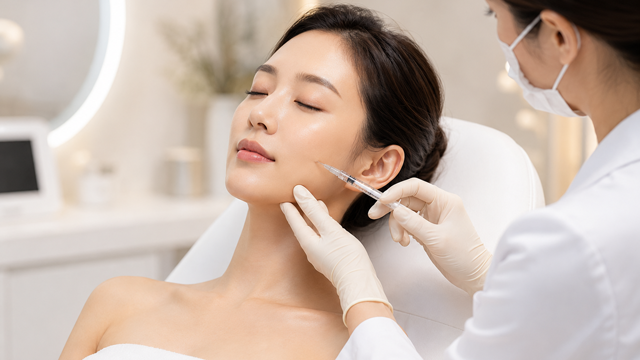
Toxnfill Hongdae Dermatologist: Meet Dr. Chang Ye Ji
Medically reviewed by Dr. Chang Ye Ji, MD, Chief Director, Toxnfill Hongdae The lead dermatologist at Toxnfill Hongdae is Dr. Chang Ye Ji, who serves as the branch's Chief Director
Schedule a ConsultationMedically reviewed by Dr. Chang Ye Ji, MD, Chief Director, Toxnfill Hongdae
The lead dermatologist at Toxnfill Hongdae is Dr. Chang Ye Ji, who serves as the branch's Chief Director. She holds a medical degree from South Korean medical training, completed her internship and dermatology residency at clinical training in Seoul, and has held a clinical academic appointment in that hospital's dermatology department since September 2025. This article sets out what her documented record actually contains, what it establishes, and what it does not — so you can judge it yourself rather than take a marketing phrase on faith.
Who leads Toxnfill Hongdae?
Dr. Chang Ye Ji holds the title of Chief Director, also rendered as Representative Director, at the Hongdae branch. She has led the branch since 2026. Four additional Directors work alongside her at the same location.
Her career before Hongdae ran through the same clinic network. She served as Deputy Director at a clinic in Ilsan, then joined the Toxnfill network's Bupyeong branch as Deputy Director, and led that branch as Chief Director before moving to Hongdae. The pattern is a doctor who has run a branch of this network before, not one appointed to a leadership title on arrival.
You can see the current medical team listed on the clinic's own doctors page.
What is a dermatologist trained to do?
A dermatologist is a physician who specializes in conditions of the skin, hair, and nails. The American Academy of Dermatology describes the field as covering patients of every age and a very wide range of conditions, from common complaints through to skin cancer.
That breadth matters when you are choosing an aesthetic clinic abroad. MedlinePlus, the patient-education service of the U.S. National Library of Medicine, points out that skin is the body's largest organ and functions as a barrier against germs and fluid loss. A doctor trained to manage disease in that organ brings a different frame of reference to a cosmetic consultation than a doctor trained only in cosmetic technique.
In practice, the difference shows up in what a doctor notices that you did not ask about — a mole that warrants a second look, a rash that changes what is safe to inject this week, or a skin barrier that is too compromised for the treatment you came in requesting.
Her education and hospital training
Dr. Chang's documented training path has four stages:
- Medical degree: South Korean medical training, a six-year course completed in 2016.
-Internship: clinical training in Seoul, the year following graduation.
-Dermatology residency: clinical training in Seoul, a multi-year residency in the dermatology department, completed in 2021.
-Fellowship: none was found in the public sources compiled for the clinic's own reference document.
clinical training in Seoul Medical Center runs a network of affiliated Sacred Heart hospitals across Korea, according to the medical center's English-language site. Training in a university hospital dermatology department means exposure to inpatient dermatology, skin pathology, and disease that a purely aesthetic practice never sees.
Counting from the start of her internship, she has been in practice for roughly a decade. Counting from the start of dermatology residency specifically, the figure is closer to nine years.
Her clinical academic appointment
Since September 2025, Dr. Chang has held the position of Clinical Assistant Professor in the Department of Dermatology at clinical training in Seoul.
A clinical academic appointment is a teaching and supervisory role held alongside practice. It is a checkable fact tied to a named institution and a named department, which is the reason it is worth stating at all. Claims like "expert doctors" or "award-winning team" cannot be checked by a prospective patient; a professorship at a specified hospital, in a specified department, from a specified month, can be.
It also means she returned to the hospital where she trained, in the department where she trained, in a teaching capacity.
What she focuses on clinically
The clinic documents Dr. Chang's core areas of practice as:
- Laser dermatology
- Scar treatment
- Hair-loss treatment
- Cosmetic and aesthetic dermatology
- General dermatology
Those five headings are broader than they look, and it is worth knowing what each one covers before a consultation.** Laser dermatologyis the use of light-based devices to target a specific structure in the skin — pigment, blood vessels, hair follicles, or the collagen framework — while leaving surrounding tissue relatively undisturbed. Different wavelengths and pulse durations reach different depths and different targets, which is why "laser" on a menu tells you almost nothing on its own. The clinically relevant question is which device, at what setting, for which structure in your skin. Scar treatmentis a distinct skill from general aesthetic work. Scars differ by type — flat and discolored, depressed, raised, or contracted — and the treatment that suits one type can worsen another. A doctor whose documented focus includes scars has been trained to tell them apart before choosing a device. Hair-loss treatmentsits inside dermatology because hair and nails fall under the same specialty as skin. Hair loss has many causes, some of them systemic, and distinguishing between them is a diagnostic exercise before it is a treatment one. Cosmetic and aesthetic dermatologycovers the injectable and device-based work most international patients come to Seoul for — botulinum toxin, dermal fillers, skin boosters, and non-surgical lifting. General dermatology**is the medical baseline underneath all of it: diagnosing and managing skin disease. It is the part of the training that determines whether a doctor recognizes when a cosmetic request is the wrong answer to what they are actually looking at.
Her stated approach is a personalized one: treatment plans built around each patient's individual skin condition and concerns, aimed at natural-looking improvement rather than a dramatic change. Toxnfill as a network describes its philosophy in similar terms — natural, non-trend-driven results delivered with authentic products and accurate dosing, a practice the brand traces back to its founding in 2012.
Read that as a positioning statement rather than a clinical guarantee. Every clinic describes itself favorably. What makes the description testable is whether the consultation you actually receive matches it: whether you are told what a treatment will not do, whether a smaller dose is proposed than you expected, and whether anything is declined.
Her path through the Toxnfill network
Dr. Chang's posts since leaving hospital training are documented in sequence rather than as a single summary claim, which makes them easier to check:
- Deputy Director at a clinic in Ilsan, a satellite city west of Seoul.
- Deputy Director at the Toxnfill network's Bupyeong branch.
- Chief Director of that same Bupyeong branch.
- Chief Director of Toxnfill Hongdae, from 2026.
Two things are worth drawing out of that list. The first is continuity: she moved up within one network rather than between unrelated employers, and she had already carried a branch's clinical leadership before taking on Hongdae. For a patient, the practical implication is that the branch you are booking is not being run by someone doing the job for the first time.
The second is a caution about how this material was compiled. The dates recorded for her first deputy-director post and the closing years of her dermatology residency overlap, which is not impossible — residents in Korea can take on limited outside clinical work in some circumstances — but it does suggest the timeline was assembled from more than one public source rather than transcribed from a single official record. Treat the sequence as reliable and the exact year boundaries as approximate. If a precise date matters for your own due diligence, request it from the clinic.
What "Chief Director" means at this clinic
At many Korean aesthetic clinics, the senior doctor's title is administrative and the treatments are performed by other staff physicians. At Toxnfill Hongdae there is a specific, documented signal that this is not the case: the clinic's Korean-language booking form distinguishes treatment performed personally by the Representative Director from the branch's standard treatment schedule. No equivalent distinction is made for the other listed Directors.
That distinction is worth understanding before you book. It implies she personally performs procedures rather than only supervising them. It also means that if you want her specifically, you should say so when you make the booking rather than assume it.
The rest of the medical team
Four Directors practice alongside the Chief Director at the Hongdae branch. The clinic's own documentation profiles them as follows:
-Dr. Byun Sung Ho, a graduate of Busan National University School of Medicine, whose documented activity centers on dermal fillers, botulinum toxin, and aesthetic skin treatment.
-Dr. Choi Ji Eun, a graduate of Seoul National University College of Medicine who completed an internship at Seoul National University Hospital, working in aesthetic injectables and aesthetic laser treatment.
-Dr. Shin Hae Ji, a graduate of Dongguk University College of Medicine, listed as practicing as a general practitioner within the team.
-Dr. Cho Yeon Ju, listed as a Director, with a career record the clinic has verified in part: she was at Sanggye Paik Hospital from March 2017 to March 2022, and has been at Toxnfill Hongdae since 2026.
Dr. Cho Yeon Ju's entry is worth a note on how to read it. The clinic has confirmed those two periods and only those two. It has not stated what she was doing between March 2022 and 2026, and this article does not fill that gap or present her employment as continuous, because the clinic has not said that it was. A gap in a published record is not evidence of anything in itself; it means the record is incomplete, which is a different thing from the record being unfavourable. If the precise career history of your treating doctor matters to you, ask the clinic to supply it in writing when you book.
A second point worth carrying into the consultation: completing a dermatology residency and holding specialist board certification are related but not identical, and a clinic profile often describes the first without distinguishing it from the second. If that distinction matters to your decision, ask which applies to the doctor who will treat you, and ask for the answer in writing rather than in conversation.
How to check the clinic's registration yourself
Toxnfill Hongdae states that it is registered as a Medical Institution for Attracting Foreign Patients, certified by Korea's Ministry of Health and Welfare under the Medical Overseas Expansion and Foreign Patients Attraction Act. That is the clinic's own statement, and you do not have to take it on trust.
Medical Korea, the international-patient portal run by the Korea Health Industry Development Institute, explains that the Ministry of Health and Welfare has operated this registration system since 2009, and that mandatory medical malpractice liability insurance for registered institutions was added in 2016. The portal reports several thousand registered medical institutions and roughly two thousand registered agencies as of March 2025.
Medical Korea also publishes a searchable registry of registered institutions, which listed over four thousand entries as of July 2026. Each entry carries a registration ID, an address, the facility type, and international-patient contact details, and the registry can be filtered by facility type and by region. If you want to confirm that a Korean clinic is registered to treat international patients, that registry is where to look — not the clinic's own website.
Under Korea's Medical Overseas Expansion Act, attracting foreign patients without that registration is a criminal offense, and the government operates a reporting channel for unregistered brokers. That is the practical reason the registration matters: it is the line between a clinic operating inside the framework and one operating outside it.
What this record does not tell you
An honest reading of any doctor profile includes its limits.
-Training predicts knowledge, not aesthetic judgment. A dermatology residency establishes that a physician was trained to diagnose and manage skin disease. Whether their sense of proportion in a cosmetic result matches yours is a separate question, and one that photographs and a consultation answer better than a résumé.
-Procedure volume is not published. Nothing in the clinic's public material states how many times any doctor has performed a given treatment. If that number matters to you — and for technique-dependent procedures it reasonably might — ask directly, and ask about the specific procedure rather than about experience in general.
-Society membership is a subscription, not an examination. The clinic lists Dr. Chang as a regular or lifetime member of several Korean professional societies in laser medicine, fillers, and aesthetic treatment. Membership in a professional society generally reflects participation in a field, not an independent assessment of competence. Treat it as context, not as certification.
-A single named doctor is not the whole clinic. You may be seen by a different Director. Confirm who will actually treat you.
None of this argues against the clinic. It argues for asking specific questions, which is what a documented profile makes possible in the first place.
Practical notes for U.S. patients
The Hongdae branch is at 11-12F, Good People Building, 162 Yanghwa-ro, Mapo-gu, Seoul, in the Hongdae area of western Seoul. The clinic operates an English-language website, and its site language selector offers English alongside Korean, Japanese, Chinese, Vietnamese, Thai, and Indonesian.
Seoul runs 13 to 17 hours ahead of the continental United States depending on your time zone and the season. In practice, a mid-to-late afternoon inquiry from the U.S. mainland tends to arrive during the clinic's next working morning, so plan on a one-day turnaround for written replies rather than a same-day exchange. Written inquiries go through the clinic's contact page.
The branch's treatment categories span botulinum toxin, dermal fillers, non-surgical lifting, thread lifting, skin boosters, pigmentation care, acne and pore treatment, general skin care, body treatments, hair removal, and intravenous wellness therapy. Which of those a dermatologist recommends for you is a consultation question, not a website question.
Preparing for a consultation with a dermatologist-led team
A doctor's record is only useful if you use it. If Dr. Chang's documented focus areas are the reason you are considering this branch, a few practical steps make the consultation more productive:
-Bring your skin history, not just your goal. Previous treatments, previous reactions, current prescription and over-the-counter products, and any diagnosed skin condition all change what is appropriate. A dermatologist can only apply general dermatology training to facts you give them.
-Photograph the concern in ordinary light before you travel. Skin looks different under clinic lighting, and pigmentation in particular can read very differently after a long flight.
-Ask what the treatment will not do. A useful consultation includes a stated limit. If everything you propose is confirmed as suitable, that is worth noticing.
-Ask who performs each step. Some parts of a treatment plan may be delivered by different members of the team.
-Ask what happens if something goes wrong after you fly home. Establish the follow-up channel before treatment, not after.
-Confirm the treating doctor by name. Five doctors work at this branch and the booking process does not always specify which one you will see, so this is a reasonable thing to put in writing.
None of these questions is adversarial. A clinic that documents its doctors this specifically has already accepted that patients will check, and a team that welcomes the questions is telling you something useful in itself. Background on the branch and its stated approach is on the clinic's about us page.
The Bottom Line
- Dr. Chang Ye Ji is Chief Director of Toxnfill Hongdae, with a medical degree from South Korean medical training and internship and dermatology residency training completed at clinical training in Seoul.
- She has held a Clinical Assistant Professor appointment in dermatology at clinical training in Seoul since September 2025, and led another branch of the same clinic network before Hongdae.
- Her documented clinical focus is laser dermatology, scar treatment, hair-loss treatment, and cosmetic and general dermatology.
- Specialist board status and procedure volume are not settled in the clinic's own reference material, and one Director's career record is confirmed only in part — confirm those directly if they affect your decision.
- Korea's Ministry of Health and Welfare registration for treating international patients is verifiable in a public government-affiliated registry rather than only on a clinic website.
Frequently Asked Questions
Who is the lead dermatologist at Toxnfill Hongdae?
Dr. Chang Ye Ji, the branch's Chief Director. She completed her medical degree at South Korean medical training and her internship and dermatology residency at clinical training in Seoul. She has led the Hongdae branch since 2026.
Does Dr. Chang Ye Ji perform treatments herself, or only supervise?
The clinic's Korean-language booking form separates treatment performed personally by the Representative Director from the branch's standard schedule, which indicates she treats patients directly. No such distinction appears for the other Directors. If you want her specifically, request it at the time of booking.
What does a Clinical Assistant Professor appointment mean?
It is a teaching and supervisory position held at a university hospital alongside clinical practice. In her case the appointment is in the Department of Dermatology at clinical training in Seoul, dating from September 2025 — the same hospital and department where she trained.
Is Dr. Chang Ye Ji a board-certified dermatologist?
Her documented record shows completion of a dermatology residency at a university hospital. Specialist board certification is a separate step with its own documentation, and this article does not assert it on the strength of a residency record. Ask the clinic directly, and request that documentation, if board certification is a requirement for you.
How many doctors work at the Hongdae branch?
Five in total: Chief Director Dr. Chang Ye Ji and four Directors — Dr. Byun Sung Ho, Dr. Choi Ji Eun, Dr. Shin Hae Ji, and Dr. Cho Yeon Ju. The depth of documented background varies between them, so confirm who will be treating you when you book.
How can I verify that the clinic is registered to treat international patients?
Search the registry of registered institutions published by Medical Korea, the portal operated by the Korea Health Industry Development Institute. Entries include a registration ID, address, facility type, and international-patient contact details, and can be filtered by region and facility type.
What kinds of skin concerns does the clinic's dermatology team handle?
The branch's documented treatment categories include botulinum toxin, dermal fillers, non-surgical lifting, thread lifting, skin boosters, pigmentation, acne and pore treatment, general skin care, body treatments, hair removal, and intravenous wellness therapy. Which of these suits you is determined at consultation.
This article is for general informational purposes and does not constitute individualized medical advice. It is not a self-diagnosis tool. Treatment candidacy, technique, and expected outcomes in dermatology can only be determined through a consultation with a qualified dermatologist who has examined your skin in person.
Clinical Notice: Individual treatment outcomes and recovery timelines may vary depending on skin condition and personal physiology. Temporary redness, mild swelling, or bruising may occur after treatment; a pre-procedure physician consultation is always conducted.
More Articles
Continue reading our clinical guides.
Toxnfill Hongdae Dermatologist: Meet Dr. Chang Ye Ji
Medically reviewed by Dr. Chang Ye Ji, MD, Chief Director, Toxnfill Hongdae The lead dermatologist at Toxnfill Hongdae is Dr. Chang Ye Ji, who serves as the branch's Chief Director
Learn More
Korean Dermatology Residency Training: How Doctors Qualify
Medically reviewed by Dr. Chang Ye Ji, MD, Chief Director, Toxnfill Hongdae Korean dermatology residency training follows a sequence that will look broadly familiar to an American
Learn More
In-Person Consultation at a Korean Dermatology Clinic
Medically reviewed by Dr. Chang Ye Ji, MD, Chief Director, Toxnfill Hongdae An in person consultation at a Korea dermatology clinic is a working appointment with a defined shape: h
Learn More