Personalized Medical Care & Dedicated International Patient Concierge


Medical Guide
Skin Lifting Treatment for Your 40s and 50s in Korea
Skin Lifting Treatment for Your 40s and 50s in Korea: A Candidacy Map Medically reviewed by Dr. Chang Ye Ji, MD, Chief Director, Toxnfill Hongdae If you are researching skin liftin
Schedule a ConsultationSkin Lifting Treatment for Your 40s and 50s in Korea: A Candidacy Map
Medically reviewed by Dr. Chang Ye Ji, MD, Chief Director, Toxnfill Hongdae
If you are researching skin lifting treatment for your 40s and 50s in Korea, the question that decides your outcome is not which device has the loudest reputation. It is how far your own laxity has actually progressed. Non-surgical lifting for aging skin in Korea is organized around degrees of sagging — there is a band it addresses well, a band where it needs help from something else, and a point past which it is the wrong instrument entirely. What follows maps the lifting categories at Toxnfill Hongdae onto that scale, and explains how a clinician places you on it.
Why Degree of Laxity Decides Candidacy, and Age Does Not
Candidacy for these treatments is written around what your skin is doing, not around the number of birthdays behind it. Two people the same age can present very differently: one has skin that has gone slack across the cheek but stayed in position, the other has a lower face that has visibly descended. Those are separate problems, and they do not respond to the same category of treatment.
The lifting range at Toxnfill Hongdae is aimed at adults sitting in the mild-to-moderate laxity band — reduced elasticity, softening firmness, fine wrinkles — who want a result without an operation. Your 40s and 50s are typically the decade when people cross from the early part of that band toward its far end, and where you sit inside it changes the answer.
There is also an upper limit, stated plainly rather than implied. Sagging severe enough to require surgical intervention falls outside what focused ultrasound lifting is intended to treat. Toxnfill Hongdae is a dermatology practice and its lifting programs are non-surgical, so the candidacy map has a boundary drawn on it.
Three Separate Things Are Changing, and Only One of Them Is "Skin"
The word "sagging" hides at least three distinct processes, and separating them is the most useful thing you can do before a consultation. Public reference material from the US National Library of Medicine makes the separation cleanly.
The skin's own tensile quality
MedlinePlus, the National Library of Medicine's consumer health service, describes each layer of skin as containing connective tissue with collagen fibers for support and elastin fibers for flexibility and strength. Its encyclopedia entry on aging changes in skin explains that changes in that connective tissue reduce the skin's strength and elasticity — a change called elastosis, more pronounced in sun-exposed areas — and that the epidermis becomes thinner with age even though the number of cell layers stays the same.
This is the deficit energy-based tightening is aimed at. Nothing about it involves tissue moving downward; it is a loss of quality in the fabric itself.
The support structure underneath
MedlinePlus treats facial aging as a separate subject, and its entry on aging changes in the face attributes the drooping appearance to loss of muscle tone together with thinning skin. It adds that sagging jowls can create the look of a double chin in some people, that the underlying layer of fat shrinks so the face no longer has a plump, smooth surface, and that loss of bone mass in the jaw reduces the size of the lower face.
This is a structural deficit, not a surface one. Firming the dermis will not reposition tissue that has descended, and repositioning tissue will not restore volume that has gone.
The skin's condition and healing capacity
The same encyclopedia entry records that sebaceous glands produce less oil with age, and that in women the decline is gradual and begins after menopause, which makes skin harder to keep moist. It also reports that dermal blood vessels become more fragile, which leads to bruising and to bleeding under the skin, and that aging skin repairs itself more slowly — wound healing may be up to four times slower than in younger skin.
None of those three facts changes which treatment suits you. All three change how you prepare for one and what you do afterward, which is why they reappear below. The MedlinePlus health topic page on skin aging gives the summary version: skin becomes thinner and loses fat, making it less plump and smooth, and it may take longer to heal. It names sunlight as a major cause, and notes that wrinkling from cigarette smoking increases with both the number of cigarettes and the number of years smoked.
Sorting Your Own Complaint Before You Read Any Device Name
Put a photograph of yourself from five or ten years ago beside a mirror, then decide which statement is closest to true:
- My skin feels slack and my fine lines have deepened, but my features are where they were. Your complaint is dermal quality.
-My jawline has lost its edge and my cheeks look like they have slid forward and down. Your complaint is descent of deeper tissue.
-My face looks flatter and more hollow, and the folds are deeper because of it. Your complaint includes volume loss.
-My lower face and under-chin feel heavier and fuller than they used to. Your complaint pairs laxity with unwanted fullness.
-The change is dramatic and my skin hangs loose. Your complaint may sit beyond the non-surgical range and needs an in-person opinion first.
Most people in these two decades recognize two of those at once, which is why a single-device answer so often disappoints.
The Lifting Categories at Toxnfill Hongdae, Mapped to What They Are For
Here is the documented candidacy for each program, expressed as who it is intended for rather than as a technical description:
-Ultherapy Prime Lifting— for people concerned about overall loss of elasticity or sagging who want a stronger, longer-lasting lifting effect. It is the option positioned at the deeper end of the range, focusing ultrasound energy on deeper tissue layers including the SMAS, the sheet of fibrous muscle fascia beneath the facial fat.
-Thermage FLX Skin Tightening— for people who want firmer, younger-looking skin, improvement of fine or deeper wrinkles, or tightening of sagging skin related to aging or ultraviolet exposure. Note that ultraviolet exposure appears in its candidacy description, which lines up with the elastosis pattern described above.
-Sofwave Skin Tightening— for individuals with mild-to-moderate laxity, visible fine lines, sagging jawlines, or neck crepiness who want lifting without surgery or a long healing period.
-Alltite Lifting— for skin that has gone loose, for fine lines and lost elasticity, for facial-line concerns, for enlarged pores and uneven texture, and specifically for anyone who wants lifting without facial-fat loss.
-Shurink HIFU Lifting— for firmer facial skin, for contours that sagging has made uneven, and for narrow or curved areas that need a plan built around them.
-ONDA Lifting— recommended for individuals who want a slimmer jawline, reduced double-chin fat, tighter skin, better elasticity and collagen remodeling. It is the entry on this list that addresses skin firmness and unwanted fat together.
-MINT Thread Lift— considered for adults concerned about mild-to-moderate facial laxity, with suitability confirmed at consultation. Threads with a 360-degree three-dimensional barb design lift and support sagging facial tissue mechanically.
-DIA Lifting — recommended for people who want a slimmer facial line, and for those concerned about sagging cheeks, nasolabial folds, marionette lines or a double chin, or who want improved skin volume and elasticity.
Read that list against your own sentence from the previous section and the shape of the map appears. Dermal-quality complaints have several candidates. Descent has fewer. The "laxity plus fullness" complaint points at one entry in particular, and the fourth bullet deserves a second look if your face has begun to flatten.
The point where "wanting volume" changes the answer
If your photograph comparison showed hollowing rather than slackness, tightening is the wrong lever to pull first. MedlinePlus attributes part of the aged facial appearance to the shrinking of the underlying fat layer, and heat does not put that back. This is where the two entries that mention volume — Alltite's fat-preserving framing and DIA Lifting's inclusion of skin volume — become relevant, and where a clinician may raise a different treatment family altogether.
What the FDA Record Shows for the Ultrasound Platform
Because "FDA" gets used loosely in aesthetic marketing everywhere, read the primary record for yourself. The FDA's 510(k) premarket notification database is public and searchable, and it holds a record for the ULTHERA SYSTEM under the number K134032. That record shows the following:
- The applicant is Ulthera, Inc., of Mesa, Arizona.
- The device classification name is "Focused Ultrasound For Tissue Heat Or Mechanical Cellular Disruption."
- The regulation number is 878.4590, and the reviewing panel is General and Plastic Surgery.
- The submission was received on December 31, 2013.
- The decision date is June 20, 2014, and the decision is recorded as Substantially Equivalent.
- The submission type is Traditional, it was not reviewed by a third party, and a clinical trial identifier is attached to the entry.
"Substantially Equivalent" is the outcome of a 510(k) clearance: the manufacturer demonstrated that its device is substantially equivalent to a legally marketed predecessor device. Looking that up yourself is a habit worth keeping — a database record is checkable in a minute, and an advertisement is not.
Where Non-Surgical Lifting Stops
Three limits are stated explicitly, and all three matter more in these two decades than in your 30s.
- Skin laxity severe enough to need surgical intervention is listed among the situations in which focused ultrasound lifting is not suitable.
- Thread lifting is not for people whose degree of change requires surgical intervention.
- Expectations matter as a screening criterion in their own right: DIA Lifting lists unrealistic expectations about what non-surgical skin tightening can achieve among the reasons a person is not suitable.
That third point is a candidacy criterion rather than a disclaimer, and it works in your favor. If you arrive expecting a surgical result from a non-surgical treatment, the right response is a conversation, not a booking.
The medical exclusions are consistent across the energy-based programs:
- Active skin infection or open wounds in the area to be treated.
- Implanted metal or electronic medical devices in or near the treatment area, including pacemakers.
- Pregnancy, and for some of these treatments breastfeeding as well.
- Severe inflammatory or cystic acne in the treatment zone.
For the thread-based programs, add severe bleeding disorders and uncontrolled autoimmune conditions.
Why Thread Candidacy Is Judged on Different Grounds
Energy-based candidacy asks how much dermal quality you have lost and how deep the target layer sits. Thread candidacy asks a mechanical question instead: is there tissue to reposition, and will it hold?
That is why the assessment for DIA Lifting evaluates facial structure, skin laxity and tissue thickness to decide the treatment areas and how many threads a result would need. Identical laxity can call for very different thread counts, because facial architecture differs.
Age enters here through the healing side rather than the eligibility side. The National Library of Medicine's account of aging skin notes more fragile dermal blood vessels and slower repair, and thread procedures involve entry points and cannula passes through tissue. That is the practical reason the guidance beforehand centers on avoiding blood-thinning supplements, alcohol and anti-inflammatory medications, as directed by the clinician who will treat you.
How the Assessment Actually Runs
The decision is made by measurement rather than by preference, and each program has its own assessment step:
- Treatment is customized to your concern and to the treatment area, with the device and cartridge selected for the skin depth and region being addressed.
- The focused ultrasound program reads depth and structure live on screen before energy is delivered, with the upgraded platform seeing down to 8 mm.
- For the microwave-based program, skin thickness and elasticity are evaluated clinically, followed by design mapping tailored to your facial contours.
- Where fat distribution is part of the concern, target areas, skin thickness and the fat layer are assessed to select the appropriate handpiece penetration depth.
- Energy delivery is customized to your skin thickness and structure rather than run to a fixed setting.
No website can do this part for you, which is why the map here ends at "which category," not "which device." To have the measurement done on your own face, ask for a laxity assessment in writing before committing to travel dates.
The Session Clock, and What Comfort Management Involves
For the ultrasound and radiofrequency lifting programs, the clock runs in two parts. Topical ointment anesthesia is applied for approximately 20 to 30 minutes, and the treatment itself then takes approximately 20 to 30 minutes. Immediate return to daily life follows.
Comfort management sits in the equipment as well as the numbing. The radiofrequency platform uses vibration and cooling functions to protect the skin, and the microwave-based program pairs anesthetic cream with integrated contact cooling. For some thermal treatments numbing is optional, applied when a patient is more sensitive to heat.
Two consequences follow. Budget the numbing time, since an appointment runs longer than the treatment time suggests. And treat "immediate return to daily activity" as distinct from "no restrictions," the subject of the next section.
Aftercare, and Why It Reads Differently at This Age
The aftercare rules for energy-based lifting are short, and in your 40s and 50s two of them do more work than they did a decade earlier:
- Heat is out: no sauna sessions and no hot baths.
- Alcohol in quantity is out.
- Exercise stays light; nothing strenuous.
- Scrub products and peeling treatments wait their turn.
- Moisturizer, or a regenerating cream, goes on daily.
- Sunscreen goes on daily too.
- Where focused ultrasound was used, keep washing water lukewarm for the first three days, so the heat that was delivered is not drawn straight back out.
The first four items hold for about a week. Washing your face and wearing makeup are fine straight after the appointment.
Now put that beside the aging-skin facts from earlier. The moisturizer line matters more than it looks, because sebaceous glands produce less oil with age and, in women, that decline begins gradually after menopause. Skin that was self-sufficient at 30 often is not at 50. Skipping peels and scrubs matters more too: the epidermis is thinner and repair is slower, so aggressive exfoliation stacked on a heat treatment asks a lot. Sunscreen has the broadest justification, since sun exposure is named as the single greatest factor in visible skin aging and elastosis is more pronounced in sun-exposed skin.
The American Academy of Dermatology's guidance on skin care in your 40s and 50s makes the same point from the prevention side. It calls sun protection the foundation of any anti-aging plan, uses the term "photoaging" for premature aging caused by ultraviolet rays, and lists loss of skin firmness among the features of what it calls smoker's face. Habits of that kind are not a substitute for treatment, and treatment is not a substitute for them.
Maintenance Rhythm: What There Is to Plan For
Lifting results are maintained rather than permanent, and the intervals differ by category. Planning around them is easier than being surprised by them:
- After the focused ultrasound treatment, maximum effect may be seen one to two months later, with lifting effects lasting approximately 6 to 12 months; a repeat treatment is recommended on that same 6-to-12-month interval, timed to the individual.
- After the radiofrequency treatment, collagen remodeling progresses gradually over approximately one to two months, with a maintenance period of approximately 6 to 12 months and repeat treatment generally recommended yearly.
- For the microwave-based treatments, initial firming is visible immediately, while peak collagen restructuring occurs over one to three months.
- For the thread-based programs, the mechanical lift is visible on the day, with results lasting roughly 10 to 18 months, or approximately a year or more for the compression-molded thread program.
Because the underlying changes continue between appointments, the useful frame for this decade is a rhythm rather than a single event. Where two approaches share similar treatment principles they may run in one session — Ulthera and Shurink are described as combinable on that basis — but the sequence is a clinical decision.
Making the Decision on Your Own Face
The most efficient consultation is one where you arrive with a described complaint rather than a device name. Say which of the five statements fits you, bring the old photograph, and name the areas that bother you most. The assessment can then do its job: measure what is there, and recommend the category that matches it.
Background on the practice behind these lifting programs sits on the clinic's own account of who performs these treatments, and inquiries about an assessment go through the same booking channel.
The Bottom Line
- Degree of laxity, not age, is what candidacy for these treatments is written around — and the documented target band is mild-to-moderate laxity with reduced elasticity or fine wrinkles.
- "Sagging" hides three separate changes: loss of dermal strength and elasticity, descent and thinning of the support underneath, and volume loss from a shrinking fat layer. Each needs a different category of answer.
- There is a stated upper limit. Laxity severe enough to require surgical intervention, and expectations of a surgical result from a non-surgical treatment, are both listed as reasons a person is not suitable.
- The FDA's 510(k) record for the ULTHERA SYSTEM, K134032, shows a Substantially Equivalent decision dated June 20, 2014 under regulation 878.4590 — a record you can look up yourself in a minute.
- Aftercare and preparation carry more weight in this decade, because skin is thinner and drier, dermal vessels are more fragile, and wound healing may be up to four times slower than in younger skin.
Frequently Asked Questions
Does my age decide which lifting treatment I should have?
Candidacy is set by how far your laxity has progressed and which tissue layer your concern sits in. Two people the same age can need different categories. The assessment measures skin thickness, elasticity and structure to make that call.
I have mild-to-moderate laxity with fine lines. Which category is that band written for?
That is the band the clinic's lifting range is aimed at, and several programs list it. Sofwave is described for mild-to-moderate laxity with visible fine lines, sagging jawlines or neck crepiness. Thermage FLX is described for people wanting firmer skin and improvement of fine or deeper wrinkles, including sagging related to ultraviolet exposure. Which fits depends on the depth your concern occupies.
My complaint is a heavier lower face with a fuller under-chin. Is that the same problem as slack skin?
No, and it is worth separating. ONDA Lifting is recommended for people who want a slimmer jawline, reduced double-chin fat, tighter skin and improved elasticity, and it is the program described as addressing skin firmness and unwanted fat together. Naming the fullness explicitly at consultation changes which category is considered.
Can I tighten my skin without losing facial fullness?
Yes, and it is a documented candidacy criterion rather than a side note. Alltite Lifting is recommended for loose or aging skin, fine lines, reduced elasticity and uneven texture, and specifically for people who want lifting without facial-fat loss. That framing matters more with age, because the underlying fat layer thins over time.
How long does a lifting appointment actually take?
For the ultrasound and radiofrequency programs, topical ointment anesthesia is applied for approximately 20 to 30 minutes, and the treatment itself takes approximately 20 to 30 minutes. Immediate return to daily life follows the appointment. Budget for both halves of the clock when planning the day around it.
What should I avoid in the week after an energy-based lifting treatment?
Four things pause for roughly a week: sauna and hot-bath heat, alcohol in quantity, scrub or peeling products, and strenuous exercise. Two things start: daily moisturizer or regenerating cream, and daily sunscreen. Where focused ultrasound was used, keep your washing water lukewarm for the first three days.
How soon will I see the result, and how often would I repeat it?
After the focused ultrasound treatment, maximum effect may appear one to two months later, and lifting lasts approximately 6 to 12 months, which is also the window in which a repeat is recommended, timed to the individual. The radiofrequency program remodels collagen over approximately one to two months, with a maintenance period of approximately 6 to 12 months and repeat treatment generally recommended yearly.
Who is not a candidate for these treatments?
Active skin infection or open wounds in the treatment area, implanted metal or electronic medical devices near it including pacemakers, severe inflammatory or cystic acne in the zone, and pregnancy all rule a person out or require postponement. The thread-based programs add severe bleeding disorders and uncontrolled autoimmune conditions. Laxity needing surgical intervention sits outside the non-surgical range.
This article is for general informational purposes and does not constitute individualized medical advice, and it is not a self-diagnosis tool. Treatment candidacy, technique, and expected outcomes can only be determined through a consultation with a qualified dermatologist.
Clinical Notice: Individual treatment outcomes and recovery timelines may vary depending on skin condition and personal physiology. Temporary redness, mild swelling, or bruising may occur after treatment; a pre-procedure physician consultation is always conducted.
More Articles
Continue reading our clinical guides.
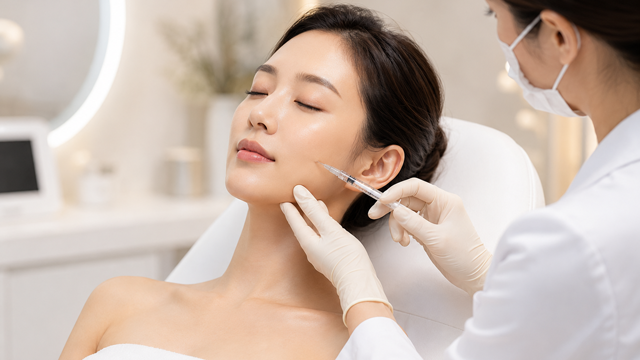
Toxnfill Hongdae Dermatologist: Meet Dr. Chang Ye Ji
Medically reviewed by Dr. Chang Ye Ji, MD, Chief Director, Toxnfill Hongdae The lead dermatologist at Toxnfill Hongdae is Dr. Chang Ye Ji, who serves as the branch's Chief Director
Learn More
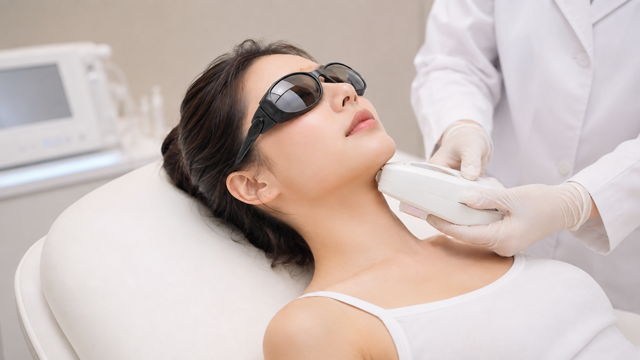
Korean Dermatology Residency Training: How Doctors Qualify
Medically reviewed by Dr. Chang Ye Ji, MD, Chief Director, Toxnfill Hongdae Korean dermatology residency training follows a sequence that will look broadly familiar to an American
Learn More
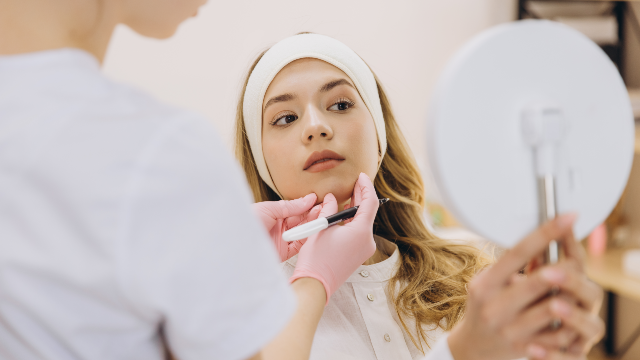
In-Person Consultation at a Korean Dermatology Clinic
Medically reviewed by Dr. Chang Ye Ji, MD, Chief Director, Toxnfill Hongdae An in person consultation at a Korea dermatology clinic is a working appointment with a defined shape: h
Learn More