Personalized Medical Care & Dedicated International Patient Concierge

Medical Guide
Skin Boosters vs Chemical Peels: Why Depth Decides
Medically reviewed by Dr. Choi Ji Eun, MD, Director, Toxnfill Hongdae The difference between a skin booster and a chemical peel is a difference of depth, and once you see that, mos
Schedule a ConsultationMedically reviewed by Dr. Choi Ji Eun, MD, Director, Toxnfill Hongdae
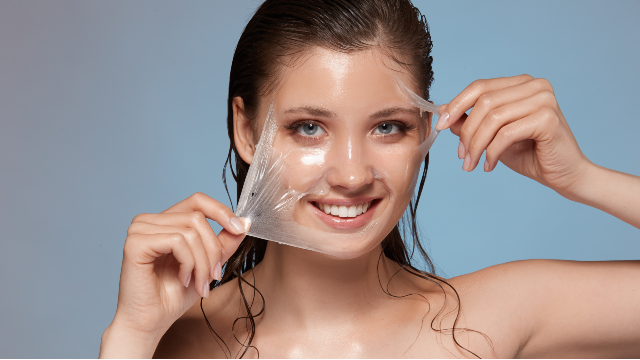
The difference between a skin booster and a chemical peel is a difference of depth, and once you see that, most of the confusion around them dissolves. A peel works on the outermost layer, loosening and removing cells that are already on their way out. A skin booster is injected past that layer into the living tissue beneath, where the collagen and hyaluronic acid that give skin its resilience actually sit. Toxnfill Hongdae's own comparison makes the same distinction, contrasting boosters aimed at deeper nourishment with peels focused on epidermal exfoliation and surface texture.
The Two Layers, and Why the Boundary Matters
Skin is built in layers with genuinely different properties, and the boundary between the top two explains almost everything here.
Reference anatomy published through the National Library of Medicine's Bookshelf describes the epidermis in strata, from the basal layer at the bottom through spinosum, granulosum, lucidum where present, to the corneum at the surface. The counts are specific: eight to ten cell layers in the spinosum, three to five in the granulosum, two to three in the lucidum on palms and soles only, and twenty to thirty in the corneum. Below sits the dermis, split into a thinner, looser papillary layer against the epidermis and a deeper reticular layer of dense collagen bundles, the two merging with no sharp line between them.
One property of the epidermis is decisive: it is avascular. It has no blood vessels of its own and is fed from a network beneath it. A layer with no circulation is a layer that behaves like a barrier, and that is exactly what topical treatments have to contend with and what an injection bypasses.
The dermis is where the material worth improving actually lives. The same reference describes the dermal extracellular matrix as a fibrous component of collagen and elastic fibers set in a ground substance of glycosaminoglycans — notably hyaluronic acid — along with proteoglycans and glycoproteins, with collagen types I and III the abundant ones. Fibroblasts are the principal cells there, and they manufacture the collagen, the elastic fibers and the matrix itself. Any treatment aiming to change skin quality durably is ultimately trying to influence those cells.
For scale, published measurements put the stratum corneum at roughly 10 to 20 micrometers thick and the dermis at roughly one to two millimeters — a difference of about a hundredfold. A 2025 ultrasound study in the Journal of Clinical Medicine, measuring 38 facial sites across 45 women with a 75 megahertz probe, found facial skin thickness varying from a median of about 1907 micrometers at the tip of the nose down to about 573 micrometers on the upper eyelid, with anatomical location explaining most of the variation. That paper states explicitly that most aesthetic interventions target the dermis or the junction between dermis and the tissue below.
What a Peel Reaches
Peels are classified by how deep the injury goes, and reference material on chemical peels for skin resurfacing sets out the three tiers: light peels confined within the epidermis, medium peels reaching from the epidermis through the papillary dermis into the upper reticular dermis, and deep peels producing necrosis into the mid-reticular dermis.
The agents map onto those tiers. Very light and light peels use lower-concentration trichloroacetic acid, Jessner's solution or glycolic acid in the 30 to 50 percent range; medium peels combine trichloroacetic acid at 35 percent with Jessner's or with glycolic acid at 70 percent; deep peels use trichloroacetic acid above 50 percent or phenol-based formulas. Jessner's solution itself is described as 14 percent each of resorcinol, salicylic acid and lactic acid in ethanol.
Priming matters more than most patients realize. The same reference notes that two to four weeks of a retinoid beforehand thins the stratum corneum and thereby increases how deeply the peel penetrates — meaning your home routine changes what the treatment does.
The same reference lists what light and medium peels are used for — acne, melasma, post-inflammatory pigmentation, lentigines, enlarged pores, fine wrinkles, rosacea, acne scarring and photodamage — and flags caution in deeper skin tones because of the risk of pigment change afterward. It also records contraindications that patients do not always volunteer, including current isotretinoin use, pregnancy, active infection, a tendency to keloid scarring, and smoking.
Toxnfill Hongdae's peel menu sits firmly in the light tier. Its Aqua Peel is described for low-irritation pore cleansing, removing waste, excess sebum and dead cells. Its Pla Peel is a platinum-and-polyhydroxy formulation described for dull, rough or sensitive skin. Its Pink Peel is described for dullness, moisture and texture refinement. The category is described as carrying no downtime at all, with makeup fine the same day; a session runs somewhere between half an hour and an hour, and upkeep is put at two-to-four-week intervals.
What an Injectable Booster Reaches
An injection does not negotiate with the barrier; it goes through it. That is the whole proposition.
A 2024 review in Cosmetics on injectable hyaluronic acid for skin rejuvenation sets out a clean taxonomy: a partially crosslinked hyaluronic acid gel is a dermal filler, while an uncrosslinked hyaluronic acid solution is a skin booster, sometimes called an injectable moisturizer. It specifies skin boosters as uncrosslinked high molecular weight hyaluronic acid in the range of 200,000 to 1,500,000 daltons at concentrations around 20 to 25 milligrams per milliliter, forming a viscous liquid with no volumizing or contouring effect.
The decisive fact for this comparison also comes from that review. Analysis using Raman spectroscopy showed that only low molecular weight hyaluronic acid, roughly 20,000 to 300,000 daltons, crosses the stratum corneum, while high molecular weight material in the 1,000,000 to 1,400,000 dalton range stays on the surface. A topical product containing the same molecule your skin already uses largely cannot get in. Injection deposits it in the dermis regardless of molecular weight.
The review also explains the biology that follows. Injected hyaluronic acid exerts mechanical force within the extracellular matrix, stretching fibroblasts and raising collagen gene expression, and a receptor on fibroblasts binds hyaluronic acid and signals collagen synthesis. It notes that enzymatic fragmentation of the material into smaller pieces is itself part of what drives dermal collagen production, beginning a couple of weeks after injection.
There is direct histological evidence that this happens. A 2025 case series in Cosmetics biopsied four women aged 35 to 60 after injecting a cohesive hyaluronic acid at 20 milligrams per milliliter into marked quadrants of the inner arm, 0.2 milliliters per quadrant. Trichrome staining showed dermal thickening across both papillary and reticular layers in every patient at three months, maintained at six. The ratio of collagen I to collagen III rose modestly, and ultrasound at twelve months confirmed greater epidermal and dermal thickness in treated skin compared with adjacent untreated skin. The paper also notes that collagen content declines by roughly one percent a year through adulthood.
Clinical outcome data exists as well. A 2026 study in Clinical, Cosmetic and Investigational Dermatology treated 34 patients with a mean age of 53 using non-crosslinked hyaluronic acid in the area around the eyes via an intradermal papule technique. Corneometer-measured hydration rose by about 3 percent, improving in 71 percent of patients; dynamic crow's feet scores fell about 6 percent; dark circles under the eyes improved in half; and 74 percent of patients and 68 percent of evaluators rated the result improved or much improved. The only adverse event reported was mild bruising.
Toxnfill Hongdae's booster range reflects the same category logic. Its SKINVIVE is described as modified hyaluronic acid that increases moisture in the dermal layer to refine surface smoothness and soften fine lines without adding facial volume — a description that captures the booster-versus-filler distinction exactly. Its Adite booster is described as a solution of hyaluronic acid, peptides or amino acids injected into the superficial dermis. Its Rejuhigh combines polynucleotide with hyaluronic acid delivered by micro-injection into the dermis.
Turnover Explains Why Peels Need Repeating
If a peel removes surface cells, how long before the surface is the same again? Measured, not guessed.
A study of epidermal turnover published in Cosmetics reports stratum corneum transit taking around 20 days in young adults and lengthening by more than ten days in older adults. Measured epidermal turnover time in six men averaging 37 years old came out at about 36 days, consistent with an older isotope-based figure of 39 days. A different measurement method gave forearm stratum corneum turnover at about 14 days. Turnover is faster on environmentally exposed areas such as the face than on covered skin.
Set that against the clinic's stated maintenance interval of every two to four weeks for its peel category, and the arithmetic makes sense: the treatment is working with a surface that renews itself on roughly that timescale. It also explains why peels are described as a continuous periodic regimen rather than a one-time fix.
Dermal remodeling runs on a completely different clock. The biopsy series above found collagen changes at three months and maintained at six, and the clinic's own note for its Juvelook booster describes duration of twelve months or more after three sessions given at four-week intervals. Weeks against months is not a small difference in planning.
Setting Them Side by Side
- Depth of action: peels act within the epidermis at the light tier used here; boosters are placed in the dermis.
-Route past the barrier: a peel works with the barrier by loosening it; a booster bypasses it with a needle.
-What it changes: a peel removes cells that are already dying; a booster acts on fibroblasts that are alive and manufacturing.
-Timescale: surface renewal in a few weeks against dermal remodeling over months.
-Immediate feel: the clinic describes immediate glow and smoothness after peels; booster results develop progressively.
-Downtime: peels here are described with zero downtime and same-day makeup; boosters can leave temporary redness, swelling, tenderness, bruising or small bumps.
-What neither does: neither adds facial volume or contour, which is a separate category with separate products.
Choosing by Concern
-Clogged pores, blackheads, excess sebum, surface roughness. The clinic positions its peel category here.
-Dryness, loss of elasticity, fine lines, overall skin quality. The clinic's booster category is described for exactly these.
-Skin that looks dull but feels fine. Often a surface problem, which points to the peel side first.
-Skin that is well exfoliated but still lacks bounce. A dermal question, which points to boosters.
-Both at once. Common, and there is no conflict between them; the clinic lists peels as frequently combined with lasers, injectables and boosters, and says any booster pairing has to be built around your particular concerns, whether the treatments are compatible, and what a medical assessment finds.
-Open facial wounds, severe active infection, sunburn or known sensitivity to exfoliating acids. The clinic names these as reasons not to proceed with peels; booster suitability similarly turns on medical history, skin condition, allergies, medications and pregnancy status.
Preparation, Aftercare and Realistic Expectations
The two categories ask different things of you afterward, in line with what they did.
For peels, the clinic's instruction beforehand is to drop harsh physical scrubs, retinoid products and unprotected sun for the few days leading up to the session. Afterward it asks for frequent moisturizing, disciplined daily sun protection at SPF 50 or above, and for any flaking to be left alone rather than picked. What it lists as expected afterward is short-lived: a little redness, some flaking, a feeling of tightness, and dryness that passes. Reference material on peels notes desquamation over several days, redness subsiding over one to two weeks, peeling at five to ten days and makeup at one to two weeks for stronger treatments, and flags caution in deeper skin tones because of the risk of pigment change.
For boosters, the clinic asks that you disclose medications, allergies, previous cosmetic treatments and relevant medical conditions at consultation, and afterward follow the individual instructions for the specific product and avoid unnecessary irritation of treated skin. Recovery is generally short, though temporary swelling, redness or bruising can occur.
On expectations, the numbers above are worth holding onto. The measured hydration improvement in the periorbital study was about 3 percent, yet three-quarters of patients rated themselves improved. Small measurable changes in skin quality can be perceptible and worthwhile, and that is a more honest frame than either dismissal or hype.
How the Decision Gets Made
Toxnfill Hongdae describes its peel assessment as a digital skin analysis establishing skin type, moisture and specific concerns before treatments are selected, and its booster assessment as reviewing medical history, skin condition, allergies, medications and pregnancy status alongside product-specific contraindications. Neither is a menu choice.
To arrange an assessment, enquiries reach the clinic on its contact page, and there is background on the practice at its about page.
The Bottom Line
- The distinction is anatomical: light peels act within the epidermis, and skin boosters are placed in the dermis where fibroblasts, collagen and hyaluronic acid actually are.
- The epidermis has no blood supply and behaves as a barrier, and Raman analysis shows that high molecular weight hyaluronic acid applied topically stays on the surface while injection places it past that barrier.
- A skin booster is uncrosslinked hyaluronic acid at around 20 to 25 milligrams per milliliter with no volumizing effect; a partially crosslinked gel is a filler, which is a different product for a different job.
- Epidermal turnover is measured at roughly 36 days, which is why peels are maintained every two to four weeks, while dermal changes in biopsy series appear at three months and hold at six.
- They are complementary rather than competing, and the sensible question is which concern comes first rather than which treatment is better.
Frequently Asked Questions
Why can't a topical hyaluronic acid product do what an injection does?
Because most of it cannot get in. The 2024 Cosmetics review reports that Raman spectroscopy found only low molecular weight hyaluronic acid, roughly 20,000 to 300,000 daltons, crossing the stratum corneum, while high molecular weight material in the 1,000,000 to 1,400,000 dalton range remained on the surface. Injection deposits the material in the dermis regardless of molecular weight, which is the entire point of the delivery route.
Is a skin booster the same as a filler?
No, and the same review draws the line cleanly. A partially crosslinked hyaluronic acid gel is a dermal filler, intended to add volume and contour. An uncrosslinked hyaluronic acid solution is a skin booster, described as around 20 to 25 milligrams per milliliter with no volumizing or contouring effect. Toxnfill Hongdae's description of its SKINVIVE booster reflects exactly this, as increasing moisture in the dermal layer without adding facial volume.
How deep do the peels at this clinic actually go?
They sit in the light tier, which reference material on chemical peels defines as injury confined within the epidermis. That matches the clinic's own description of zero downtime with makeup possible the same day and side effects limited to temporary mild redness, minor flaking, slight tightness or transient dryness. Medium peels reach the papillary and upper reticular dermis, and deep peels the mid-reticular dermis, which is a different proposition entirely.
Why do peels need repeating every few weeks?
Because the surface renews itself on that timescale. Measured epidermal turnover in one study averaged about 36 days, close to an older isotope-based figure of 39 days, with stratum corneum transit around 20 days in young adults and longer in older ones. The clinic's stated maintenance interval of every two to four weeks tracks that renewal cycle, which is why it describes the category as a continuous periodic regimen.
Is there real evidence that injected hyaluronic acid changes the dermis?
There is histological evidence. A 2025 case series in Cosmetics biopsied four women after injecting cohesive hyaluronic acid into marked quadrants of the inner arm and found dermal thickening in both the papillary and reticular layers in every patient at three months, maintained at six, with ultrasound at twelve months confirming greater epidermal and dermal thickness in treated skin than in adjacent untreated skin. Four patients is a small series, so read it as a demonstration rather than a population estimate.
Can I have both, and in what order?
Both categories are used together routinely, and the clinic lists peels as frequently combined with laser toning, injectables and skin boosters. It also holds that any booster pairing has to be shaped around what specifically concerns you, whether the two treatments sit well together, and what an examination finds. The sequencing is a clinical decision, partly because peel preparation and aftercare affect how the skin responds to anything else in the same period.
What kind of improvement is realistic?
Measured changes tend to be modest and still perceptible. In the 2026 periorbital study, corneometer hydration rose about 3 percent and improved in 71 percent of patients, dynamic crow's feet scores fell about 6 percent, and yet 74 percent of patients rated themselves improved or much improved. That gap between the instrument and the mirror is normal, and it is a better guide to expectations than either extreme.
This article is for general informational purposes, does not constitute individualized medical advice, and is not a self-diagnosis tool. Formulations, protocols and published evidence change over time. Only a qualified dermatologist or physician who has examined your skin in person can determine which category of treatment suits your concerns.
Clinical Notice: Individual treatment outcomes and recovery timelines may vary depending on skin condition and personal physiology. Temporary redness, mild swelling, or bruising may occur after treatment; a pre-procedure physician consultation is always conducted.
More Articles
Continue reading our clinical guides.
Toxnfill Hongdae Dermatologist: Meet Dr. Chang Ye Ji
Medically reviewed by Dr. Chang Ye Ji, MD, Chief Director, Toxnfill Hongdae The lead dermatologist at Toxnfill Hongdae is Dr. Chang Ye Ji, who serves as the branch's Chief Director
Learn More

Korean Dermatology Residency Training: How Doctors Qualify
Medically reviewed by Dr. Chang Ye Ji, MD, Chief Director, Toxnfill Hongdae Korean dermatology residency training follows a sequence that will look broadly familiar to an American
Learn More
In-Person Consultation at a Korean Dermatology Clinic
Medically reviewed by Dr. Chang Ye Ji, MD, Chief Director, Toxnfill Hongdae An in person consultation at a Korea dermatology clinic is a working appointment with a defined shape: h
Learn More