Personalized Medical Care & Dedicated International Patient Concierge

Medical Guide
Is Laser Hair Removal Painful at a Korean Clinic? A Guide
Medically reviewed by Dr. Shin Hae Ji, MD, General Practitioner, Toxnfill Hongdae Almost nobody books laser hair treatment without first asking someone whether it hurts. The answer
Schedule a ConsultationMedically reviewed by Dr. Shin Hae Ji, MD, General Practitioner, Toxnfill Hongdae
Almost nobody books laser hair treatment without first asking someone whether it hurts. The answers are usually unhelpful in one of two directions: a friend who says it was nothing, or a stranger online describing something close to torture. Both are real experiences. What neither describes is what decides which of the two you will have — a specific combination of where the laser is pointed, how much hair is there on the day, what settings your skin allows, and the state you arrive in.
This article is about the sensation itself, described as plainly as it can be, and about the variables that genuinely shift it. It is written for someone considering treatment at Toxnfill Hongdae in Seoul, but the physiology does not change with the postal code.
What the Sensation Is Usually Compared To
The comparison you will hear most often is a rubber band snapped against the skin. Toxnfill Hongdae's own description of the experience uses similar language: brief warmth, a snapping feeling, or a mild stinging sensation during the treatment, with comfort varying by the area treated, the thickness of the hair, and individual sensitivity. The American Academy of Dermatology, writing for patients, notes that some people receive a numbing gel before the procedure and that the skin is held taut while the laser is applied.
The rubber-band comparison is useful because it gets three things right. The sensation is sharp rather than dull. It is fast. And it is on the surface, not deep. But the comparison is imperfect in ways worth knowing before you sit down.
A snapped rubber band is purely mechanical. What you feel here is heat — a very small, very fast pulse of heat delivered into the hair and the structures around it. Many people describe a hot flick rather than a sting, and some describe a delayed warmth that arrives half a second after the pulse and fades over a couple of seconds. On coarse, dense hair, some describe a sensation closer to a hot pinprick. None of that comes across in "like a rubber band."
The second imperfection is that a rubber band is the same every time. The laser pulse is not. As the device moves across an area, it crosses skin that is thicker in some places and thinner in others, closer to bone in some places than others, and carrying denser hair in some patches than others. Your experience across a single treated area is not one sensation repeated; it is a range, with a few spots that make you flinch and a great many that you barely register.
The third imperfection is emotional rather than physical. "Like a rubber band" sets an expectation of a single event. In practice you are dealing with a sequence of dozens or hundreds of them.
Brief and Repeated, Not Continuous
This is the single most useful structural fact about the experience, and it is the reason people tolerate it far better than the descriptions suggest.
Each pulse is over in a fraction of a second. Between pulses there is nothing. The device moves, fires, moves, fires. What you actually experience is a rapid series of very short events with gaps in them, not a sustained burn that you have to endure while a clock runs down.
That matters psychologically more than most people expect. Sustained pain is much harder for humans to sit with than a repeated brief stimulus, because there is no recovery interval and no sense of progress. With a pulsed treatment, every second of discomfort is immediately followed by a second of nothing, and the area shrinks visibly as the handpiece moves. People who go in braced for a continuous ordeal usually report afterward that the hardest part was the anticipation rather than the pulses.
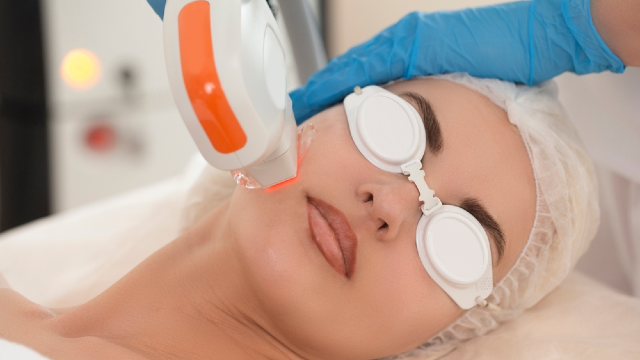
It also means total time matters. Toxnfill Hongdae describes treatment of roughly 5 to 10 minutes per area, with the exact time following the size of the region covered. An upper lip is over before you have fully settled. A full leg is a longer sequence, and fatigue — the accumulated irritation of a few hundred small events — becomes its own factor even though no single pulse is worse than the first.
Where on the Body You Are Being Treated
If you only remember one variable, remember this one. Area is the largest single determinant of how much a session hurts, and it is far larger than most people anticipate.
Skin over bone with very little padding between hurts more. The upper lip, the shin, the ankle, the sternum, the knee and the bikini line are all in this category. There is less soft tissue to buffer the sensation and the nerve supply in several of these regions is dense. The upper lip in particular is notorious, and the reason is not that the hair there is uniquely stubborn — it is that a small strip of thin, well-innervated skin sits directly over bone.
Thin skin also hurts more independently of bone: the inner thigh, the underarm and the neck generally read as more intense than the outer thigh or the calf. Conversely, the outer thigh, the forearm, the back and the calf are usually described as very manageable. People are frequently surprised that a large area is easier than a tiny one.
This is worth planning around. If you are treating several areas, ask for the difficult one first, while your tolerance is highest. There is no clinical reason to save it for last, and there is a good psychological reason not to.
Hair Density, Coarseness, and Why the First Session Is the Worst One
Hair is the target. The more of it there is, and the thicker and darker it is, the more energy is being converted into heat in a given patch of skin, and the more you feel.
This produces an effect that surprises almost everybody in a good way: the first session is typically the most uncomfortable one you will have, and subsequent sessions are noticeably easier at comparable settings. By the time you return for a second appointment, there is simply less hair present in the treated area than there was, and the same pass across the same patch of skin generates less total heat. People who dread the second appointment on the strength of the first frequently report that it was mild by comparison.
It also explains why areas with coarse, dense growth — the bikini line, a male chest or beard, an underarm — are reported as sharper than areas with fine hair, quite separately from the skin-thickness effect described above. Two variables stack. One consequence: do not judge the entire course by session one. That is the outlier, not the norm.
Skin Tone, Settings, and the Trade You Are Making
Your skin tone is not a comfort variable directly. It is a settings variable, and settings are a comfort variable.
Laser hair treatment works on the pigment in the hair. Where the surrounding skin is also richly pigmented, the margin between treating the hair and overheating the skin narrows, and the responsible response is to choose a device and settings appropriate to that skin rather than to push energy. The U.S. Food and Drug Administration notes on its laser hair removal page that these are prescription devices intended for use under the direction of a licensed practitioner, and the reason is exactly this: the settings decision is a clinical judgment with real consequences. Toxnfill Hongdae states that suitability for GentleMax Pro laser hair treatment depends on skin tone, hair color, the treatment area, and individual medical history, and that spot size and energy level are matched to hair density and the specific area being treated.
Two practical implications follow. First, a session run at settings appropriate to your skin may feel milder than a friend's session on different skin — that is not a lesser treatment, it is a different correct answer. Second, recent sun exposure or a tan changes the calculation. Toxnfill Hongdae advises postponing treatment if the skin is sunburned, irritated, infected or recently tanned. StatPearls, published on the NCBI Bookshelf by the National Library of Medicine, lists skin and hair color among the factors shaping the outcome of laser hair treatment, and the American Academy of Dermatology advises patients to protect treated skin from the sun and avoid tanning beds. Arriving with a fresh tan risks a more conservative session or a cancelation.
Your Own State on the Day
The same person, treated on the same area at the same settings, will not report the same number on two different days. Several of the reasons are documented.
Sleep. This is the best-evidenced of the lot and the most actionable. A controlled study published in PMC at the National Library of Medicine found that total sleep deprivation in healthy participants significantly increased pain sensitivity to pressure and cold, impaired conditioned pain modulation — the body's own descending pain-damping system — and facilitated temporal summation, meaning repeated stimuli were experienced as escalating. Temporal summation is directly relevant to a treatment consisting of hundreds of repeated pulses. If you have a choice between two appointment slots and one follows a red-eye flight, take the other one.** Anxiety.** Anticipation is not a trivial contributor. A prospective cohort study published in PMC found that patients with higher preoperative anxiety had substantially greater odds of not achieving acceptable pain control afterward, and the association between pre-procedure anxiety and reported pain has been observed across multiple surgical settings. That research concerns surgery rather than dermatologic laser work, and the transfer is not automatic — but the direction is consistent and the mechanism is not procedure-specific. Practically: knowing in advance what the sensation is, how long it lasts, and that you can ask for a pause is itself a comfort measure.** Caffeine.** Here the honest answer is that the evidence is mixed. Research indexed in PMC has found that a single large acute dose of caffeine raised pain threshold and tolerance in a cold-pressor task, while a separate community-based study found higher habitual daily caffeine consumption associated with greater baseline pain sensitivity. Those point in opposite directions because they measure different things — an acute dose versus a chronic intake pattern. The defensible takeaway is not "avoid coffee" but "do not radically change your usual intake on the day."
Where you are in your cycle. You will find confident claims that treatment hurts more in the days before a period. The published picture is unsettled. A meta-analytic review indexed in PubMed reported the follicular phase showing higher thresholds than later phases across several pain modalities. But a later study published in PMC that tested women at three cycle points using cold-pressor, heat and ischemic pain found cycle phase did not influence pain perception. If you personally notice a pattern, scheduling around it is reasonable; nobody can promise it will help.
None of these are reasons to cancel. They are reasons to choose the slot sensibly.
What the Clinic Side Does About It
Comfort is not left entirely to the patient. Several things happen on the clinical side, and it is worth knowing which apply so you can ask for them.** Topical anesthetic.** Toxnfill Hongdae applies a topical ointment anesthetic for approximately 20 to 30 minutes before laser hair treatment, as a standard part of its sequence, which runs consultation, pre-treatment photographs, ointment anesthesia, and then the laser itself. There is an important safety caveat attached to this. The FDA's consumer update on hair removal records that its Center for Drug Evaluation and Research received reports of serious and life-threatening side effects following the use of large amounts of skin-numbing products for laser hair removal, and advises that anyone using such a product follow a health care provider's directions and use the lowest amount of anesthetic drug possible. The practical reading: numbing applied by a clinic to a defined area is a different proposition from a patient slathering a high-strength product over a large surface at home and wrapping it. Do not do the latter, and do not bring your own.
Cooling. Toxnfill Hongdae states that a cooling system or a topical numbing method may be used for patient comfort as appropriate to the area and the individual's sensitivity. Cooling works in two ways at once: it protects the skin surface while heat is being delivered below it, and cold sensation competes with pain sensation for attention on its way to the brain. It is one of the more effective comfort measures available and it costs you nothing to ask whether it is being used on your area.** Settings and pacing.** Energy is not fixed. If an area is proving intolerable, the settings can be reconsidered, the pass broken up, and a pause taken. None of that happens unless the clinician knows.
The Honest Tension Nobody Mentions
Here is the part that most marketing copy avoids: a completely comfort-focused session and a maximally effective session are in some tension with each other.
The energy that heats the follicle is the same energy you feel. There is no version of this treatment where meaningful heat is delivered into a structure a millimeter or two below your skin and you perceive nothing at all. Cooling narrows the gap, topical anesthetic narrows it further, and good technique narrows it more — but the gap does not close to zero, and a provider who promises that it will is either using settings that will underdeliver or is not being straight with you.
This is not an argument for suffering. It is an argument for calibration. The target is a session that is uncomfortable in a brief, bounded, tolerable way. If you go in expecting "something sharp and quick, repeatedly, and it will be over soon," you have an accurate model. If you go in expecting nothing, every pulse is a small betrayal.
What It Should Not Feel Like, and What to Do About It
There is normal discomfort and there is a warning sign, and the difference is not subtle.
Normal: a quick snap or hot flick, brief stinging, warmth that lingers a second or two, a sensation that makes you inhale but does not make you want to leave. Afterward, Toxnfill Hongdae describes temporary redness or slight swelling — sometimes small raised bumps around treated follicles — generally settling within about one to two days, with normal daily activity resuming immediately and treated hairs shedding naturally over the following one to two weeks.
Not normal: genuine burning that persists well after the pulse rather than fading; sharp pain escalating pass after pass in the same spot; or any point where you find yourself gripping the chair and counting. Blistering, scabbing or a burn during or immediately after a session is a complication, not a stage. Toxnfill Hongdae lists burns, blistering, changes in skin pigmentation, scarring and, uncommonly, paradoxical hair growth among the risks, and notes that risk varies with skin type, settings and sun exposure afterward. StatPearls similarly catalogs complications of laser treatment of the skin.
The correct response in the moment is to say so, immediately, out loud — not afterward, not in a review. A clinician cannot see your sensation; they can only hear what you tell them. Saying "that one was much sharper" or "this area is too much, can we cool it or drop the energy" is not being difficult. It is how settings get corrected before skin gets injured rather than after.
If a language barrier worries you, agree on a signal before the session starts — a raised hand means stop. Toxnfill Hongdae provides English-language information and services for international visitors, so it is reasonable to confirm in advance how you will communicate.
What to Tell the Clinician Before You Start
Most of what determines your comfort is decided before the first pulse, during the consultation. Toxnfill Hongdae performs a customized consultation with skin evaluation, mapping of the treatment zones, a review of medical history and pre-treatment photographs. Bring the following to it, unprompted:
-Your recent sun exposure, honestly. Including a holiday two weeks ago and including self-tanner. This changes the settings decision and it changes your risk.
-**Any medication or supplement you take,**particularly anything that increases light sensitivity. Toxnfill Hongdae notes certain medications may mean postponing treatment.
-Skin conditions, infections, open areas or active irritationin or near the treatment zone. These postpone rather than complicate.
-Your own history with pain and with previous sessions. If a prior clinic's session was unbearable, say which area and what it felt like.
-Whether you have shaved and when. Toxnfill Hongdae asks that the area be shaved one to two days before the appointment and that you not wax or pluck during the treatment period, because the hair has to still be present below the surface. Arriving unshaved makes the session both less effective and considerably more uncomfortable.
-**Which area you want treated first,**if you are having several. Ask for the difficult one at the start.
-That you would like to know what to expect before each new area. The worst version of any sensation is the unexpected one.
If you want to know who will be doing the assessment, the clinic's medical team is listed publicly.
The Bottom Line
- The sensation is a brief, sharp, hot flick repeated many times with gaps in between — not a continuous burn — and most people find the anticipation harder than the pulses.
- Area matters more than anything else: thin skin and skin directly over bone, such as the upper lip, shin and bikini line, are the uncomfortable regions, while large fleshy areas like the outer thigh and calf are usually easy.
- The first session is typically the sharpest because there is the most hair present; later sessions at comparable settings are commonly reported as noticeably milder.
- Comfort is actively managed through topical ointment anesthetic applied for roughly 20 to 30 minutes, cooling, and adjustment of spot size and energy to the area — but a completely comfort-focused session and a fully effective one are in genuine tension, because the energy that treats is the energy you feel.
- Sharp escalating pain, a persistent burning sensation, or blistering is not something to endure politely; say so during the session so settings can be changed.
Frequently Asked Questions
How bad is the upper lip compared with the legs?
The upper lip is consistently reported as one of the sharper areas, because it is a small strip of thin, well-innervated skin sitting directly over bone. The legs are generally described as much easier despite being far larger. The upper lip is also over in a very short time, which is the compensation.
Does the numbing cream actually work?
It reduces the sharpness of the sensation rather than eliminating it. Toxnfill Hongdae applies a topical ointment anesthetic for approximately 20 to 30 minutes before treatment. The FDA has cautioned that serious side effects have been reported with the use of large amounts of skin-numbing products for laser hair removal, so this is something to have applied by the clinic rather than self-administered generously at home.
Will it hurt less if I drink less coffee beforehand?
The published evidence does not support a confident answer. Research indexed in PMC has found that a single large acute dose of caffeine raised experimental pain thresholds, while a separate community-based study found higher habitual caffeine intake associated with greater baseline pain sensitivity. Because these point in different directions, the sensible approach is to keep your usual intake rather than change it sharply on the day.
Is it true that treatment hurts more before a period?
It is widely repeated and not well settled. A meta-analytic review indexed in PubMed found the follicular phase showed higher pain thresholds than later phases across several pain types, but a subsequent study published in PMC that tested women at three cycle points found no influence of cycle phase on pain perception. If you have personally noticed a pattern, scheduling around it is reasonable; nobody can promise it will make a difference.
What should I do if one pulse hurts much more than the others?
Say so immediately, during the session. A single sharper pulse can simply reflect a denser patch of hair or thinner skin at that point, but it can also indicate that the settings need adjusting for that area. The clinician cannot detect your sensation and depends on you to report it. Asking for cooling, a pause, or a lower energy level is a normal part of the process.
Should I expect pain after the session, not just during it?
Generally no, beyond mild warmth. Toxnfill Hongdae describes temporary redness or slight swelling that usually settles within about one to two days, with an immediate return to daily activity. Uncommonly, folliculitis, blisters or scabbing can occur. Anything that is worsening rather than settling, or any blistering, should be reported to the clinic rather than waited out.
This article is for general informational purposes only and does not constitute individualized medical advice, nor is it a self-diagnosis tool. Suitability, laser settings and expected comfort can only be determined through consultation with a qualified dermatologist.
Clinical Notice: Individual treatment outcomes and recovery timelines may vary depending on skin condition and personal physiology. Temporary redness, mild swelling, or bruising may occur after treatment; a pre-procedure physician consultation is always conducted.
More Articles
Continue reading our clinical guides.
Toxnfill Hongdae Dermatologist: Meet Dr. Chang Ye Ji
Medically reviewed by Dr. Chang Ye Ji, MD, Chief Director, Toxnfill Hongdae The lead dermatologist at Toxnfill Hongdae is Dr. Chang Ye Ji, who serves as the branch's Chief Director
Learn More
Korean Dermatology Residency Training: How Doctors Qualify
Medically reviewed by Dr. Chang Ye Ji, MD, Chief Director, Toxnfill Hongdae Korean dermatology residency training follows a sequence that will look broadly familiar to an American
Learn More
In-Person Consultation at a Korean Dermatology Clinic
Medically reviewed by Dr. Chang Ye Ji, MD, Chief Director, Toxnfill Hongdae An in person consultation at a Korea dermatology clinic is a working appointment with a defined shape: h
Learn More