Personalized Medical Care & Dedicated International Patient Concierge


Medical Guide
How Soon Will I See Results From Sculptra or Radiesse?
Medically reviewed by Dr. Choi Ji Eun, MD, Director, Toxnfill Hongdae Most of the writing about collagen-stimulating injections describes the appointment and then skips to the outc
Schedule a ConsultationMedically reviewed by Dr. Choi Ji Eun, MD, Director, Toxnfill Hongdae
Most of the writing about collagen-stimulating injections describes the appointment and then skips to the outcome. The part in between — the four, five, six weeks when nothing dramatic is happening and you are checking your own face every morning — gets a single word, usually "gradual," and then the paragraph moves on.
That gap is where most of the anxiety lives. People do not generally struggle with the injection. They struggle with week two, when the treatment feels like it has vanished, and with week four, when they cannot tell whether something has changed or whether they have simply looked at their own face so many times that they can no longer see it.
This article is about that interval. What happens, what it feels like, why the evidence of your own eyes is unusually unreliable here, and how to tell the difference between a result that is still arriving and a result that is not going to arrive.
The Two Treatments, in One Sentence Each
Only as much mechanism as you need to follow the timeline, because the deeper biology belongs in a consultation.
Sculptra is a poly-L-lactic acid injectable. Toxnfill Hongdae describes it as a collagen-stimulating treatment that, unlike hyaluronic acid filler, gradually stimulates collagen production over time to create a gradual, natural-looking improvement in facial volume. The operative point for our purposes: what you eventually see is material your own body makes, on your body's schedule.
Radiesse is a calcium-based injectable. Toxnfill Hongdae describes it as supporting skin repair and improving elasticity, and as providing structural support while stimulating collagen production over time. The operative point: it does two things on two clocks. Some support is present from placement, and a further change develops afterward.
That difference — one product with essentially no immediate structural contribution, one with some — is the reason the first week feels so different depending on which you had, and the reason a single answer to "how soon" does not exist.
Why the Face You See That Evening Is Not the Result
This is the single most useful thing to understand before the appointment rather than after it.
What you see in the mirror on the day of a collagen-stimulating injection is a combination of several things, and only one of them is the treatment. There is the volume of liquid that was just introduced into the tissue. There is the tissue's normal response to being injected repeatedly with a needle or cannula: swelling. There is temporary redness. There may be bruising that has not yet surfaced. Toxnfill Hongdae lists temporary bruising, swelling, pain, tenderness and a foreign-body sensation among the possible effects after Sculptra, and bruising, redness, pain and swelling after Radiesse.
None of that is the outcome. It is the appointment, visible on your face.
The actual outcome is a change in the tissue that has not happened yet, because it has not had time to happen. Toxnfill Hongdae states that Sculptra volume develops gradually over approximately four to six weeks after treatment. Four to six weeks is not a disclaimer attached to a result you already have; it is the period during which the result is being made.
The Day-One Effect That Goes Away, and Why It Frightens People
Here is the part that is most often left out of the pre-treatment conversation, and the omission causes real distress.
After a Sculptra session you may look better immediately — fuller, smoother, more supported. Within a few days, a noticeable part of that improvement will recede. Toxnfill Hongdae notes that swelling after Sculptra generally improves within several days, and that is exactly the point: a portion of what you saw on day one was the liquid the product was suspended in plus the swelling from the injections themselves. Both resolve. What they leave behind, in the early days, is a face that can look close to where it started.
If nobody warns you, this reads as failure. People conclude the treatment did not work, or that they were given too little, or that something was wrong with the product. Often they conclude it at day four or day five, which is the lowest point of the whole timeline — the temporary effect has gone and the real one has barely begun.
Warned, it reads as expected. The disappearance of a day-one effect after a collagen-stimulating injection is not evidence of anything going wrong. It is the treatment behaving the way this category behaves.
Radiesse sits differently. Because its carrier contributes support from the moment it is placed, the early picture is less likely to collapse in the same way. Toxnfill Hongdae's own phrasing is careful and worth borrowing: some effects may be visible after treatment, while collagen-related improvements develop gradually. Two effects, two timelines. The early one is not the whole thing, and the later one is not visible yet.
What the Intervening Weeks Actually Look Like
An approximate map. Individual experience varies, and none of this replaces what your own clinician tells you about your own face.
Days one to seven. Injection-related effects dominate and then fade. Swelling settles, bruising surfaces and then clears, tenderness eases. Toxnfill Hongdae describes post-Sculptra symptoms as commonly improving within about one to two weeks. For Sculptra there is also homework: the clinic recommends gentle massage of the treated area for about five minutes, five times a day, for at least five days, to help prevent lumps. That instruction is not optional in spirit — uneven distribution is among the listed risks, and the massage exists to reduce it. Restrictions apply in this window too: avoiding heavy drinking, saunas, jjimjilbang and hot baths for three to seven days, and avoiding pressure or compression of the treated area for two to three weeks.** Weeks one to three.** This is the flat stretch, and it is psychologically the hardest. The treatment is no longer visible on your face as an event, and the result is not yet visible as a result. Nothing you can see is changing day to day, because the change being built is slow and small and does not announce itself. Most people who become convinced their treatment failed become convinced during these weeks.** Weeks four to six.** For Sculptra this is the stated window in which volume develops. The change tends to be noticed indirectly rather than directly: a photograph taken for some unrelated reason looks different, or someone who has not seen you in a while comments, or clothing and light fall on your face differently. It rarely arrives as a morning where you look in the mirror and see a new face.** Beyond six weeks.** Where a course has been planned, the next session typically lands in here and the process restarts on a higher baseline. Toxnfill Hongdae describes Sculptra as commonly requiring three or more sessions spaced about a month apart, and states that results build continuously from within the skin. For Radiesse, the clinic describes results lasting roughly six months to a year, with longevity varying by treated area, amount used, metabolism and individual skin condition.
Why Your Own Photographs Are the Worst Available Instrument
You will take pictures. Almost everyone does. It is worth knowing in advance how badly they can mislead you.
A phone camera taken casually varies on nearly every dimension that matters for judging a subtle facial change. The distance from the lens to your face changes the apparent proportions of your features. The angle changes which contours catch light. The time of day changes the color temperature and, more importantly, the direction of the light — which is the single biggest driver of how a cheek or a fold appears. Indoor versus outdoor, morning versus evening, window on your left versus window in front of you: each of these can produce a difference larger than six weeks of genuine change. Add automatic beautification and smoothing, which many phones apply by default and without saying so, and the comparison stops being a comparison at all.
The result is a series of images that swing wildly while the underlying face changes slowly and steadily. Look through them on a bad day and you will find proof that nothing happened. Look through them on a good day and you will find proof that everything did. Neither proof is worth anything.
There is a second problem, independent of the camera. You see your own face every day, which makes you the worst-positioned observer of a gradual change to it. Continuous exposure to a slowly shifting image tends to update your sense of "normal" along with the image, so the change is absorbed rather than noticed.
What to Do InsteadRely on the clinic's photographs. Standardized clinical photography exists precisely to remove the variables above: same position, same distance, same lighting, same background, same settings. Comparisons made between two such images mean something, and comparisons made between two casual selfies largely do not. Ask at the time of treatment whether baseline images are taken and whether you can see them side by side at review.** If you shoot your own, standardize brutally.** One location, one time of day, one light source in one position, no filter, no beautification, camera held at the same distance, same neutral expression, and the same three angles every time. A short series shot under identical conditions is worth more than a hundred casual ones.** Space the comparisons out.** Checking at day three, day five and day eight tells you about swelling, not about collagen. Comparing at baseline and at four to six weeks tells you about the treatment.** Use function as well as appearance.** How your skin feels, how makeup sits, whether a fold creases the way it used to — these are sometimes noticed earlier and more reliably than volume.
The American Academy of Dermatology publishes practical guidance on photographing skin for clinical purposes, and its central themes are consistency and honest lighting. Those two things matter more here than camera quality.
Why the Course Is Planned Before You Start, Not Added Afterward
A common suspicion is that the second and third sessions are invented after the first one underdelivers. It is worth explaining why the opposite is usually true.
With a collagen-stimulating injectable, the amount of change per session is limited by biology rather than by how much product is in the syringe. Building toward a larger correction therefore means building in stages, and staging is designed at the outset because the intervals between sessions are part of the design. Toxnfill Hongdae describes Sculptra as commonly requiring three or more sessions at intervals of about a month, and states that treatment may require a planned series rather than a single injection depending on goals and clinical assessment.
The practical implication follows immediately:** judging the outcome after one session of a planned three is judging an unfinished thing.** A single session in a staged plan is not a small version of the result. It is a foundation, and foundations do not look like buildings.
Two things to establish before the first injection, then. How many sessions this plan contains. And what a normal amount of visible change after session one would be, so that you have a reference point rather than an expectation borrowed from a different treatment.
The Specific Trap for Someone Who Is Traveling
This is where the timeline stops being a curiosity and becomes a logistical problem.
The appointment takes under an hour. Toxnfill Hongdae describes Radiesse treatment as taking within about thirty minutes with numbing cream and no downtime, and describes Sculptra as a short, relatively simple process allowing a quick return to daily activities, with one to two days in Korea generally sufficient and flying home possible immediately or within twenty-four to forty-eight hours once initial swelling subsides. So the treatment fits easily into a trip.
The result does not. If volume develops across four to six weeks and a full course runs across several months, then you will be at home, thousands of miles away, for essentially the entire period in which the thing you paid for actually appears. You will form your judgment of the result without the person who produced it in the room, and without the standardized photographs sitting on that clinic's system.
That is a solvable problem, but only in advance. Before you fly, agree three things:** What you are looking for.** Ask the treating clinician to describe, in concrete terms, what a normal trajectory looks like for your specific treatment and treated area — what should have settled by when, and what should be emerging by when.** When you should be assessing.** Agree the checkpoint dates rather than assessing continuously. A checkpoint at four to six weeks means something. A daily check means nothing and costs you a great deal of peace of mind.** How to reach them, and with what.** Establish the channel before you need it, and know what you will send: your standardized images, the dates, and a specific question. Toxnfill Hongdae's contact route for international patients is its online contact page, and the clinic's main site carries its English-language treatment information. The US Centers for Disease Control and Prevention, in its travelers' health guidance on care obtained abroad, advises arranging follow-up care and keeping your treatment records before you leave, and that advice applies with particular force to a treatment whose result arrives after the flight.
One separate point that is not about patience at all: the gradual timeline applies to the intended result, not to problems. Symptoms that are worsening rather than settling — increasing pain, spreading discoloration, blistering, warmth, or anything that looks like infection — are not part of any timeline and are not a wait-and-see matter. Toxnfill Hongdae explicitly flags persistent skin discoloration, blistering, itching, warmth and worsening pain as warranting medical assessment. Seek care locally and contact the treating clinic, in either order, without waiting for a checkpoint date.
When It Is Reasonable to Conclude the Result Fell Short
Patience is not infinite, and "it takes time" should not be used to postpone an honest conversation indefinitely. So here is a reasonable standard.
It is premature to conclude anything in the first three weeks. It is premature to conclude anything after one session of a planned multi-session course. It is premature to conclude anything from casual photographs taken in different light.
It becomes reasonable to raise the question when the agreed course is complete, the stated development window has passed, and a fair comparison — ideally the clinic's own standardized images — shows less change than the two of you discussed at the outset.
Raise it first with the clinic that performed the treatment. They hold your baseline images, they know what was used and where, and they are the only people positioned to say whether the plan was completed as designed. Disappointment with an aesthetic result is a real and legitimate thing to raise; it is also a different conversation from an urgent clinical one, and it is best had with the original treating team rather than with a new practitioner who has no record of what you looked like beforehand. You can find the clinic's team details on its doctors page.
Be prepared for several possible answers, all of them legitimate: that the plan is not finished; that the area needs more than was agreed; that expectations set at the start were for a subtler change than you were picturing; or that this category was not the best match for your goal in the first place.
Gradual Is a Genuine Cost, Not a Softened Marketing Word
It is worth being direct about this, because the alternative is a patient who spends six weeks quietly unhappy.
The delay is not a minor caveat attached to an otherwise equivalent product. It is a real trade-off that you pay in uncertainty. You will spend weeks unable to confirm that your money and your appointment produced anything. For some people that is entirely acceptable, and the pay-off — a change that emerges slowly enough that nobody can point to a date — is exactly what they wanted. For others it is genuinely unpleasant, and it does not become pleasant because it was described in advance.
If you know about yourself that you will find that interval difficult, say so during the consultation. It is relevant clinical information, not a confession. Toxnfill Hongdae positions this category specifically for people who want gradual, natural-looking improvement rather than the immediate effect associated with hyaluronic acid filler — which means the reverse preference is also a legitimate starting point, and a different category may suit you better. Someone who wants to see the change on the day they pay for it is usually poorly served by a collagen stimulator, however good the eventual result might have been.
The Bottom Line
- What you see on the day of treatment is the appointment, not the result. Swelling, redness and injected fluid are all visible; the actual change has not been made yet.
- After Sculptra, part of the day-one improvement will recede within days. That is expected, not a failure, and knowing it in advance prevents a great deal of unnecessary alarm.
- Toxnfill Hongdae describes Sculptra volume as developing gradually over approximately four to six weeks, with three or more sessions about a month apart commonly planned; Radiesse offers some effect from placement with collagen-related change developing afterward.
- Casual phone photographs in inconsistent light are the least reliable way to judge a gradual change. Use the clinic's standardized images, or shoot your own under rigidly identical conditions, and compare at agreed checkpoints rather than daily.
- If you are flying home mid-timeline, settle before departure what a normal trajectory looks like, when you will assess it, and how to reach the treating clinician — and raise a shortfall with them once the course is complete.
Frequently Asked Questions
Why did my face look better immediately and then go back?
Because part of what you saw was the fluid the product was carried in plus swelling from the injections, and both resolve within days. The change the treatment is actually for is produced over the following weeks. Toxnfill Hongdae notes that swelling after Sculptra generally improves within several days and that volume develops gradually over about four to six weeks.
Can I judge Radiesse sooner than Sculptra?
Partly. Radiesse contributes some support from placement, so the early picture is less likely to fall away entirely. But the clinic is explicit that collagen-related improvement develops gradually, so what you see in the first days is still not the finished result. Treat the early appearance as a partial preview rather than an outcome.
Is there anything I can do to make it happen faster?
Not meaningfully, and attempts usually cause harm rather than speed. What you can do is follow the aftercare, which exists to protect the quality of the result rather than its arrival date — for Sculptra, the recommended gentle self-massage for the first several days, and the restrictions on heat, alcohol and pressure on the treated area.
How many sessions will I need?
That is determined at consultation, not in advance. Toxnfill Hongdae describes Sculptra as commonly needing three or more sessions about a month apart, while noting that treatment plans depend on individual goals and clinical assessment. Ask for the number before the first injection, because it determines when you are entitled to judge anything.
I only have a few days in Seoul. Is this treatment worth starting?
It can be, but go in knowing you are starting something rather than completing it, and that you will be elsewhere while it develops. Agree the checkpoints and the follow-up route before you fly. If your goal is a visible change during the trip itself, discuss whether a different category suits you better.
What if nothing has changed after the full course?
Then it is entirely reasonable to say so, and to say it to the clinic that treated you. Bring the dates, the standardized comparison images and what you were told to expect at the outset. That conversation belongs with the original treating team, who hold your baseline record, rather than with a new practitioner starting from nothing.
This article is for general informational purposes only and is not individualized medical advice or a substitute for examination; it is not a tool for self-diagnosis. Expected timelines, session numbers and realistic outcomes for your face can only be established by a qualified dermatologist who has assessed you in person.
Clinical Notice: Individual treatment outcomes and recovery timelines may vary depending on skin condition and personal physiology. Temporary redness, mild swelling, or bruising may occur after treatment; a pre-procedure physician consultation is always conducted.
More Articles
Continue reading our clinical guides.
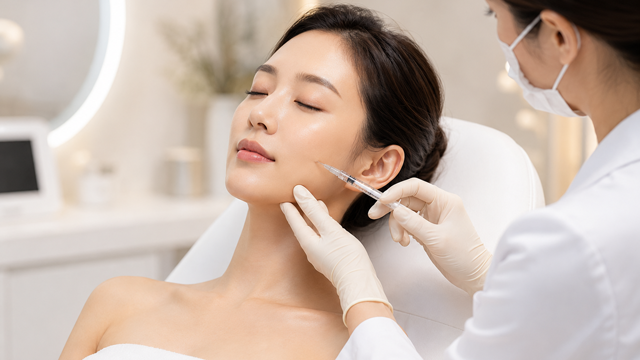
Toxnfill Hongdae Dermatologist: Meet Dr. Chang Ye Ji
Medically reviewed by Dr. Chang Ye Ji, MD, Chief Director, Toxnfill Hongdae The lead dermatologist at Toxnfill Hongdae is Dr. Chang Ye Ji, who serves as the branch's Chief Director
Learn More

Korean Dermatology Residency Training: How Doctors Qualify
Medically reviewed by Dr. Chang Ye Ji, MD, Chief Director, Toxnfill Hongdae Korean dermatology residency training follows a sequence that will look broadly familiar to an American
Learn More
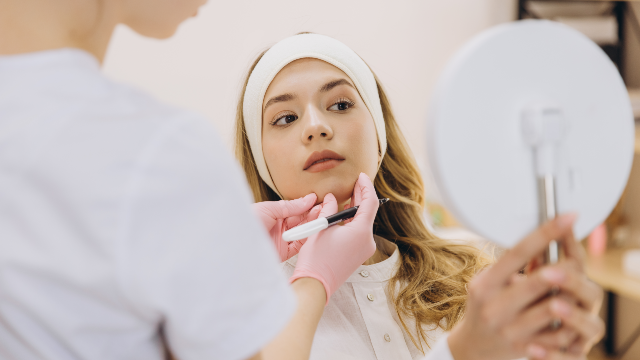
In-Person Consultation at a Korean Dermatology Clinic
Medically reviewed by Dr. Chang Ye Ji, MD, Chief Director, Toxnfill Hongdae An in person consultation at a Korea dermatology clinic is a working appointment with a defined shape: h
Learn More