Personalized Medical Care & Dedicated International Patient Concierge

Medical Guide
Fraxel vs Potenza for Acne Scars: Which Suits Which
Medically reviewed by Dr. Chang Ye Ji, MD, Chief Director, Toxnfill Hongdae Comparing Fraxel and Potenza for acne scars only becomes useful once you know what kind of scars you hav
Schedule a ConsultationMedically reviewed by Dr. Chang Ye Ji, MD, Chief Director, Toxnfill Hongdae
Comparing Fraxel and Potenza for acne scars only becomes useful once you know what kind of scars you have, because these two devices do not damage skin in the same way and different scar shapes respond to different kinds of controlled injury. Toxnfill Hongdae lists both within its acne and pore program, describing its Fraxel treatment as reaching deeper layers to improve the appearance of pores and acne marks while lifting and firming the skin, and Potenza RF microneedling as offered for facial and targeted areas with options focused on pores and acne scars.
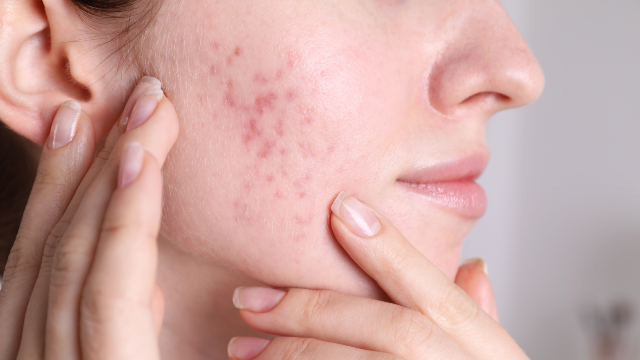
Acne Scars Are Not One Thing
Before comparing devices, it helps to know which scars you are asking them to treat, and a 2022 review of acne scar treatment methods in the Journal of Clinical Medicine gives the measurements.
Icepick scars are deep and narrow, sometimes reaching the boundary between dermis and the fat beneath, with sharp edges and a width of two millimeters or less. They form a V-shaped cross-section and account for roughly 60 to 70 percent of atrophic acne scars. Boxcar scars are round or oval with clearly demarcated edges, described as 0.1 to 0.5 millimeters deep and 1.5 to 4 millimeters wide, forming an M-shaped cross-section, and making up around 15 to 20 percent. Rolling scars are the largest, up to about five millimeters across, at roughly 15 to 25 percent.
That distribution has a blunt implication: the most common scar type is also the narrowest and deepest, and narrow deep scars are the hardest for any resurfacing device to reach. The same review notes that punch excision suits icepick scars and narrow boxcar scars under three millimeters, while punch elevation suits broader boxcar scars with sharp edges and a normal base — approaches that involve neither laser nor radiofrequency.
The American Academy of Dermatology makes the same point in patient language, stating that icepick scars require different treatment from rolling scars and that a dermatologist needs to know the types and locations before planning. It also notes that plans are individualized on scar type, scar count, age and skin tone, and that raised or keloid scars require the opposite approach, since those involve excess collagen rather than a deficit.
If a consultation does not begin by identifying your scar types, that is the question to ask.
What "Fractional" Means, Precisely
The word gets used loosely, so it is worth taking the regulator's own definition.
The FDA maintains a dedicated product classification for laser instruments whose output is delivered as tiny beams in the micro range — a separate code from ordinary powered surgical lasers, which tells you the agency treats fractional delivery as a distinct technology rather than a setting. That classification places these devices in Class II, subject to premarket notification, and describes the target area as skin including the dermis and epidermis along with underlying soft tissue.
A 2024 split-face study in Cosmetics comparing fractional carbon dioxide and 1410 nanometer diode lasers for acne scars describes the mechanism in citable terms: fractional lasers create micro thermal treatment zones that drive new collagen formation and re-epithelialization, delivering pulses as micro beams that produce columns of coagulation through epidermis and dermis while the tissue between them is left intact, so that untreated skin speeds the healing.
That untouched tissue between the columns is the entire design idea. It is why fractional treatment recovers faster than full-surface resurfacing, and why a course of sessions replaces a single aggressive one.
Toxnfill Hongdae describes its own Fraxel program in three graded stages — Stage 1 as a deep mode, Stage 2 as a dual mode, Stage 3 as a triple layer mode — applied to the cheek area it calls the butterfly zone or to the full face, and describes the underlying laser as fractional with ultra-short pulses. A useful consultation question follows from that: which stage is being proposed, and why that one for your skin.
What the FDA Record Shows for Each Category
Here the two technologies diverge sharply, and the difference is not what most patients would guess.
On the laser side, acne scars appear explicitly in the cleared indications. The FDA clearance record for a Fraxel-branded fractional laser system granted in October 2009 lists, for its 1550 nanometer arm, dermatological procedures requiring soft tissue coagulation, skin resurfacing, pigmentation and cutaneous lesions, periorbital wrinkles, acne scars and surgical scars. Its 1925 nanometer arm, by contrast, is limited to coagulation of soft tissue with no acne scar claim. Same machine family, different wavelength, different permitted claim.
On the radiofrequency microneedling side the picture is different, and it is the single most surprising fact in this comparison. The FDA clearance for the Potenza system, granted in January 2021, places it under the classification for electrosurgical cutting and coagulation devices, and its indications for use are dermatologic and general surgical procedures for electrocoagulation and hemostasis. A later Potenza clearance from December 2024 carries the same indications, unchanged. Neither record contains a cleared indication for acne scars, wrinkles, skin tightening or rejuvenation.
The 2024 clearance also states plainly that no clinical performance testing was performed, and the 2021 one required no animal or human clinical testing, because clearance rests on demonstrating equivalence to an earlier device rather than on new trial evidence.
None of this means the treatment does not work or should not be offered. Using a cleared device outside its listed indications is lawful medical practice and is extremely common in aesthetics. What it means is that if someone tells you a device is "FDA approved for acne scars," you now know how to check that claim, and roughly what you will find.
The technical specifications in those records are worth knowing too. The system delivers radiofrequency at one or two megahertz in monopolar and bipolar modes, at zero to fifty watts in one-watt steps. The 2024 clearance lists a needle thickness of 0.35 millimeters, spacing between needles of 1.3 to 2.0 millimeters, a treatment spot of one centimeter square, and a maximum insertion depth reduced to 2.5 millimeters from the predicate's 4.0, adjustable in quarter-millimeter steps from a minimum of 0.5.
The FDA's Safety Communication on RF Microneedling
In October 2025 the FDA issued a safety communication about risks associated with certain uses of radiofrequency microneedling devices, and anyone considering this treatment should know what it says.
The reported serious complications it names are burns, scarring, fat loss, disfigurement and nerve damage, in some cases requiring surgical repair or other medical intervention. It frames these risks around use for dermatologic and aesthetic purposes — wrinkles, resurfacing, tightening, rejuvenation — which is to say around exactly the uses that fall outside the cleared indications described above.
Its description of the mechanism explains why the risk exists: a microneedle array delivers radiofrequency energy to specific depths, and each microneedle creates a small zone of intense heat at its tip. Concentrated heat at a controlled depth is the therapeutic effect and the hazard at once.
The agency's recommendations are practical. Seek a licensed provider who is trained and experienced with radiofrequency microneedling. Ask which device will be used. Understand that this is a medical procedure rather than a cosmetic treatment, and that it must never be attempted at home. The agency also confirms these devices are Class II, cleared through premarket notification, and directs consumers to the clearance database to check what a given device is actually authorized to do.
The clinic's own risk list is consistent: temporary redness, swelling, warmth, tenderness, pinpoint bleeding or mild irritation, with infection, prolonged inflammation or pigment changes as rare complications.
What Head-to-Head Evidence Exists
Direct comparisons are scarce, and the ones that exist are small, so they should be read as signals rather than verdicts.
The 2022 Journal of Clinical Medicine review cites a study with twenty patients per arm receiving three sessions at four-week intervals, in which a 1550 nanometer fractional erbium glass laser outperformed a fractional radiofrequency microneedle device for acne scars. That is one trial, at one set of parameters, and it points toward the laser.
Balanced against that, the American Academy of Dermatology states that combining radiofrequency with microneedling can produce less noticeable acne scars than either approach alone, and that both radiofrequency and radiofrequency microneedling are safe for all skin tones. It says the same of microneedling by itself. For patients with deeper skin tones who have reason to worry about post-treatment darkening, that is a meaningful statement from a society rather than a manufacturer.
The 2024 Cosmetics split-face study is a useful check on how much the specific device matters. Comparing fractional carbon dioxide against a 1410 nanometer diode across thirty patients over three monthly sessions, both sides improved significantly against baseline, but the difference between them was not statistically significant on either quantitative or qualitative scoring, and collagen type I area measured 39.7 percent against 37.8 percent — again not significantly different. Patient satisfaction actually leaned numerically toward the gentler non-ablative arm, at fifteen of thirty against four of thirty, though that difference did not reach significance either.
The honest summary is that several reasonable technologies produce broadly similar improvement, and that operator skill, correct scar-type matching, and completing the course probably matter more than which of two credible machines is used.
How the Two Feel and Recover
Both are outpatient treatments here, and both use topical numbing when appropriate.
For the Fraxel program, the clinic describes assessing and preparing the skin, determining the mode and treatment area, then applying the laser systematically. Recovery varies with intensity: mild redness and sensitivity for several days at gentler settings, longer for stronger ones. Temporary redness, warmth, swelling, sensitivity, dryness or peeling can occur, with pigmentary changes, prolonged irritation, infection or scarring less common but possible.
For Potenza, the clinic describes cleansing and preparing the skin before the device delivers controlled microneedling with radiofrequency energy to the selected area, with numbing cream used to improve comfort. Mild redness and irritation commonly settle over several days, though this varies with intensity and individual response.
Aftercare for both centers on gentle skincare and sun protection, avoiding excess heat, irritation or manipulation of treated skin, and following the clinic's treatment-specific instructions. Sun protection is not a footnote after either treatment.
Combinations, Which Is How These Are Usually Used
Toxnfill Hongdae documents Potenza combinations with Juvelook, Exosome, Rejuran Healer, Rejuran HB, Cryocell, cryo soothing care, LED and a vitamin sheet mask, and lists Potenza with Rejuran and Potenza with Exosome among its acne and pore combinations. It also offers extraction, anti-inflammatory injections, Aqua Peel and peeling treatments in the same program, alongside acne medication prescriptions.
The reason a device is bundled with a booster or a soothing step is that scar remodeling and inflammation control are different problems. Treating an active breakout and remodeling an old scar at the same visit require different tools, which is why nothing is selected until the assessment has established what kind of acne you have, how your pores are behaving, how reactive your skin is, what scarring is present, what has been tried before and what your medical history holds.
The clinic notes that some acne and pore treatments require multiple sessions for progressive improvement, and the AAD's own guidance on adjacent modalities gives a sense of the commitment: mild peels often need three to five treatments every two to four weeks, and fillers used for depressed scars give temporary results lasting from three months to two years.
Matching Approach to Scar
- Predominantly icepick scars. The narrowest and deepest type, and the 2022 review pairs them with punch excision rather than resurfacing. Worth raising explicitly.
-Broad boxcar scars with sharp edges and a normal base. The same review pairs these with punch elevation, again a different approach from either device here.
-Rolling scars and general textural irregularity. Resurfacing and remodeling approaches are more at home here.
-Enlarged pores alongside the scars. The clinic positions both its Fraxel program and Potenza for pores as well as marks.
-A deeper skin tone with a history of darkening after inflammation. The AAD states that radiofrequency and radiofrequency microneedling are safe for all skin tones, which is a relevant data point for this conversation.
-Raised or keloid scars. The opposite problem, and the AAD notes these need a different approach entirely.
-Active infection, significant inflammation, certain bleeding disorders or photosensitivity. The clinic names these among reasons either treatment may be unsuitable.
Questions Worth Taking to the Consultation
Ask which scar types you have and in what proportion. Ask which device is being proposed and, for the laser, which stage or mode and why. Ask what that device's cleared indication actually is, and let the answer be whatever it is — a candid "this use is outside the listed indication, and here is why I still recommend it" is a better answer than a vague one. Ask how many sessions, at what interval, and what the skin will look like in the days afterward.
The clinic asks patients to disclose medications, allergies, active skin conditions, previous procedures and current skincare beforehand, and to minimize sun exposure ahead of laser treatment. To arrange an assessment you can get in touch through the contact page, and the clinic overview is worth reading first.
The Bottom Line
- Scar type comes first. Icepick scars make up roughly 60 to 70 percent of atrophic acne scars and are the hardest for any resurfacing device to reach.
- Acne scars appear explicitly in the cleared indications of the 1550 nanometer arm of a Fraxel-branded fractional laser record; the Potenza clearances list electrocoagulation and hemostasis only.
- In October 2025 the FDA issued a safety communication on radiofrequency microneedling naming burns, scarring, fat loss, disfigurement and nerve damage among reported complications, and advising patients to ask which device is being used.
- The limited head-to-head evidence is mixed: one small trial favored a fractional laser over fractional radiofrequency microneedling, while the AAD reports that combining radiofrequency with microneedling can outperform either alone.
- Expect a course rather than a session, and expect the plan to combine approaches, because active acne and established scarring are different problems.
Frequently Asked Questions
Which scar types respond least well to either device?
Icepick scars, which are also the most common. The 2022 review in the Journal of Clinical Medicine describes them as deep and narrow, sometimes reaching the junction between dermis and subcutaneous fat, at two millimeters wide or less, and it pairs them with punch excision rather than with resurfacing. If your scars are predominantly this type, that is worth putting on the table at the assessment.
Is Potenza FDA cleared to treat acne scars?
Its cleared indications are dermatologic and general surgical procedures for electrocoagulation and hemostasis. That wording appears in both the January 2021 and the December 2024 clearance records, unchanged. Aesthetic use beyond a listed indication is lawful and common in this field, but it is a different thing from a cleared claim, and you are entitled to be told which one applies.
What does the FDA safety communication actually warn about?
Its October 2025 communication on radiofrequency microneedling names burns, scarring, fat loss, disfigurement and nerve damage among reported serious complications, sometimes requiring surgical repair. It explains that each microneedle creates a small zone of intense heat at its tip, recommends a licensed provider trained and experienced with the technology, advises asking which device will be used, and states that this is a medical procedure that must not be attempted at home.
Does fractional treatment mean less downtime?
That is the design intention. The 2024 study in Cosmetics describes fractional lasers as producing columns of coagulation through the epidermis and dermis while leaving the tissue between them intact, so that untreated skin speeds healing. The clinic describes recovery as varying with treatment intensity, from mild redness and sensitivity over several days at gentler settings to a longer settling period at stronger ones.
Is one clearly better than the other?
The evidence does not support a clean verdict. One small trial cited in the 2022 review, with twenty patients per arm over three sessions, favored a 1550 nanometer fractional laser over a fractional radiofrequency microneedle device. Meanwhile the American Academy of Dermatology reports that combining radiofrequency with microneedling can leave scars less noticeable than either alone. Scar-type matching and completing the course likely matter more than the choice between two credible devices.
Are these treatments safe for deeper skin tones?
The American Academy of Dermatology states that radiofrequency, radiofrequency microneedling, and microneedling alone are safe for all skin tones. It also notes that treatment plans should account for skin tone alongside scar type and count. Any energy-based treatment still carries a risk of pigment change, which the clinic lists among the rarer complications for both of these, so the assessment beforehand is where this gets settled.
How many sessions should I expect?
The clinic states that some acne and pore treatments require multiple sessions for progressive improvement, with the number and interval depending on skin condition and settings, and does not promise a fixed course. For context on adjacent treatments in the same program, the AAD notes that mild peels often need three to five treatments given every two to four weeks.
This article is for general informational purposes, does not constitute individualized medical advice, and is not a self-diagnosis tool. Device clearances, indications and treatment protocols change over time. Only a qualified dermatologist or physician who has examined your skin in person can determine which approach to acne scarring suits you.
Clinical Notice: Individual treatment outcomes and recovery timelines may vary depending on skin condition and personal physiology. Temporary redness, mild swelling, or bruising may occur after treatment; a pre-procedure physician consultation is always conducted.
More Articles
Continue reading our clinical guides.

Toxnfill Hongdae Dermatologist: Meet Dr. Chang Ye Ji
Medically reviewed by Dr. Chang Ye Ji, MD, Chief Director, Toxnfill Hongdae The lead dermatologist at Toxnfill Hongdae is Dr. Chang Ye Ji, who serves as the branch's Chief Director
Learn More

Korean Dermatology Residency Training: How Doctors Qualify
Medically reviewed by Dr. Chang Ye Ji, MD, Chief Director, Toxnfill Hongdae Korean dermatology residency training follows a sequence that will look broadly familiar to an American
Learn More

In-Person Consultation at a Korean Dermatology Clinic
Medically reviewed by Dr. Chang Ye Ji, MD, Chief Director, Toxnfill Hongdae An in person consultation at a Korea dermatology clinic is a working appointment with a defined shape: h
Learn More