Personalized Medical Care & Dedicated International Patient Concierge

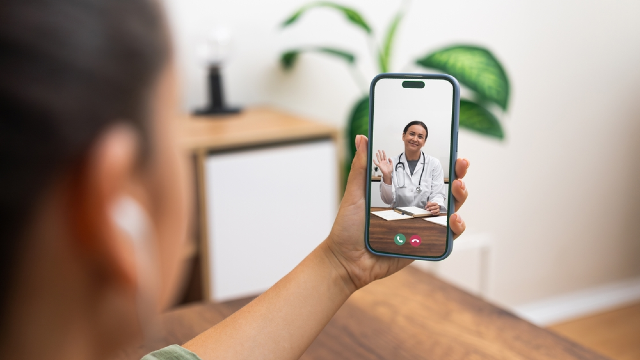
Medical Guide
Follow-Up Care Options for US Patients Back From Korea
Medically reviewed by Dr. Chang Ye Ji, MD, Chief Director, Toxnfill Hongdae Once your plane has landed at home, the question of who can help you is no longer abstract. It has a sho
Schedule a ConsultationMedically reviewed by Dr. Chang Ye Ji, MD, Chief Director, Toxnfill Hongdae
Once your plane has landed at home, the question of who can help you is no longer abstract. It has a short and specific answer, and the answer has four entries.
There is the clinic that treated you, now separated from you by roughly 6,000 miles and most of a day's time difference. There is whatever dermatologic care exists where you live. There is urgent care, for the narrow set of situations that cannot wait. And there is time, which is the one people leave off the list entirely and which quietly handles the majority of what comes up.
Those four are not interchangeable, and they are not ranked. Each can do things the others cannot, and each has a limit that is worth knowing in advance rather than discovering at eleven o'clock at night with a mirror in your hand. What follows is an honest description of what each one is actually able to offer.
The treating clinic: real reach, and a real limit
Start with the clinic, because it holds something no one else does: knowledge of exactly what was done to you.
That matters more than it sounds. The team that treated you — you can see who practices there on the clinic's medical team page — knows which product went where, at what depth, and how your skin behaved during the appointment. They know what they expected to happen next. They have treated a great many people with the same products and have a sense of what the ordinary course looks like. None of that transfers automatically to anyone else, which is why the treating clinic remains the first and most informed point of contact for questions about the treatment itself.
Toxnfill Hongdae keeps a direct route open for this. The clinic operates an English-language site with a language selector that offers English alongside Korean, Japanese, Chinese, Vietnamese, Thai and Indonesian, and it routes patient questions through its contact page. It is also registered with Korea's Ministry of Health and Welfare as a medical institution for attracting foreign patients, under the legislation governing that registration — which is a statement about the clinic's formal standing with international patients rather than a promise about response times.
Now the limit, stated plainly because it is the part most often glossed over.
Assessment at a distance is interpretation, not examination. What a clinician abroad receives is your description of what you are feeling and a photograph taken by you, in your lighting, at your angle, on your phone's camera with whatever processing that camera applies. From that, they can form an impression. They cannot palpate the area, cannot compare its texture to the surrounding tissue, cannot see it in three dimensions or under a clinic light, and cannot check how it moves. Those are not minor omissions; several of the things a clinician would most want to know are only available through touch.
So the realistic division is this. The treating clinic is excellent at answering questions about what was done, what the usual course looks like, what is consistent with the product used, and what they would want to look at if you were in the room. It is not in a position to give you a definitive verdict on something happening in your skin today. A clinician who says "this sounds consistent with what we usually see, but I cannot tell you that with certainty from here" is not being evasive. That is the accurate answer.
There is also the practical matter of clocks. The clinic operates on weekdays from 10:00 to 20:00 and weekends from 10:00 to 19:00, Korea Standard Time. From the US East Coast that working day runs from roughly nine in the evening to seven the following morning; from the West Coast, from around six in the evening to four in the morning. Neither is a disaster, but it is not a same-hour conversation either, and it means a question sent at noon your time is being read by people who are asleep. Build that into your expectations rather than reading silence as indifference.
Your dermatologist at home: build the relationship before you go
The second actor is the one with hands and eyes in your city, and the timing of when you establish that relationship matters far more than most travelers realize.
The American Academy of Dermatology describes a board-certified dermatologist's training as covering the medical, surgical and cosmetic care of skin, hair and nails. That is a real and broad scope, and it is available to you locally. The obstacle is not competence. It is two other things.
The first is scheduling. In much of the United States, a new-patient dermatology appointment is booked weeks out, sometimes months. If you first try to establish care on the afternoon something concerns you, the calendar is against you. A patient who already has a dermatologist — someone with a file open in their name and a receptionist who recognizes it — is operating in a completely different system from a patient calling cold.
The second is harder and more interesting:** you are asking someone to manage a result they did not create, using a product they may not recognize.** This is genuinely awkward for the clinician, and being aware of that changes how you ask.
Aesthetic product ranges differ substantially between markets. Some of what is used routinely in Korean clinics is not marketed in the United States at all, and a brand name that is instantly familiar in Seoul may mean nothing to a dermatologist in Ohio. That clinician is then in the position of being asked about material they cannot readily identify, in tissue they did not treat, with no baseline of what your face looked like the week before. Most will help anyway. All of them will help better if you arrive able to name what was used precisely, and if you frame the request as "here is what happened, here is what I was told to expect, and I would value your read" rather than "please fix this."
The best version of this relationship is established before you fly. A single appointment for something ordinary — a mole check, a routine skin review — is enough to make you an existing patient rather than a stranger, and it gives the clinician a look at your baseline skin that no photograph replaces. The CDC's guidance for people seeking medical care abroad recommends discussing your plans with your own health care provider beforehand and arranging for care after you return. That advice reads like a formality until the day you need it, at which point it is the difference between an appointment next week and an appointment next season.
Urgent local care: the preparation is knowing the address
The third actor is the one you hope not to use, and the entire preparation consists of a piece of information rather than an action.
Know, before you travel, where you would go. Not in general terms — specifically. Which facility near you handles after-hours care. Whether your insurance directs you somewhere in particular. Whether the nearest emergency department is the one you would actually choose. Whether there is a dermatology practice in your area that keeps same-day slots.
This takes about fifteen minutes and is worth doing precisely because it is the kind of thinking that becomes difficult exactly when it is needed. Nobody researches urgent care options well at two in the morning. Everybody researches them well on a Tuesday.
The second piece of that preparation is insurance, and it is worth checking rather than assuming. The US Department of State's guidance for international travelers points out that coverage rules differ and should be confirmed in advance, and cosmetic treatment is a category where policies are frequently explicit about what they do and do not cover — including care related to a procedure performed overseas. Knowing the answer before you need it removes one variable from a moment that has enough variables already.
None of this is a prediction that you will need urgent care. It is the same logic as knowing where the fire exits are. The value is entirely in having done it beforehand, and it costs nothing if it is never used.
The pharmacy question, which is best solved in Korea
Here is the option people are least prepared for, and it is almost entirely solvable before departure.
You may leave Korea with a topical, an oral medication or a recommended product as part of what you were advised to continue. Toxnfill Hongdae's own post-treatment guidance for several of its procedures involves things like a regenerating cream, a specific sunscreen habit, or a short course of oral anti-inflammatory or pain medication. Some of that is easy to continue anywhere. Some of it is not, for a simple reason: the product you were handed may not exist on a US pharmacy shelf.
Brand names do not cross borders reliably. Formulations differ. Something sold over the counter in Seoul may require a prescription in the United States, and the reverse is also true. A product that looks identical may contain a different concentration of the same active ingredient.
The fix is to ask one question before you leave the clinic:** what is the active ingredient, and what is its generic name?** An active ingredient travels; a brand name often does not. With a generic name in hand you can check availability at home through MedlinePlus, the National Library of Medicine's consumer drug information resource, and your own pharmacist or physician can identify an equivalent. Without it you are holding a tube with Korean labeling and a name that returns nothing useful.
Two related points. If you are bringing medication home, the US Department of State advises travelers to carry medicines in their original labeled containers along with the prescribing documentation, which is sound practice in both directions of a trip. And if what you were given is a short course intended to finish before you land, ask explicitly whether it needs continuing at all — some of it does not, and knowing which is which prevents both unnecessary pharmacy trips and unnecessary gaps.
Time: the option nobody counts
The fourth entry on the list is the one that does most of the work, and it is not a service you contact.
A great many post-treatment observations resolve on a schedule that has nothing to do with intervention. The reason this belongs on a list of options is that recognizing it converts the same experience from an anxious week into an uneventful one. The physical facts are identical. The difference is entirely whether you knew the shape of the curve you were on.
Toxnfill Hongdae publishes timelines that give that shape. For one of its injectable skin boosters, the temporary raised appearance at the injection points is described as taking roughly one to two days to fully resolve. For another, temporary swelling, bruising, redness and raised points are described as generally subsiding within a few days, with gentle washing and light makeup permitted from the following day. For certain of its collagen-stimulating injectables and one of its thread lifting procedures, bruising, swelling and a foreign-body sensation are described as commonly improving over about one to two weeks.
At the other end of the scale sit the treatments where nothing much is supposed to be visible yet. The clinic describes collagen remodeling after its Thermage FLX treatment as progressing gradually across roughly one to two months, maximum effect from its Ultherapy Prime lifting as appearing around one to two months afterward, and primary collagen regeneration after Sofwave as showing at eight to twelve weeks. A patient who does not know those numbers and who inspects their face on day nine will conclude that the treatment failed. A patient who does know them is simply early.
So the useful exercise is to ask, at the end of your appointment, what the expected shape looks like for what you had — what you should notice this week, what you should notice next month, and at what point the thing you are waiting for should have arrived. That single piece of information is what makes waiting a decision rather than a state of uncertainty.
To be clear about what this section is and is not: time is an option for the ordinary course of things, not a substitute for contact when something is troubling you. Anything that concerns you is a reason to ask someone, and asking early costs nothing. The point here is narrower and still worth making — most of what people write to clinics about at two in the morning was already on its way to resolving, and knowing that in advance is genuinely valuable.
Putting the four side by side
Compared directly, the division of labor is clear enough to summarize.
The treating clinic has the knowledge and the least ability to act physically. Ask it what was done and what usually happens next.
Your local dermatologist has the ability to act and the least context. Give them the context, and give it to them before you need them.
Urgent local care has neither the context nor the specialty focus, and it has the one thing the others do not: immediacy. Know where it is.
Time has no information at all and resolves most of the caseload. Know its schedule so you can tell whether you are on it.
Every one of those four works better when it is arranged in advance, which is not an accident. It is the actual conclusion of this article.
The Bottom Line
- Four sources of help exist after you leave Seoul — the treating clinic, a local dermatologist, urgent local care and time — and each does something the others cannot.
- The treating clinic knows exactly what was done to you and can say what usually follows, but assessment from 6,000 miles away is interpretation rather than examination, and a good clinician will say so.
- A dermatologist where you live is the only one of the four with hands and eyes on you, which is why that relationship is worth establishing before you travel rather than during a difficult week.
- A product recommended in Korea may have no shelf equivalent at home, so ask for the active ingredient and its generic name while you are still in the clinic.
- Most post-treatment observations resolve on their own schedule; knowing the expected timeline for what you had is what separates waiting well from waiting anxiously.
The one preparation that makes all of them work
If you take a single thing from this, take this: leave Korea able to name exactly what was used on you.
Not the category. The specifics — the brand names of the products, the name of the device, and the generic or active-ingredient name where one exists, spelled in the Latin alphabet so that someone in the United States can search it. Ask for it in English before you leave the building, and check that you can read it back.
That one piece of information is what unlocks every other option on this list. It is what lets the treating clinic answer a question precisely instead of generally. It is what lets your dermatologist at home identify material they have never handled. It is what makes a pharmacy conversation possible. It is what lets you understand which timeline you are on. Without it, every one of the four actors is working from your description of a tube you no longer have, and every answer you get will be hedged accordingly.
It takes two minutes to ask for and it is the highest-leverage thing you will do all trip. If you are still in the planning stage, the clinic's contact page is the place to raise it in advance, so that nobody is assembling it while you are watching the clock before a flight.
Frequently Asked Questions
Can the clinic in Korea assess a problem from photographs?
It can form an impression, and that impression is worth having, because the clinic knows precisely what was used on you. What it cannot do is examine you. A photograph carries no information about how an area feels, how it moves or how it compares by touch to the tissue around it, and those are often the details that matter most. Treat a remote opinion as informed guidance rather than a diagnosis.
Why should I find a dermatologist at home before I travel?
Because of the calendar and the context. New-patient dermatology appointments in the United States are frequently booked weeks ahead, so establishing care in advance changes what is available to you later. It also gives that clinician a look at your skin before treatment, which is far more useful than any description you could give afterward. The CDC recommends arranging care at home as part of planning treatment abroad.
What if my US dermatologist does not recognize the product used in Korea?
That is a common and manageable situation. Aesthetic product ranges differ by market, and a brand familiar in Seoul may not be marketed in the United States. Giving the clinician the active ingredient or generic name rather than only the brand usually resolves it, since that is what an American clinician can look up. This is the main reason to leave Korea with those names in hand.
Will my usual skincare products be a problem when I get home?
Possibly, in the short term. Toxnfill Hongdae's guidance after several treatments includes avoiding scrubs, peeling products and harsh actives such as retinoids and acids for a period afterward, and maintaining moisturizer and sunscreen. Confirm with the clinic which of your usual products pause and for how long, because resuming an active routine too early is one of the more avoidable ways to interfere with a result.
How do I know whether what I am seeing is on schedule?
By knowing the schedule before you leave. Ask what should be visible this week, what should be visible next month, and when the result is meant to have arrived. Toxnfill Hongdae publishes timelines for many of its treatments — raised injection points resolving in a day or two, bruising over one to two weeks, collagen effects across one to two months. Compare what you see against the number you were given rather than against your expectations.
Does the clinic offer support in English after I return?
Toxnfill Hongdae maintains an English-language site and a language selector covering English among several other languages, and it directs patient inquiries through its contact page. What that supports is correspondence rather than examination, and response timing is affected by a time difference of thirteen to sixteen hours depending on where in the United States you are.
Should I just wait and see, or contact someone?
If something is troubling you, ask. The cost of a question is close to zero, and both the treating clinic and a clinician at home would rather hear from you early than late. The value of understanding ordinary timelines is not that it replaces asking — it is that it lets you ask calmly, with a clear description of what you are seeing and how it compares to what you were told to expect.
This article is for general informational purposes only. It is not individualized medical advice and it is not a self-diagnosis tool; the timelines described here are general descriptions rather than predictions about your own response. Any question about your own skin after a procedure is a question for a qualified dermatologist who can examine you, and nothing here should replace that conversation.
Clinical Notice: Individual treatment outcomes and recovery timelines may vary depending on skin condition and personal physiology. Temporary redness, mild swelling, or bruising may occur after treatment; a pre-procedure physician consultation is always conducted.
More Articles
Continue reading our clinical guides.
Toxnfill Hongdae Dermatologist: Meet Dr. Chang Ye Ji
Medically reviewed by Dr. Chang Ye Ji, MD, Chief Director, Toxnfill Hongdae The lead dermatologist at Toxnfill Hongdae is Dr. Chang Ye Ji, who serves as the branch's Chief Director
Learn More
Korean Dermatology Residency Training: How Doctors Qualify
Medically reviewed by Dr. Chang Ye Ji, MD, Chief Director, Toxnfill Hongdae Korean dermatology residency training follows a sequence that will look broadly familiar to an American
Learn More
In-Person Consultation at a Korean Dermatology Clinic
Medically reviewed by Dr. Chang Ye Ji, MD, Chief Director, Toxnfill Hongdae An in person consultation at a Korea dermatology clinic is a working appointment with a defined shape: h
Learn More