Personalized Medical Care & Dedicated International Patient Concierge


Medical Guide
Fat-Dissolving Injections: What They Cannot Replace
Medically reviewed by Dr. Byun Sung Ho, MD, Director, Toxnfill Hongdae Almost none of the confusion around fat-dissolving injections concerns how they work. It concerns what they a
Schedule a ConsultationMedically reviewed by Dr. Byun Sung Ho, MD, Director, Toxnfill Hongdae
Almost none of the confusion around fat-dissolving injections concerns how they work. It concerns what they are for. Toxnfill Hongdae describes this category as non-surgical injections that deliver fat-reducing ingredients into targeted areas to help reduce localized fat and create more defined contours, with common areas including the double chin, cheeks, jawline and body. Read that description slowly and the limits are already sitting inside it. Every phrase points at a place. Not one of them points at a size, a weight, or a silhouette.
That gap between what the category is and what people hope it is produces more unhappy outcomes than any technical problem does. This article is about the second half of the question — what these injections cannot stand in for, and why so many people arrive expecting them to.
The Category Treats a Place, Not a Number
The unit these treatments operate on is a defined pocket of fat in a specific location. Toxnfill Hongdae lists the areas it considers: cheeks, jowls, double chin, abdomen, thighs, upper arms, and other localized fat deposits. A jawline is a place. A stomach at a particular size is not.
The American Society for Dermatologic Surgery draws the same line from the candidacy side. It describes non-invasive fat reduction as the route taken by patients who do not require significant fat reduction to achieve a meaningful aesthetic result, and states that patients who are obese and do not have specific fat bulges, but who need substantial fat reduction, are candidates for invasive and minimally invasive procedures instead. The phrase worth holding onto there is "specific fat bulges." The presence of a discrete, identifiable pocket is what makes someone suitable. Its absence is what makes someone unsuitable, regardless of how much fat is present overall.
The American Academy of Dermatology frames the entry condition in everyday language: non-invasive fat removal is worth considering if you have an area of fat that diet and exercise will not budge. Notice that this is a statement about an area, and it presumes that diet and exercise have already been part of the picture. The Academy is equally direct about the magnitude of the result, describing it as subtle — your pants feeling a little looser, your belly looking a little flatter. That is a truthful description of a contour treatment, and it is a long way from the transformations people sometimes have in mind.
Toxnfill Hongdae states the boundary in its own terms as well. Its documented benefits for this category include reducing localized fat and refining facial or body definition, with the explicit qualification that results vary between individuals and are not intended as a substitute for overall weight management. That single clause does more work than anything else on the page.
The Commonest Disappointment Is a Category Error
Here is the pattern that recurs. Someone wants to look different in clothing, or to weigh less, or to feel generally leaner. They book a contour treatment because a contour treatment is what a clinic sells. Months later the treated pocket has genuinely changed, the goal has not been met, and the treatment is blamed for failing at something it never addressed.
This is not a failure of the injection. It is a mismatch between a body goal and a contour tool. The two questions are different in kind:
- A contour questionsounds like: the line under my chin disappears in photographs; one cheek area sits fuller than the other; there is a pad above my knee that has been there since my twenties regardless of what I weigh.
-A body questionsounds like: I want to be two sizes smaller; I want to lose twenty pounds; I want to look athletic.
Only the first family is answerable here. The second belongs to the territory MedlinePlus, the National Library of Medicine's consumer health service, covers under weight control: a balance of nutrition and physical activity, with a general adult recommendation of 150 minutes of physical activity a week, and, where lifestyle change is not enough and weight-related health conditions are present, prescription treatment or surgery discussed with a clinician. MedlinePlus is also candid that many factors feed into weight — environment, family patterns, sleep, emotional eating, medications and medical conditions among them — which is exactly why a localized injection is not an entry point to that problem.
If you can say out loud which of the two questions you are actually asking, the consultation becomes short and useful. If you cannot, no amount of technical skill in the treatment room will rescue the plan.
What Happens in the Treated Area, in Plain Terms
The mechanism only needs to be understood at one level of detail for this discussion. The injected material disrupts fat cells in the area it is placed into, and the body clears the contents of those cells over the following weeks. That is the whole of it for planning purposes.
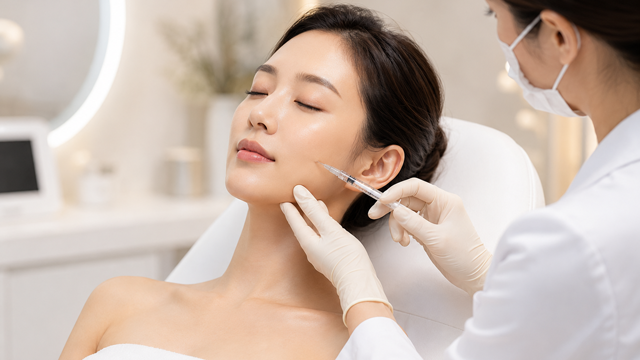
Toxnfill Hongdae describes the delivery accordingly: the area is assessed and marked, then the selected solution is injected into the target using multiple small injections. General anesthesia is not required, and a topical or local numbing method may be used where appropriate for comfort. The clinic's category includes several named injections — Facial Contouring Injection for cheek, jowl, jawline and under-chin fullness; Zero Cut, described as a non-surgical fat-dissolving injection usable in facial or body contouring; V-Cut, positioned for the double chin and jawline; Body Cut, used in targeted body programs for areas such as the abdomen and upper arms; and Zero Fit, which Toxnfill describes as a steroid-free fat-decomposition injection developed by its own medical staff.
Two consequences follow from "the body clears it over the following weeks," and both matter more than the chemistry.
The first is that nothing visible happens on the day. Toxnfill Hongdae states that contouring results generally begin to appear within two to four weeks. The Academy of Dermatology reports a comparable arc for non-invasive fat removal generally, with some change noticeable as early as three weeks and most people seeing the full effect between three and six months after the last treatment. Anyone judging the outcome in the mirror that evening is looking at swelling, not at a result.
The second is that the change is bounded by what was injected and where. The material does not circulate looking for fat elsewhere. It acts where it is placed.
Treating One Area Does Not Change How the Rest Behaves
A persistent hope is that reducing fat in one place recalibrates the body — that once the under-chin pocket is treated, the face generally will behave differently, or that a treated abdomen will hold weight differently in future.
It does not work that way. The treatment alters the amount of fat sitting in a defined location at a defined moment. It does not change how you store fat, where you preferentially store it, or what your body does with an energy surplus. Those are systemic properties, and a localized injection is not a systemic intervention.
This is why the same person can be delighted with a treated jawline and unchanged in every other respect, and why a clinic will not promise that a treated area "trains" the rest of the face. It is also why Toxnfill Hongdae's own aftercare guidance points outward rather than inward: the clinic recommends staying hydrated and maintaining a balanced diet with light exercise as support for the outcome. Those are habits aimed at the systemic layer that the injection does not touch.
There is a related misreading worth naming. Because a treated pocket can become notably smaller while neighboring areas do not, the contrast between them sometimes becomes more visible rather than less. A result can be real and still sit inside a face or a body that has not otherwise changed.
Weight Change Afterward Still Shows
This is the point most often skipped, and it is the one that decides whether a patient is satisfied a year later.
A contour treatment is not a lock on a result. Toxnfill Hongdae is direct about it: for its steroid-free injection, effects are described as semi-permanent in the absence of weight gain, and for the category more broadly, longer-lasting effects are described where weight remains stable. The clinic also notes for some contouring programs that effects may last roughly four to six months, with repeat sessions considered at intervals of about one to four weeks depending on the treatment and dosage. Different products behave differently, and the specific expectation belongs to the consultation rather than to an article.
The underlying logic is simple. Remaining fat cells in and around a treated area still respond to energy balance. If overall weight rises meaningfully afterward, the appearance of the treated area can change with it. If weight falls, the area may look different again. The treatment set a starting point; it did not fix the picture in place.
This is also the honest answer to a question patients ask in a slightly embarrassed way — whether they should lose weight first. In most cases the sequencing conversation is worth having openly, because assessing a pocket during a period of active weight change means assessing a moving target.
A Course, Not an Event
People book these injections expecting an appointment. The category behaves like a program.
Toxnfill Hongdae describes certain steroid-free injection treatments as taking roughly ten minutes, and states that depending on the treatment and dosage, repeat sessions may be recommended at intervals of about one to four weeks. For its steroid-free injection specifically, multiple sessions are described at two-to-four-week intervals depending on dosage. The Academy of Dermatology similarly notes that non-invasive fat removal generally requires more than one treatment session. The American Society for Dermatologic Surgery, writing about injectable deoxycholic acid for submental fullness, describes the number of treatments as tailored to the amount of fat present and the aesthetic goal, with treatments spaced at least a month apart.
Three practical implications follow:
-The first session is not the answer. It is the first data point. How much change a given dose produced in a given area is what informs the next one.
-A single trip may not contain a course. If you are traveling for treatment, the interval arithmetic matters more than the appointment length. A ten-minute injection with a four-week interval is not a ten-minute commitment.
-Judging too early produces bad decisions. Because change emerges over weeks, a second session chosen at day five is chosen blind.
Recovery, by contrast, is generally undemanding. Toxnfill Hongdae describes little downtime, with temporary swelling, bruising or soreness possible for several days, and advises avoiding strenuous exercise, alcohol, smoking, saunas and jjimjilbangs for roughly three to seven days. That short recovery is part of why the category is often mistaken for something trivial. The appointment is brief; the process is not.
Skin Firmness Is a Separate Question
Reducing fat under a chin changes what the skin above it has to cover. It does not change the skin.
Skin firmness, elasticity and laxity belong to a different tissue and answer to different treatments. The American Society for Dermatologic Surgery describes sagging skin as the result of collagen and elastin loss over time, aggravated by sun exposure and by significant weight loss, and points to energy-based tightening as the family of treatments aimed at it. The Academy of Dermatology likewise treats firming loose skin as its own category with its own options. MedlinePlus notes that skin changes with age are among the most visible signs of aging, with skin becoming thinner and less elastic, and that sun exposure is a major driver. None of that is addressed by removing fat.
Two things follow, and the second is the uncomfortable one.
First, if your complaint is that the area looks slack rather than full, a fat reduction is aimed at the wrong tissue and will not deliver what you want.
Second, where laxity is already present, reducing the fat beneath it can occasionally make that laxity easier to see. The skin that was draped over a fuller pocket now has less underneath it. This is not a complication and it is not common in every case, but it is a foreseeable outcome that a proper assessment should raise before treatment rather than after. Toxnfill Hongdae's own consultation process reflects this: it states that the plan is customized according to facial or body shape, skin condition, degree of sagging, and amount of localized fat. The degree of sagging is on that list for a reason.
Reasons Someone May Not Be a Candidate That Have Nothing to Do With Efficacy
A large share of people who are turned away, or asked to postpone, are turned away for reasons entirely unrelated to whether the treatment would have worked.
Toxnfill Hongdae documents the categories it assesses: people who are pregnant or breastfeeding, those with certain medical conditions, those with an active skin infection at the treatment site, and those with allergies to the ingredients may need to avoid or postpone treatment, with medical evaluation recommended beforehand. For its facial contouring injection the clinic adds a further category that is easy to overlook — people with unrealistic expectations.
That last one is not a polite euphemism. It is the clinical version of everything above. If the stated goal is a body change, the correct answer is not a smaller dose of a contour treatment; it is a different conversation.
There is also a category question rather than a safety one. If there is no discrete pocket to treat — if fat is distributed evenly rather than concentrated — then, as the American Society for Dermatologic Surgery describes, the non-invasive route is not the matching option, whatever the total amount. Being told this is a sign the assessment was done properly.
Where This Belongs in the Order of a Plan
The most useful reframing is positional. Fat-dissolving injections belong near the end of a plan, not at the start of one.
The things that actually move overall body composition come first, and MedlinePlus sets them out plainly: eating patterns, physical activity, and, where indicated, medical treatment discussed with your own provider. Those interventions change the whole system. They also change the thing that is being measured — which is why assessing a specific pocket makes most sense once the broader picture has settled rather than while it is in motion.
Read in that order, this category has a clear and defensible job: finishing. It addresses the residual, stubborn, place-specific fullness that stays put after the systemic work has been done. The Academy of Dermatology's framing — an area that diet and exercise will not budge — is precisely a description of a leftover, not of a starting point.
Positioned that way, expectations align with what the treatment does, and the result usually lands closer to what the patient hoped for. Positioned the other way round, as a shortcut past the harder work, it disappoints reliably.
If you want to see how the clinic groups its injection and contouring work before you write in, the clinic's own overview of its treatment categories is a reasonable place to start.
How to Describe What You Want
The single most useful thing you can bring to a consultation is a precise description of the area, not a product name.
-Point at a place. Name the specific region and say how long it has looked that way.
-Say whether it tracks with your weight. A pocket that shrinks when you lose weight is a different proposition from one that has never moved.
-Say whether the complaint is fullness or slackness. These route to different families of treatment, and mixing them up is the fastest way to a mismatched plan.
-Describe the goal in appearance terms, not in clothing sizes."The line here" is answerable. "Two sizes down" is not.
-Declare the constraints early — pregnancy or breastfeeding, allergies, medical conditions, current medications, recent treatments, and your travel dates if you are visiting.
You can set all of that out in writing before you arrive through the clinic's booking and contact page, which lets the consultation begin at assessment rather than at explanation.
The Bottom Line
- The category treats a defined pocket of fat in a specific place. Toxnfill Hongdae states plainly that it is not intended as a substitute for overall weight management.
- The commonest disappointment is a person who wanted a body change and bought a contour change; the American Academy of Dermatology describes the realistic result as subtle.
- Weight change afterward still affects how a treated area looks, which is why the clinic frames durability around weight remaining stable rather than around a fixed result.
- It is a course rather than an event: change generally begins over two to four weeks, repeat sessions are spaced weeks apart, and full effect is commonly described at three to six months after the last session.
- Skin laxity is a separate question that a fat reduction does not answer and can occasionally make easier to see, which is why degree of sagging is assessed before treatment.
Frequently Asked Questions
Will fat-dissolving injections help me lose weight?
No, and they are not designed to. Toxnfill Hongdae states that the benefits of this category are localized fat reduction and contour refinement, and that they are not intended as a substitute for overall weight management. MedlinePlus covers the interventions that do change overall weight — eating patterns, physical activity, and where appropriate medical treatment discussed with your own provider. A localized injection is not an entry point to that problem.
How long before I see anything?
Toxnfill Hongdae describes contouring results as generally beginning to appear within two to four weeks. The American Academy of Dermatology reports that with non-invasive fat removal some change may be noticeable as early as three weeks, with most people seeing the full effect between three and six months after the last treatment. Anything visible on the day of treatment is swelling rather than outcome.
If I gain weight later, will the result disappear?
The appearance of a treated area can change with meaningful weight gain. Toxnfill Hongdae describes the effects of its steroid-free injection as semi-permanent in the absence of weight gain, and describes longer-lasting effects where weight remains stable. Remaining fat cells in and around the area still respond to energy balance, so the treatment sets a starting point rather than locking a result in place.
Can one session be enough?
Sometimes a single session is what a small area needs, but the category generally behaves as a course. Toxnfill Hongdae notes that repeat sessions may be recommended at intervals of about one to four weeks depending on treatment and dosage. The American Academy of Dermatology states that non-invasive fat removal generally requires more than one session, and the American Society for Dermatologic Surgery describes injectable treatment for submental fullness as tailored in number, with sessions at least a month apart.
Will this tighten the skin under my chin as well?
No. Skin firmness is a separate question answered by a different family of treatments. The American Society for Dermatologic Surgery attributes sagging skin to collagen and elastin loss over time and points to energy-based tightening for it, while MedlinePlus notes that skin becomes thinner and less elastic with age. Where laxity is already present, reducing the fat beneath it can occasionally make that laxity easier to see, which is why Toxnfill Hongdae assesses the degree of sagging before planning.
Who is generally not suitable?
Toxnfill Hongdae lists pregnancy or breastfeeding, certain medical conditions, active skin infection at the treatment site, and allergy to the ingredients as reasons to avoid or postpone treatment, with medical evaluation recommended first. It also names unrealistic expectations as a reason someone may not be a candidate for facial contouring injections. Separately, the American Society for Dermatologic Surgery notes that people without specific fat bulges who need substantial fat reduction are not matched to the non-invasive route at all.
Should I sort out my weight before booking?
It is worth raising directly at consultation. Assessing a specific pocket during a period of active weight change means assessing a moving target, and the interventions that change overall body composition — described by MedlinePlus as a balance of nutrition and activity, with prescription treatment or surgery where clinically indicated — work on the whole system rather than on one area. This category is better understood as finishing work on what is left over.
This article is for general informational purposes, does not constitute individualized medical advice, and is not a self-diagnosis tool. Whether any treatment described here suits you, and what it can realistically achieve in your case, can only be determined by a qualified dermatologist or physician who has examined you in person.
Clinical Notice: Individual treatment outcomes and recovery timelines may vary depending on skin condition and personal physiology. Temporary redness, mild swelling, or bruising may occur after treatment; a pre-procedure physician consultation is always conducted.
More Articles
Continue reading our clinical guides.
Toxnfill Hongdae Dermatologist: Meet Dr. Chang Ye Ji
Medically reviewed by Dr. Chang Ye Ji, MD, Chief Director, Toxnfill Hongdae The lead dermatologist at Toxnfill Hongdae is Dr. Chang Ye Ji, who serves as the branch's Chief Director
Learn More

Korean Dermatology Residency Training: How Doctors Qualify
Medically reviewed by Dr. Chang Ye Ji, MD, Chief Director, Toxnfill Hongdae Korean dermatology residency training follows a sequence that will look broadly familiar to an American
Learn More

In-Person Consultation at a Korean Dermatology Clinic
Medically reviewed by Dr. Chang Ye Ji, MD, Chief Director, Toxnfill Hongdae An in person consultation at a Korea dermatology clinic is a working appointment with a defined shape: h
Learn More