Personalized Medical Care & Dedicated International Patient Concierge

Medical Guide
Acne-Prone Skin Treatment Options in Korea, by Presentation
Medically reviewed by Dr. Chang Ye Ji, MD, Chief Director, Toxnfill Hongdae Most confusion about acne-prone skin treatment options in Korea comes from treating acne as one conditio
Schedule a ConsultationMedically reviewed by Dr. Chang Ye Ji, MD, Chief Director, Toxnfill Hongdae
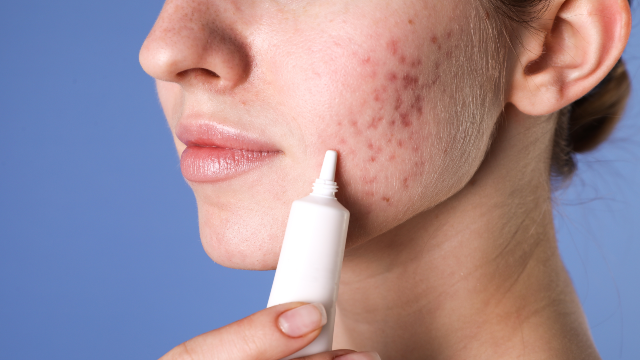
Most confusion about acne-prone skin treatment options in Korea comes from treating acne as one condition with one answer. An inflamed pustule that appeared last week, an indented scar left by a nodule five years ago, a permanently widened pore and a flat brown mark are four separate physical problems, and the treatment families that address them are largely different. This guide sorts Toxnfill Hongdae's documented acne and pore treatments by which presentation each one is described for, so you can walk into a consultation knowing which conversation you are trying to have.
Acne Is Several Different Problems Wearing One Name
The most useful thing you can do before choosing a treatment is name what is actually on your skin.
The acne vulgaris monograph in StatPearls — a clinical reference hosted on the NCBI Bookshelf by the US National Library of Medicine — treats acne as a chronic inflammatory disorder of the pilosebaceous unit, meaning the hair follicle together with the oil gland that empties into it. It grades lesions from 1 to 4: comedones at grade 1, inflammatory papules with redness at grade 2, pustules at grade 3, and nodulocystic acne at grade 4, where many pustules coalesce into nodules and cysts. Grade 1 splits again into open comedones, where the follicular opening is dilated and holds gray, brown or black keratotic material, and closed comedones, which sit under the surface as smooth dome-shaped papules.
The same reference explains how one becomes the other. Keratin and sebum accumulate in a microcomedo until it becomes a closed comedo, then continuous distension widens the follicular opening into an open comedo, with oxidized lipids and melanin inside producing the dark color. Follicles eventually rupture, releasing bacteria, keratin and proinflammatory lipids into the dermis, which worsens inflammation and drives nodule formation.
Two consequences follow, and they are why a single treatment cannot cover everything. Scarring is structural: StatPearls records that roughly 20 percent of people affected by acne develop severe acne that results in scarring. Marks are pigmentary: the same source notes that acne lesions may lead to postinflammatory hyperpigmentation, more common in people with Fitzpatrick phototypes IV to VI.
So there are four practical presentations worth separating before anyone picks a device:
- Active inflammatory acne— papules, pustules, nodules, and the oil and bacteria feeding them.
-Acne scarring— a change in the shape of the skin, either depressed or raised.
-Enlarged pores and congestion— widened follicular openings, blackheads, rough surface texture.
-Acne marks — flat discoloration where a lesion used to be, with the skin's contour intact.
Where Sebum Fits, and Why Oil Control Is Its Own Track
Oil is not a side issue in acne, which is why some treatments aim at the gland rather than the lesion.
The StatPearls entry on sebaceous gland physiology, also on the NCBI Bookshelf, records that the sebaceous gland supplies 90 percent of the skin's surface lipids. Its secretion method is holocrine, meaning the sebocyte deliberately destroys itself to release its contents, and the full cycle of lipid synthesis and discharge takes about a week. That reference also notes that androgen receptors, present throughout the skin, show a particular preference for the sebaceous gland, where androgens stimulate cell proliferation and lipid production.
The acne StatPearls entry adds the microbial link: seborrhea provides a growth medium for Cutibacterium acnes, which hydrolyzes sebum triglycerides into free fatty acids and glycerol as a nutrient source, and the resulting anaerobic, lipid-rich environment lets the organism thrive. Reduce the oil supply and you change that environment, which is why sebum management appears as a treatment goal in its own right, separate from resurfacing or scar remodeling.
The Modality Families This Clinic Works With
Toxnfill Hongdae's acne and pore category is built from three families, and knowing which one a proposed treatment belongs to tells you most of what you need to know.
- Exfoliating and peel treatments. Black Peel and Aladdin Peeling, both documented for active acne and for pore and texture concerns, alongside extraction.
-Energy-based treatments. Potenza RF microneedling, the clinic's Fraxel program, and Gold PTT.
-Injected and prescribed treatments. Anti-inflammatory injections, described by the clinic as calming acne, and acne medication prescriptions.
The clinic's stated logic is that the appropriate option depends on the specific acne or pore concern, with Potenza listed specifically for pores and acne scars.
Presentation One: Active Inflammatory Breakouts
When lesions are inflamed and new ones keep arriving, the goal is to reduce oil, reduce bacterial load and calm inflammation — not to resurface anything.
Black Peel
Black Peel is the clinic's peel aimed squarely at active disease. It is applied to cleansed skin to exfoliate dead cells, clear congested pores, suppress acne-causing bacteria and calm inflammation, then neutralized and thoroughly cleansed off. Suitable candidates are described as people with active acne, excessive sebum or enlarged pores who want gentle exfoliation. What the clinic states it is for reads as separate goals rather than one vague promise: acne relief, anti-inflammatory care, improved skin texture and tone, sebum management, pore reduction, and skin regeneration and calming.
The visit is more than the peel step alone. The sequence runs cleansing, then extraction, then the peel, then LED and cryo care, then a modeling step, then finishing. A session runs roughly 40 to 60 minutes, no anesthesia is used, and the clinic describes the treatment as causing minimal stimulation. Redness or a slight burning sensation may last around two to three days, and itching with small flakes of dead skin can follow. People with active open facial wounds are not candidates, and treatment is generally postponed where there is active infection, severe irritation or significant inflammation.
Gold PTT
Gold PTT is the clinic's energy-based treatment aimed at the oil and bacteria side of active acne rather than at texture. It is described as a non-surgical acne treatment that targets acne-related oil production and bacteria using light and thermal energy. Documented candidates are adults with inflammatory acne, excess sebum or acne-prone skin, and people with persistent acne, recurring breakouts or enlarged pores where skincare alone has not been enough.
Its delivery mechanism connects directly to the gland physiology above. The clinic describes Gold PTT as using ultrasound to carry micro-particles into the pores and then selectively targeting sebaceous glands, which helps limit irritation of the outer skin layer. It runs as a three-step process, so the appointment is relatively short, and anesthesia is generally not required. The clinic describes minimal discomfort and reduced redness because the energy is directed selectively. Recovery is short, with temporary redness or swelling possible after acne extraction, and improvement in acne, sebum and pore appearance develops progressively.
Injections, extraction and prescriptions
Two of the clinic's options for active acne sit outside both peels and devices. Anti-inflammatory injections are documented as being for calming acne, and manual extraction is part of the program. Beyond those, the clinic lists acne medication prescriptions among its acne and pore approaches, which matters because severe acne is not primarily a procedural problem.
The StatPearls monograph on isotretinoin, again on the NCBI Bookshelf, gives the shape of that separate track. It is an oral retinoid, approved by the US Food and Drug Administration in 1982 for severe nodular acne that resists conventional therapy including systemic antibiotics, and it works by reducing sebaceous gland size and sebum production, normalizing keratinization and exerting anti-inflammatory effects. StatPearls also summarizes American Academy of Dermatology guidance: the drug is recommended for severe acne or for people who have not responded to standard topical and oral treatments, and candidacy should also be considered where acne carries significant psychosocial burden or scarring. Such therapy carries monitoring and pregnancy-prevention obligations, which makes it prescribing territory rather than a menu choice.
Presentation Two: Acne Scarring
Scarring is a change in the architecture of the skin, and it responds to remodeling rather than to oil control.
StatPearls describes the depressed scars acne leaves as oval craters, deep pits or pits with sloped sides, and notes that healing can instead produce hypertrophic and keloidal scars. The StatPearls entry on hypertrophic scarring and keloids draws the distinction between those two raised types precisely: hypertrophic scars stay inside the boundary of the original injury and may regress over time, while keloids extend past those borders and do not regress. Both arise from excess collagen production during healing, and that entry names acne among the injuries that can produce either. If what you have is raised rather than indented, resurfacing is not the conversation, and it is worth saying so out loud.
For indented scarring and general textural irregularity, the clinic's documented option is Potenza RF microneedling. It is offered for the full face, for a single area and for the cheek region the clinic names the butterfly zone, with dedicated options for pores and acne scars. Suitable candidates are described as adults concerned with enlarged pores, acne scars, uneven texture or mild skin laxity, following professional assessment.
Some specifics you can plan around:
-Equipment. Potenza RF with additional tip options including an N Tip and a Pumping Tip. The clinic states that 13 different tips are available.
-Appointment length. Approximately 30 minutes of treatment, excluding a 20-minute topical anesthesia period, performed as an outpatient procedure.
-Comfort. Topical numbing is used, and the clinic describes Potenza as less painful than Intracel.
-Onset and course. Skin improvement can begin gradually two to three days after treatment, with at least three treatments at one-month intervals.
-Expected effects. Temporary redness, swelling, warmth, tenderness, pinpoint bleeding or mild irritation. Infection, prolonged inflammation and pigment change are less common.
-Reasons it may be unsuitable. Active skin infections, marked inflammation, certain bleeding disorders, or other contraindications to microneedling and radiofrequency.
The clinic's Fraxel program is its other option here, presented as intensive care that works at depth, with the stated aims of refining how pores and acne marks look and adding firmness. The underlying platform is a Picolo picosecond fractional system, applied in graded modes, and the program is documented for people concerned about visible pores, acne marks, uneven texture or mild loss of firmness. Temporary redness, warmth, swelling, sensitivity, dryness or peeling can follow, with pigmentary change, prolonged irritation, infection or scarring less common but possible. It is generally postponed where there is active skin infection, significant inflammation or a photosensitive condition.
Presentation Three: Enlarged Pores and Congestion
Enlarged pores are the physical residue of the process StatPearls describes: a follicular opening stretched wide by accumulated keratin and sebum, sometimes still holding a darkened plug.
This is the presentation with the most overlap between families, because a widened, congested pore responds both to clearing what is in it and to remodeling the skin around it. Black Peel is documented for enlarged pores and sebum control, and Aladdin Peeling as contracting pores. In the energy family, Potenza's pore-focused option, the Fraxel program's stated effect on pore appearance and Gold PTT's effect on enlarged pores all address the same complaint by different routes.
Aladdin Peeling
Aladdin Peeling is worth its own description because it is not acid chemistry. It is an exfoliation procedure using micro-needles derived from natural marine ingredients that penetrate the epidermis. A natural mineral powder mix is applied and rubbed onto the target areas to stimulate cell regeneration and remove dead skin cells, and the session finishes with a soothing mask to aid recovery. The clinic uses an upgraded formulation containing silicate, giant kelp, Dead Sea salt, boswellia and arnica extracts, chosen to lower irritation. Documented candidates are people with active acne, acne marks, enlarged pores, hyperpigmentation or keratosis pilaris — the rough, bumpy texture that comes from keratin plugging follicles, often on the upper arms.
The sequence is self-cleansing, toner cleaning, extrusion, peel application, drying, a first mask, regenerative cream and finishing. The appointment takes about 50 minutes, with a course of one to three sessions depending on skin needs. No anesthesia is used; a mild prickling sensation occurs as the natural spicules enter the skin. It is not suitable for people with open wounds, active infections or extreme skin sensitivity.
Recovery has a fairly predictable shape, which is useful if you are traveling:
- Warmth, tingling, redness and mild swelling in the first one to two days.
- Dryness and tightness around days two to four.
- Peeling beginning around days three to five.
- Shedding complete within five to ten days.
Its stated effects are improved skin texture, reduced acne marks, sebum control, tighter pores, a more even tone and improvement in keratosis pilaris.
The Fourth Thing People Mean: Marks Rather Than Scars
A flat brown or gray patch where a pimple used to be is a pigment problem, and it behaves nothing like a scar.
The StatPearls monograph on postinflammatory hyperpigmentation defines it as pigment acquired once skin has been inflamed or injured, and names acne among the leading causes in people with darker skin tones, where the reference puts incidence as high as 65 percent. It separates the condition by depth, and that separation predicts how a given mark behaves. The epidermal form is melanin accumulating in the upper layers, appearing brown, and it tends to improve more readily over time. The dermal form follows deeper or more prolonged inflammation, with melanin granules escaping into the dermis where macrophages engulf them, producing a blue-gray tone that is more persistent and more resistant to treatment.
Three things follow from that reference, all relevant to planning:
- Marks often fade unaided, but the reference puts that timescale at months to years, which is why treatment tends to be prolonged and why combined approaches are described as most effective.
- Resurfacing procedures themselves sit among the skin injuries capable of setting the condition off, so a plan aimed at marks has to weigh that.
- Severity tracks how inflamed the skin was, which is an argument for settling active lesions before chasing the marks they leave.
On the clinic's side, Aladdin Peeling is documented for acne marks and hyperpigmentation, and the Fraxel program is described as improving the appearance of acne marks. MedlinePlus, the consumer health service of the National Library of Medicine, makes the underlying point plainly: acne can cause scars, and its general advice is to clean the skin gently, try not to touch it, and avoid the sun.
Peel Aftercare: What the Recovery Weeks Ask of You
Peel results depend heavily on what happens in the days after the appointment, and the instructions are specific rather than generic.
Before a peel, the clinic asks you to stop aggressive manual exfoliants, strong retinoid creams and direct sun exposure for a few days. Aladdin Peeling has a longer runway: chemical exfoliants, retinoids and tanning treatments stop three to five days ahead. Afterwards, the clinic's instructions across its peel program are these:
-Moisturize frequently, using a regenerating cream where one is provided.
-Keep sun protection strict and daily, at SPF 50 or above.
-Do not pick, pull or scrub flaking skin. This is stated repeatedly and it is not cosmetic advice.
-Wash your face normally. After a Black Peel, same-day face washing is fine.
-Skip saunas and hot baths for a weekafter Aladdin Peeling.
-Let the shedding run its course. With Aladdin Peeling, peeling starts around day three to five and finishes within five to ten days; visible smoothing shows at about a week.
The instruction not to interfere with peeling skin has a mechanism behind it. Postinflammatory hyperpigmentation is driven by the degree of inflammation and by injury depth, so traumatizing skin that is mid-recovery risks producing exactly the marks you came in to reduce. The same logic sits under the sunscreen instruction.
Sessions, Timing and What "Progressive" Means Here
Acne and pore treatments at this clinic are described as courses, not single events, and the published numbers let you plan.
-Appointment lengths. Acne peeling runs about 40 minutes, Potenza about 30 minutes, and Accu Toning about 60 minutes.
-Anesthesia by treatment. Potenza and Accu Toning use topical or ointment anesthesia. Acne peeling and Ssola Therapy use none.
-Course intervals. At least three Black Peel sessions one to two weeks apart, three Aladdin Peeling sessions three to four weeks apart, and at least three Potenza sessions a month apart.
-Downtime. Many of the clinic's acne and pore treatments have minimal downtime and allow an immediate return to daily activity.
-How results arrive. Some treatments show early improvement, while repeated sessions are recommended for further change, with protocols running at intervals of one to four weeks.
For anyone flying in, a single visit can complete a treatment but rarely completes a course.
How the Choice Actually Gets Made in the Room
Selection is assessment-driven, and each treatment has its own checklist.
For the acne and pore category generally, a clinician works through acne type, pore condition, skin sensitivity, what scarring is present, what has been treated before and the medical history behind it. For Gold PTT, the assessment centers on acne severity, oil production, previous treatments, current medications and treatment goals. For Fraxel, it takes in skin type, pigmentation, pores, acne marks, texture and overall skin condition before laser settings are selected. For Black Peel, it focuses on the current acne condition and skin sensitivity.
Risk control at the clinic is described as customized selection rather than a fixed protocol: different devices, tips, wavelengths and settings chosen according to the concern in front of them. What you should volunteer without being asked is your active acne status, skin sensitivity, current medications, allergies, any active skin conditions, recent procedures and the skincare products you are using.
Dr. Chang Ye Ji, the Chief Director, lists laser dermatology and scar treatment among her core clinical interests, alongside general and cosmetic dermatology.
To begin this before you travel, put your breakout pattern in front of the clinic: what your skin is doing now, what you have already tried, what changed. It is also worth reading how the Hongdae practice presents its doctors so you know whose assessment you are asking for.
The Bottom Line
- Sort your skin into presentations first — active inflammation, scarring, enlarged pores or flat marks — because treatment families differ by presentation, not by severity alone.
- Active inflammatory acne is addressed here through Black Peel, Gold PTT, anti-inflammatory injections, extraction and acne medication prescriptions, all aimed at oil, bacteria and inflammation.
- Indented scarring and textural irregularity route to Potenza RF microneedling and the Fraxel program; raised or keloidal scarring is a different problem and should be named as such.
- Enlarged pores overlap both families, while flat acne marks are a pigment problem whose severity tracks how inflamed the original lesion was.
- Every documented protocol here is a course: roughly three sessions at one-to-two-week intervals for Black Peel, three to four weeks for Aladdin Peeling, and a month for Potenza.
Frequently Asked Questions
Which treatment does the clinic list specifically for pores and acne scars?
Potenza RF microneedling. Toxnfill Hongdae offers it for the full face, for a single area and for the cheek region it calls the butterfly zone, with dedicated options for pores and acne scars. The clinic states that 13 different tips are available so the approach can be matched to skin type and concern.
How soon does the skin peel after Aladdin Peeling, and for how long?
The clinic describes warmth, tingling, redness and mild swelling in the first one to two days, dryness and tightness around days two to four, peeling beginning around days three to five, and shedding finishing within five to ten days.
Is anesthesia used for acne and pore treatments?
It depends on the treatment. Potenza and Accu Toning use topical or ointment anesthesia, and Potenza's is applied for about 20 minutes before a roughly 30-minute treatment. Acne peeling and Ssola Therapy use none, and anesthesia is generally not required for Gold PTT.
What does Black Peel actually do to an active breakout?
It is applied to cleansed skin to exfoliate dead cells, clear congested pores, suppress acne-causing bacteria and calm inflammation, then neutralized and cleansed off. The clinic states its purposes as acne relief, anti-inflammatory care, sebum management, pore reduction, and improved texture and tone.
Can I wash my face after a peel?
Yes. After a Black Peel, face washing is possible the same day. The clinic asks you to use moisturizer and regenerating cream along with sunscreen afterwards, and not to pick or scrub at peeling skin while it sheds.
Do any of these treatments target oil production directly?
Gold PTT does. The clinic describes it as using ultrasound to deliver micro-particles into the pores and then selectively targeting sebaceous glands, an approach that also helps limit irritation of the outer skin layer.
When would the clinic postpone acne treatment rather than proceed?
An active skin infection, marked irritation or inflammation, or another condition that first requires medical assessment are all reasons the clinic may hold off. Certain medications, allergies and medical conditions can also limit suitability.
This article is for general informational purposes and does not constitute individualized medical advice, and it is not a self-diagnosis tool. Treatment candidacy, technique, and expected outcomes can only be determined through a consultation with a qualified dermatologist.
Clinical Notice: Individual treatment outcomes and recovery timelines may vary depending on skin condition and personal physiology. Temporary redness, mild swelling, or bruising may occur after treatment; a pre-procedure physician consultation is always conducted.
More Articles
Continue reading our clinical guides.
Toxnfill Hongdae Dermatologist: Meet Dr. Chang Ye Ji
Medically reviewed by Dr. Chang Ye Ji, MD, Chief Director, Toxnfill Hongdae The lead dermatologist at Toxnfill Hongdae is Dr. Chang Ye Ji, who serves as the branch's Chief Director
Learn More
Korean Dermatology Residency Training: How Doctors Qualify
Medically reviewed by Dr. Chang Ye Ji, MD, Chief Director, Toxnfill Hongdae Korean dermatology residency training follows a sequence that will look broadly familiar to an American
Learn More
In-Person Consultation at a Korean Dermatology Clinic
Medically reviewed by Dr. Chang Ye Ji, MD, Chief Director, Toxnfill Hongdae An in person consultation at a Korea dermatology clinic is a working appointment with a defined shape: h
Learn More